Es
EsThe Indian government has ordered a residential lockdown for 21 days from March 25, CNN reports. That’s likely to have a severe impact on manufacturing including downstream supply chains. There are already signs of disruptions to the logistics industry with Indian ports declaring force majeure and cutting activities according to S&P Global Platts.
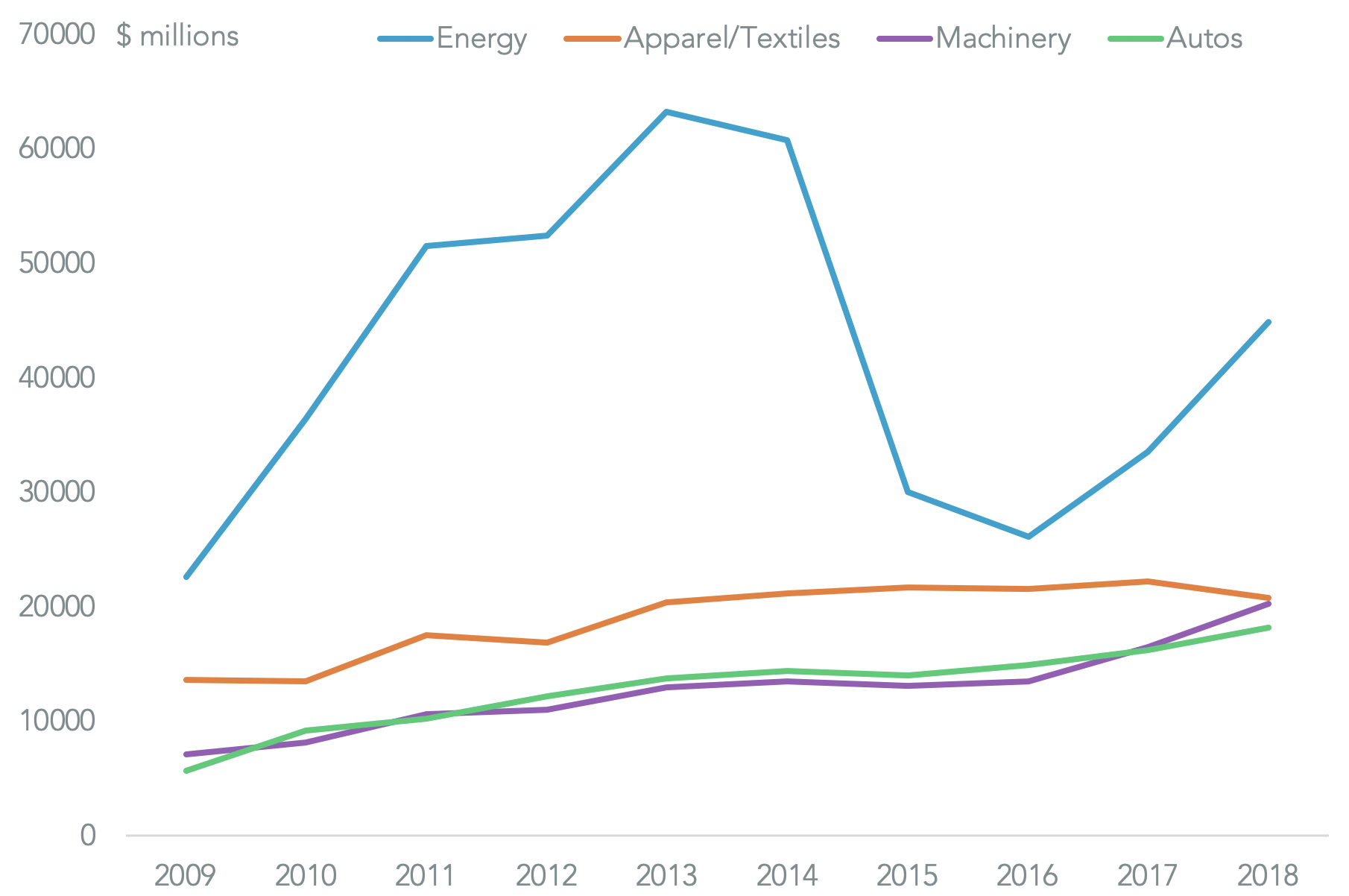
Panjiva data shows the largest Indian export lines in 2018 were energy – in particular refined fuels – worth $44.8 billion or 14.1% of the total after a 34.0% surge compared to 2017. Those shipments will likely already be in decline in dollar terms as a result of the collapse in the oil price. That was followed by precious metals as 12.4% as part of significant bilateral trade linked to household stores of wealth. Among manufactured goods apparel and textiles represented 6.6%, machinery 6.4% and vehicles (autos and capital) 5.7%.
The largest export market in aggregate was the U.S. with $51.7 billion of shipments in 2018, or 16.2% of the total, followed by the UAE which accounted for 9.0% and China with 5.1%.
Source: Panjiva
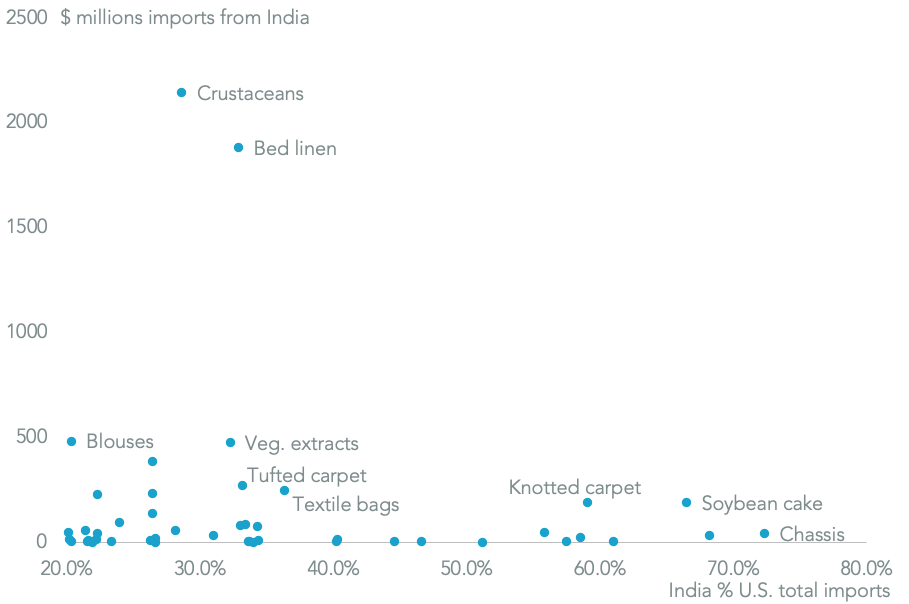
In terms of U.S. imports the most exposed industry is vehicle chassis (HS 8706) where 72.3% of imports came from India in 2019, Panjiva’s data shows. Among the most exposed firms to vehicle chassis imports has been Deere & Co., as discussed in Panjiva’s research of March 25. Among consumer goods, India represented 32.1% of U.S. imports of carpets and 16.0% of textiles.
Source: Panjiva
The largest import to the U.S. by value is pharmaceuticals. While India only represented 9.4% of total U.S. pharma imports the supplies are concentrated in generic pharmaceuticals. As flagged in Panjiva’s March 4 report there was already a set of export restrictions imposed on a narrow range of drugs.
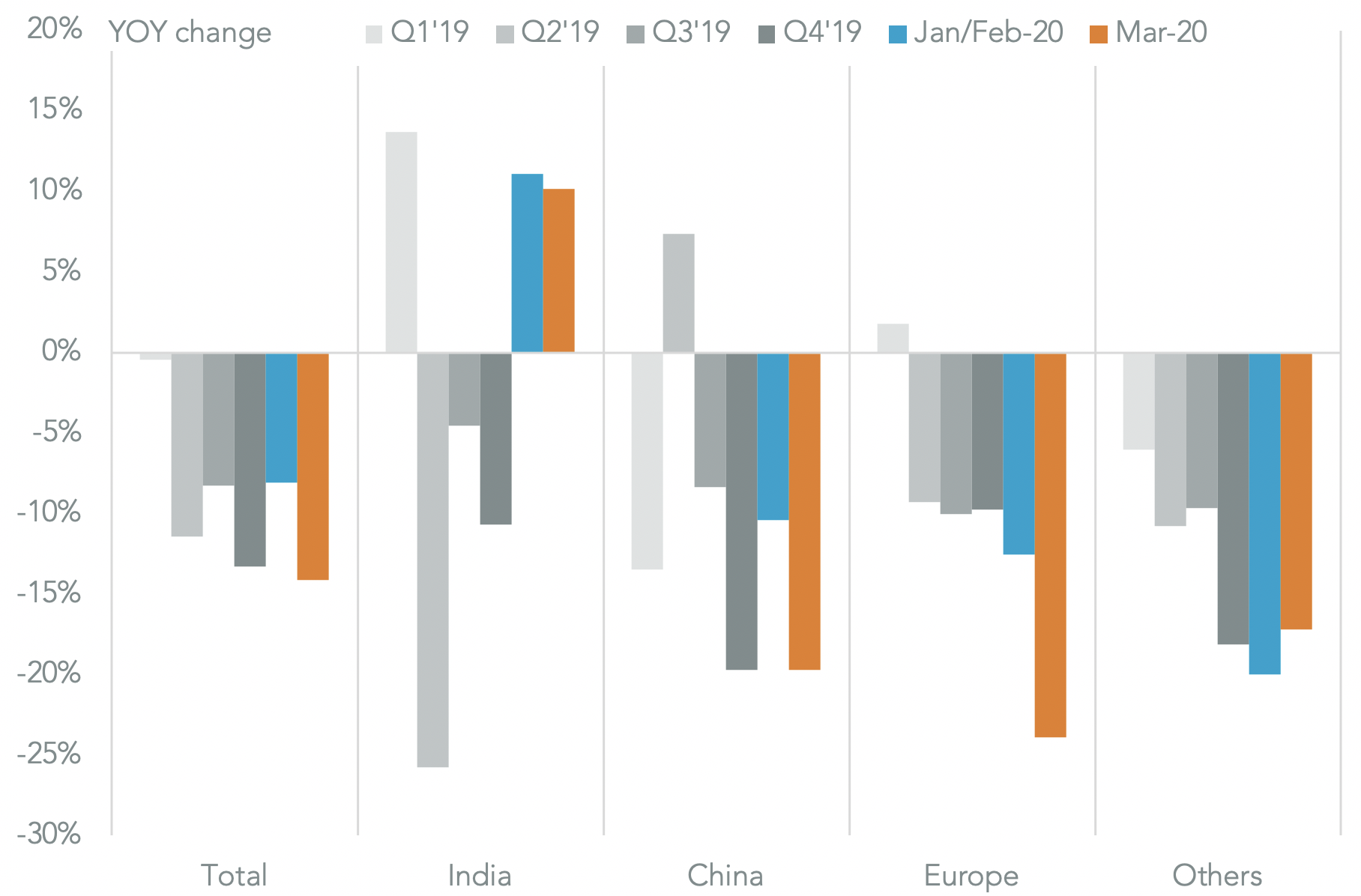
Panjiva’s seaborne data shows pharmaceutical imports to the U.S. already dropped by 14.2% year over year in the first two weeks of March after falling 8.2% in the first two months of the year. Shipments from India were substituted for those from Europe and China with shipments from India having increased by 10.2% in the first two weeks of March and by 11.0% in the first two months of the year. Losing imports from India could therefore exacerbate the existing supply chain downturn.
Leading seaborne shippers from India in the 12 months to Feb. 28 that have ramped up their shipments include Cadila – shipments associated with which rose by 80.4% year over year in January and February combined – as well as Dr. Reddy’s with a 65.7% surge and Amneal with a 58.8% increase. Not all shippers have boosted their supplies though, for example shipments linked to Aurobindo and Alkem fell by 18.9% and 27.0% respectively.
Source: Panjiva