Es
EsVacuum cleaner manufacturer iRobot reported an 8% year over year increase in revenues in Q2, above analysts estimates of a 2% improvement according to Bloomberg. The firm also increased its revenue expectations for the full year to “unchanged to slightly higher” than in 2019 compared to a decline previously.
The upturn in the firm’s business has been very recent. Panjiva’s data shows U.S. seaborne imports in June surged 133.4% compared to a year earlier and reached the highest since prior pre-tariff worries in December 2018. The second quarter overall however suffered a drop of 8.8% due to weaker shipments in April and May due to a mixture of supply disruptions and uncertainties about demand.
iRobot was not the only vacuum cleaner maker to see that effect. Total U.S. seaborne imports surged 44.8% higher in June having declined in May while those linked to Miele 108.5% higher after a 50.5% drop in May. By contrast Dyson saw a continued downturn in June, which may reflect its reliance on manufacturing in Malaysia rather than China.
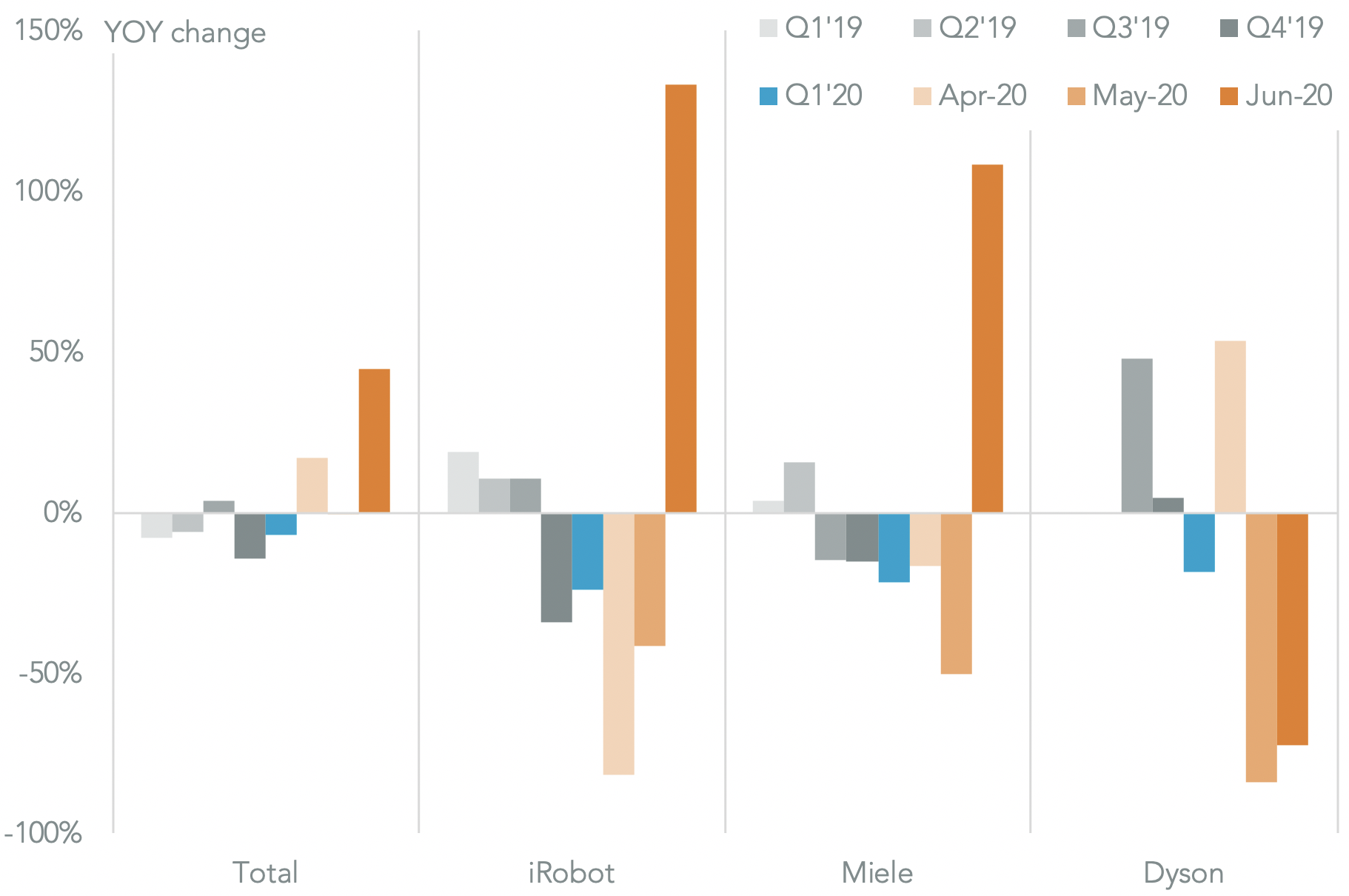
Source: Panjiva
One forthcoming challenge for iRobot will come from the reimposition of tariffs on its shipments from China. The firm’s CEO, Colin Angle, indicated that “we do not yet know whether this exclusions will be extended through the second half of the year“. As discussed in Panjiva’s research of July 14, tariff exemptions have been extended in some products though the overall outlook for tariffs will be a function of the U.S. general elections as outlined in Panjiva’s Q3 Outlook.
iRobot has started to diversify away from China somewhat with shipments from Malaysia and elsewhere reaching 16.9% of the total in the past six months compared to near-zero in 2019 as a whole.

Source: Panjiva