Es
EsToymaker Mattel reported 47.1% revenue growth respectively in Q1’21, helped in part by favorable comparisons linked to the pandemic a year ago. A comparison to Q1’19, a normal off-peak month, shows growth for Mattel of 26.8%. Analysts were likely expecting more of a return-to-normal, with Mattel’s revenues beating consensus by 27.8 percentage points according to S&P CapitalIQ. The expansion was driven by a 69.0% rise in sales of dolls, including the Barbie and American Girl brands.
Hasbro by contrast reported growth of just 0.8% compared to a year earlier, underperforming consensus estimates by 5.1 percentage points and likely reflecting a slump in movie tie-in sales collapsed on the back of theater closures. Yet, when comparing to Q1’19 revenues rose by 52.2%, helped by improving sales of franchise brands including Play-Doh and Nerf.
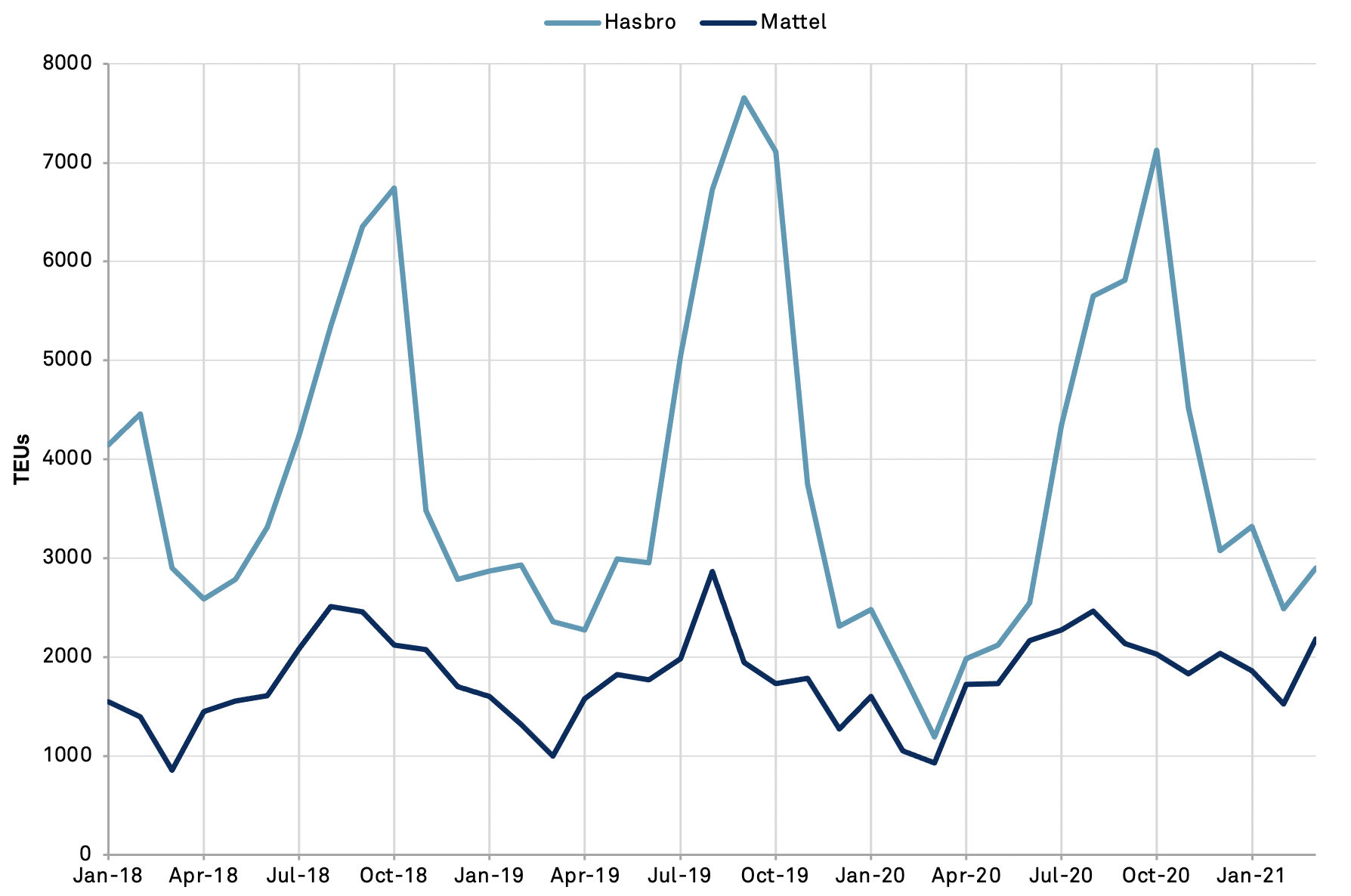
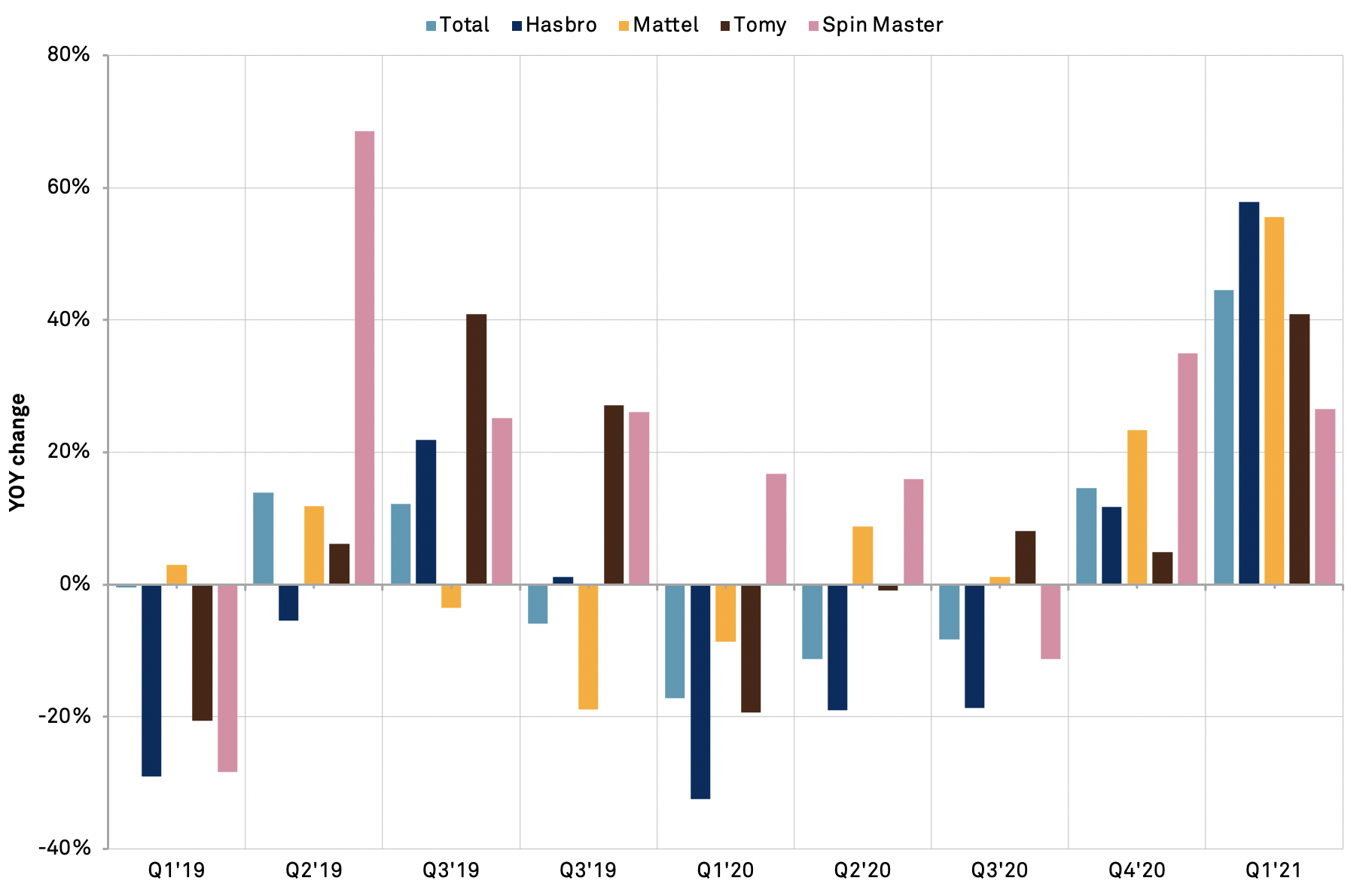
The divergent performance of the two firms in part reflects the seasonality of the toy industry as well as the importance of choosing the right categories, even for diversified brand owners. Panjiva’s data shows that U.S. seaborne imports linked to Hasbro and Mattel expanded at similar rates, with shipments linked to Hasbro having increased by 57.9% year over year while those associated with Mattel rose by 55.6%.
Importantly both saw an acceleration in growth in March which partly reflects lower comparator figures due to the pandemic as well as potential deliveries of products previously tied up in port congestion on the U.S. west coast.
Source: Panjiva
Both firms have also had to deal with significant cost inflation in their supply chains. In Mattel’s case the firm’s CFO, Anthony DiSilvestro, has stated that “cost inflation had a negative impact of 240 basis points” which was “essentially equally weighted between resins and ocean freight.” Similarly, Hasbro’s CFO Deborah Thomas has noted “freight capacity continues to be very limited and more expensive across all markets” while the company has also “seen significant increases in resin, packaging material and metal prices“.
The resins inflation may have been triggered in part by the February storms in Texas, as discussed in Panjiva’s April 14 research. Logistics cost inflation has been widespread with both shipping and freight forwarding firms expecting the pressure to continue for most of the rest of the year.
Indeed, that persistence has led Mattel to “forecast higher than previously anticipated inflation in cost of goods sold due to further increases in the cost of resins and ocean freight“. Hasbro meanwhile “has plans in place to help mitigate those costs, including price increases for” H2’21.
To a certain extent the toy industry has been a victim of its own success, with a surge in demand being a contributing factor to the logistics congestion that has caused higher rates. Total U.S. seaborne imports of toys in Q1’21 climbed 44.5% higher year over year and were also 19.7% higher than the same period of 2019.
Aside from Hasbro and Mattel’s expansion there was also a 249.1% surge in shipments linked to WowWee while shipments linked to Tomy and Spin Master rose by 40.9% and 26.6% respectively.
Source: Panjiva