Es
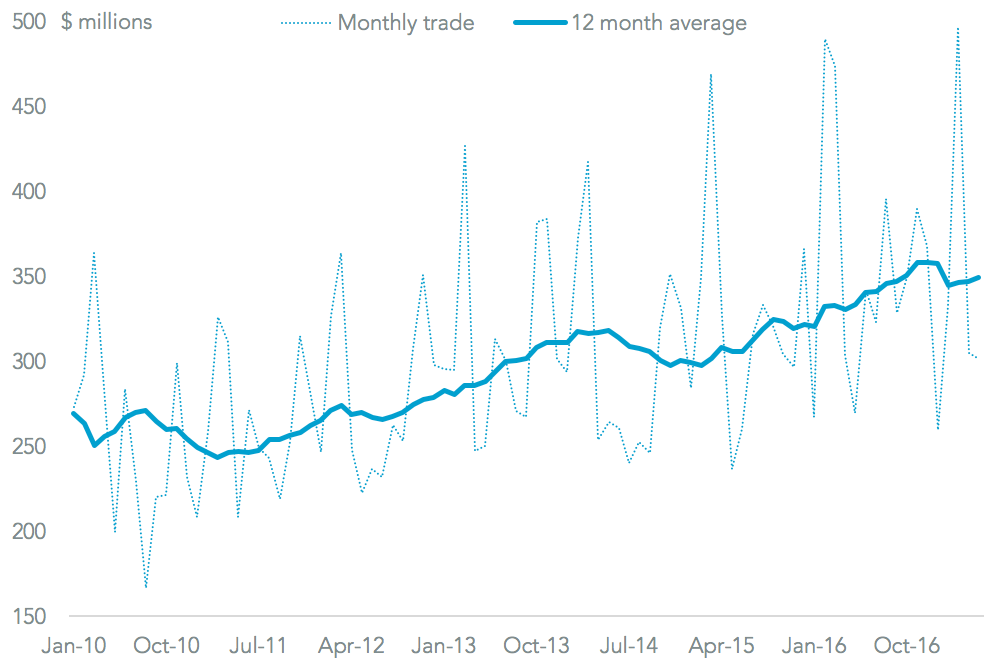
EsThe U.S. FDA has released a multi-year roadmap to reduce the levels of nicotine in cigarettes to “non-addictive” levels. Stock prices for the tobacco-products manufacturers including Altria and BAT fell by as much as 10% in response. A weaker domestic market may drive U.S.-based producers to try and export more. Yet, U.S. trade in tobacco has declined slightly to $4.19 billion in the 12 months to May 31 from its peak of $4.3 billion of combined imports and exports in calendar 2016, Panjiva data shows.
Source: Panjiva
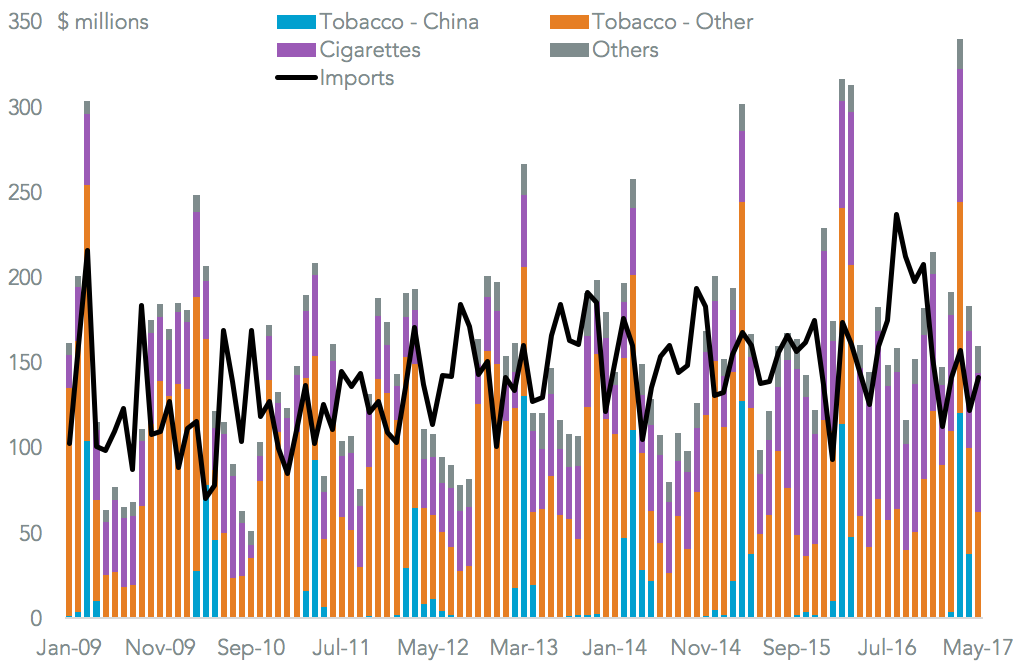
Export growth has maintained a steady growth rate, reaching 10.6% in the quarter to May 31, while imports dropped 2.2% over the same period. Within exports shipments of raw tobacco jumped 31.6% while cigarettes fell 8.0%. Growth in the former is somewhat overstated by later-than-usual deliveries of tobacco to China in 2017 vs. 2016.
Source: Panjiva
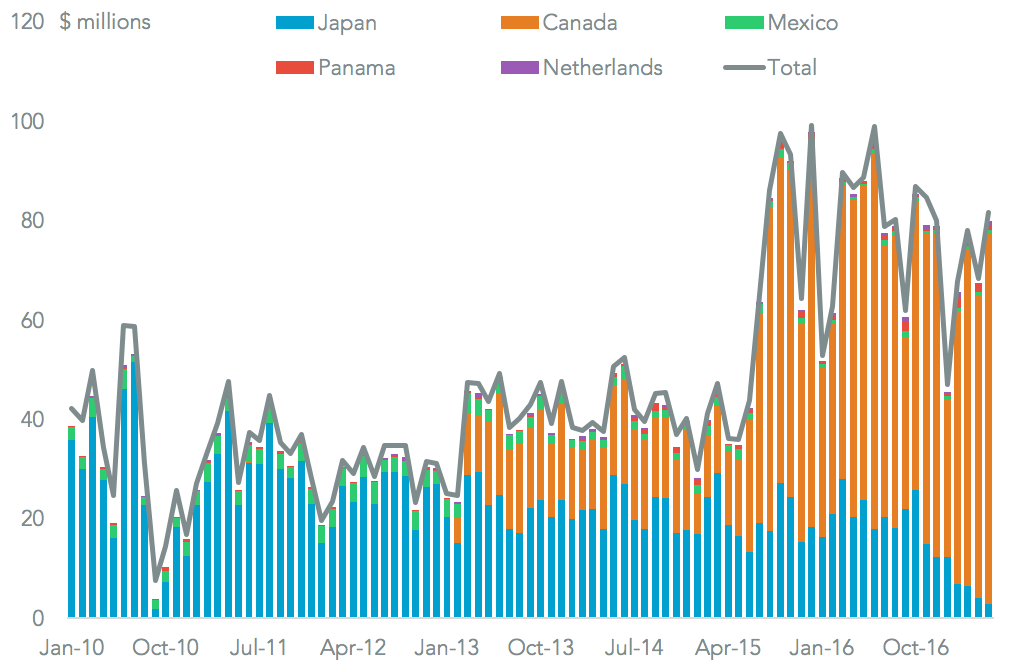
U.S. cigarette exports, led by producers including BAT’s Reynolds operations, experienced a 14.0% drop in exports in the past quarter. That largely reflects an 87.6% drop in direct exports to Japan, partly explained by a rise of 17.8% in shipments to Canada. A 10% drop in domestic sales seen by Japan Tobacco in the first quarter suggests there the drop in Japan-bound shipments have been partly diverted via Canada.
Source: Panjiva
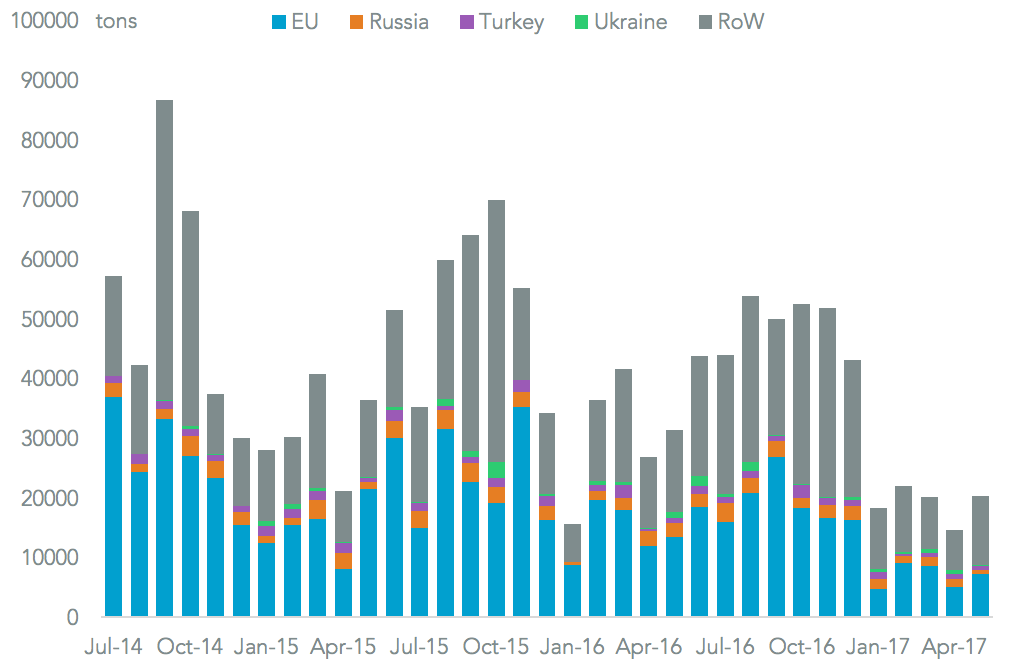
The slowdown seen in the U.S. is also being seen in Brazil, the world’s largest tobacco producer according to Reuters. Exports in the three months to May 31 fell 44.8% on a year earlier, led by a 51% drop in shipments to the European Union. Shippers including JTI, Universal Leaf and BAT are clearly not yet benefiting from improved crop financing arrangements from the government.
Source: Panjiva