Es
EsCabinet-level talks are being planned between the U.S. and China for July, the South China Morning Post reports. These will be led by U.S. Commerce Secretary Wilbur Ross, Treasury Secretary Steve Mnuchin and Chinese Vice Premier Wang Yang. These likely relate to the culmination of the “100 day plan” which should technically wrap up on July 16, as outlined in Panjiva research of April 26. Presidential-level meetings are not yet planned, suggesting these talks should be seen as part of an ongoing process rather than a culmination.
So far no concrete measures have been announced, though China has highlighted the potential for the U.S. to relax its export controls. In the meantime, however, China’s trade surplus with the U.S. has been going the wrong way after exports increased by 9.9%. That mean the surplus increased 18% on a year earlier in April. Furthermore, its surplus with the rest of the world has been steadily falling and is 36.5% below its peak.

Source: Panjiva
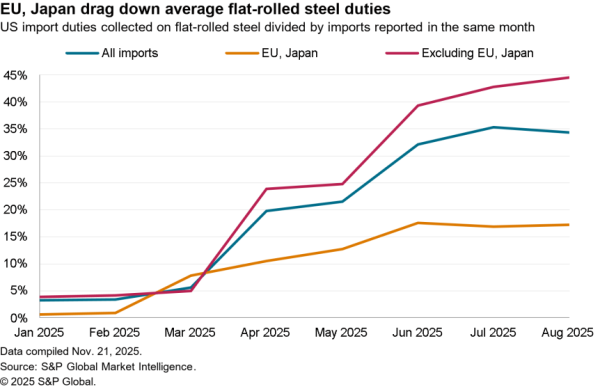
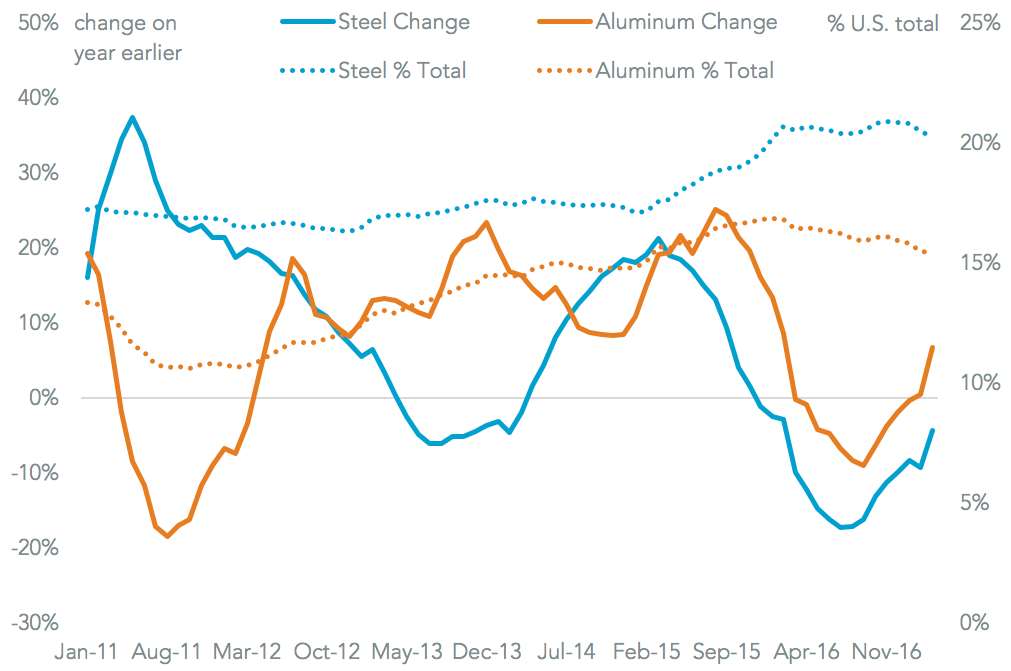
One area where Chinese officials could help the broader objectives of the U.S. administration is in metals. President Donald Trump has issued Presidential Memoranda calling for accelerated investigations into the steel and aluminum sectors. U.S. imports of both products increased in the first quarter. Panjiva data shows steel imports from all countries increased 16.2%. While China lagged with a 3.9% increase it still accounts for 20.3% of U.S. imports on a trailing 12 month basis, up from 16.3% in 2012.
There is a similar picture for aluminum, where Chinese exports increased 14.6% in the past quarter against a backdrop of global imports rising 28.3%. While China’s share of U.S. imports at 15.4% is below their peak, they are still well above 2012’s 12.0% level. Chinese government commitments to cutting capacity – as was recently delivered for steel – may help smooth relations.
Source: Panjiva