Es
EsThe first meeting between Prime Minister Trudeau of Canada and President Trump of the U.S. suggests future trade relations between the two countries will be about modifications at the margin, not wholesale change in treaties and policies. This is a similar message coming from Trump’s meeting with Prime Minister Abe of Japan, as discussed in Panjiva research of February 13.
There are unlikely to be major changes coming quickly, the press conference transcript has Trudeau referring to discussions coming “in the weeks and months to come”. Yet, there may be some small changes near term from a technical perspective with Trump referring to moves that will make it “lot easier for trade and a lot better and a lot faster for trade”.
Even in the long term the changes may not be significant, to quote President Trump: “We’ll be tweaking it. We’ll be doing certain things that are going to benefit both of our countries.”. Notably though he also referred, perhaps unrealistically to ensuring “we are going to make it so that everybody is happy”.
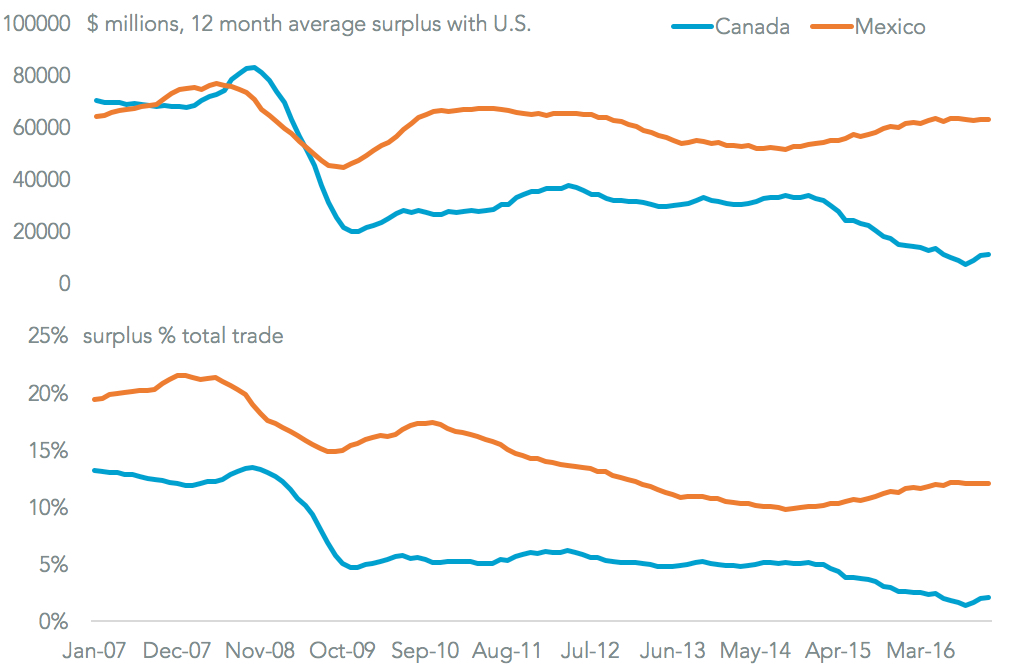
There are two major areas where Prime Minister Trudeau may have had a trump card (as it were) to play. First is his reference that “35 U.S. states list Canada as their largest export market”. Adding to this, Canada’s trade surplus with the U.S. has fallen steadily over time, and was just 2.1% of U.S.-Canada total trade in 2016 according to Panjiva data for U.S. imports and exports. That compares to 13.2% in 2006 and Mexico’s current 12.0%. A recent increase in the Canadian surplus has been due to oil price rises rather than increased merchandise exports.
Source: Panjiva
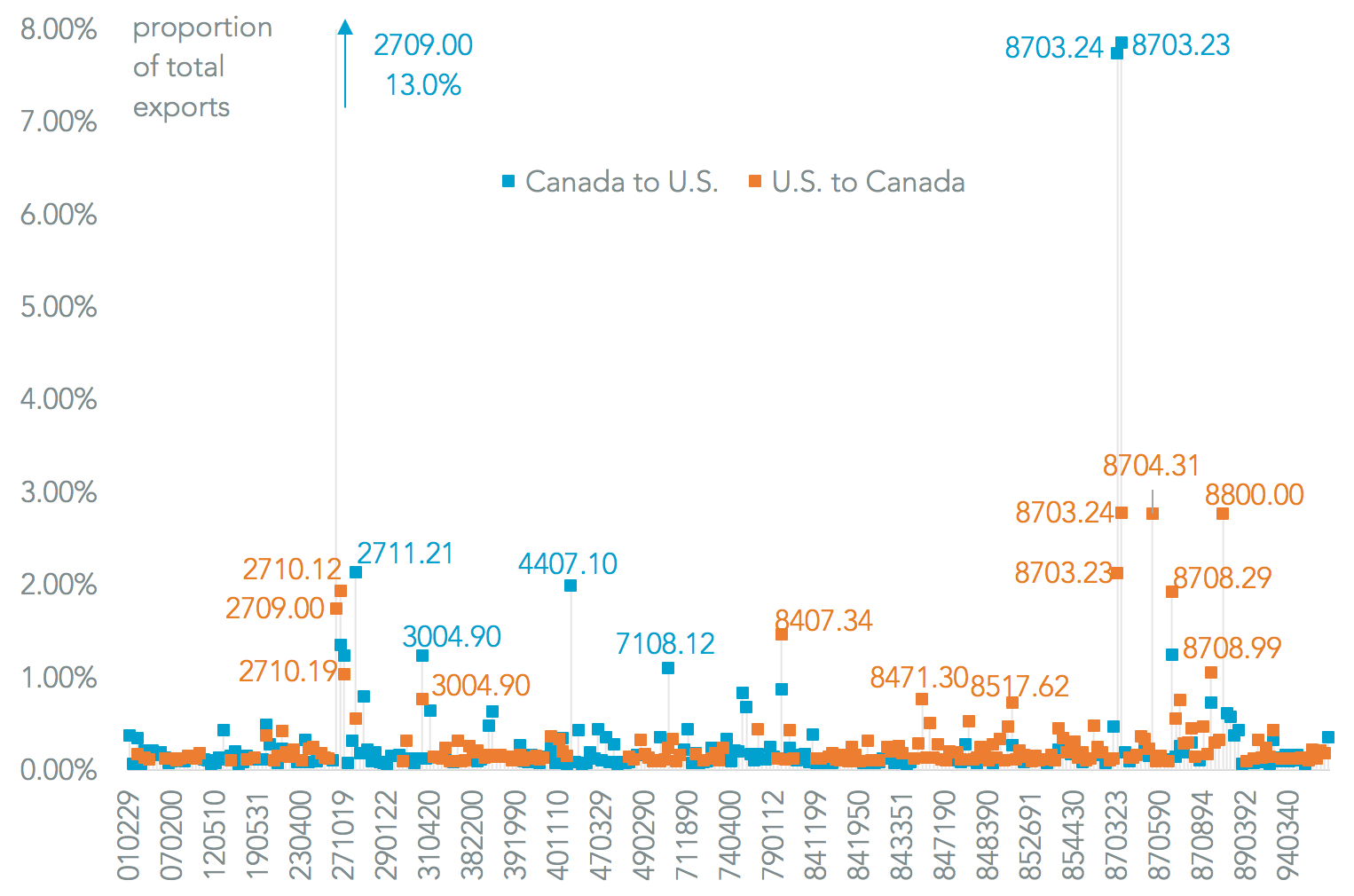
The second area is that Canada’s exports can be characterized more as a raw material supplier than as a workshop, which is the case with Mexico. The main manufactured product export areas are in autos (HS 87) where the two countries are co-dependent, while materials including energy (HS 27), wood (HS 44) and precious metals (HS 71) were the other major export lines in 2016. It is also a vital client country for major U.S. export sectors including aerospace (HS 88), refined energy products, capital goods (HS 84) and electronics (HS 85).
Finally, one area of weakness for Canada is that its exports are much less fragmented by product than the U.S. Its top 10 products account for 39.9% of total exports vs. 20.4% for the U.S. This likely means future negotiations, which will presumably be led on the U.S. side by Commerce Secretary Ross, may require Canada to make concessions on many more product lines than the U.S.
Source: Panjiva