Es
EsThe U.S. Trade Representative increased tariff rates to 15% from 10% on imports of aircraft from the EU in connection to a long-running WTO-linked dispute covering EU support for Boeing. It has also changed the list of tariff-afflicted products outside of the aerospace.
Notably the USTR has also reserved the right to raise duty rates on non aircraft to as much as 100% from 25% “upon any EU imposition of additional duties on U.S. products in connection with the Large Civil Aircraft dispute or with the EU’s WTO challenge to the alleged subsidization of U.S. large civil aircraft“.
This latest action overshadows potential negotiations between the EU and U.S. As outlined in Panjiva’s 2020 Outlook, there’s a chance that the aerospace disagreement, alongside EU plans regarding carbon border taxes and digital services taxes could lead to a wider tariff dispute later in 2020.
The existing tariffs do not appear to have made a significant dent in EU exports to the U.S., which climbed 10.9% year over year in December, Panjiva’s analysis of official data shows, reaching 6.9% for Q4 overall. At the same time EU imports from the U.S. rose by just 0.6% in December and 5.1% in Q4.

Source: Panjiva
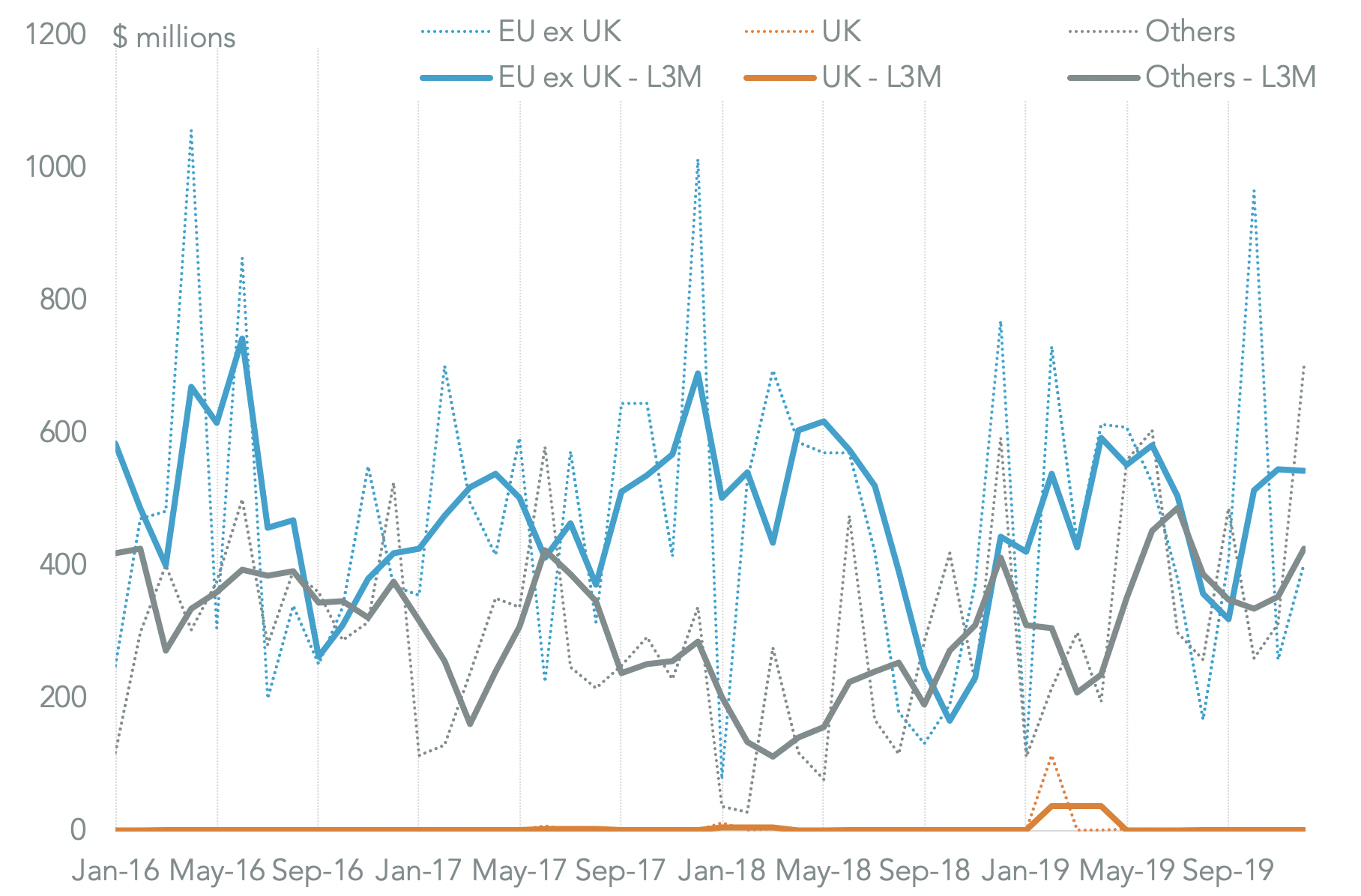
The Trump administration’s preoccupation with the rising trade deficit versus the EU may have been another reason for the modest tariff increase. Panjiva’s data shows that U.S. imports of the aerospace products covered by the tariffs were worth $10.0 billion in 2019, with $5.61 billion coming from the EU ex-U.K. and $115 million from the U.K. The latter has not been able to escape the tariffs despite Brexit as it is still a part of Airbus’s supply chain and is still a correspondent in the WTO case.
The tariffs – which were only applied in October 2019 but had previously been well flagged – may have led to an acceleration in deliveries to U.S. buyers. U.S. imports of large civil airliners from the EU excluding the U.K. climbed 10.1% year over year in 2019 as a whole but had surged 21.4% higher in Q4. Imports from the rest of the world – principally Canada and Brazil – slowed to just 3.3% in Q4 after a jump earlier in the year.
Source: Panjiva
Surprisingly, despite there having been 26,000 submissions in the recent review commentary process held by USTR, only two non-aerospace products have been changed. Imports of prune juice have been removed from the list while butcher’s knives have been added. Shipments of prune juice were zero while imports of knives were worth just $10,800.
The changes may simply have been to assert the potential for a “carousel” approach to tariffs, which can bring significant uncertainty to supply chains both in terms of short-term supplies and long-term investment decisions.
In the meantime the other 158 products, which were covered by 25% tariffs have seen a marked drop in shipments at the end of 2019 as the tariffs came into effect. Panjiva’s analysis shows Imports of food products from the EU overall covered by the tariffs fell by 29.8%, while beverages dropped 21.6% and other products by 9.1%.
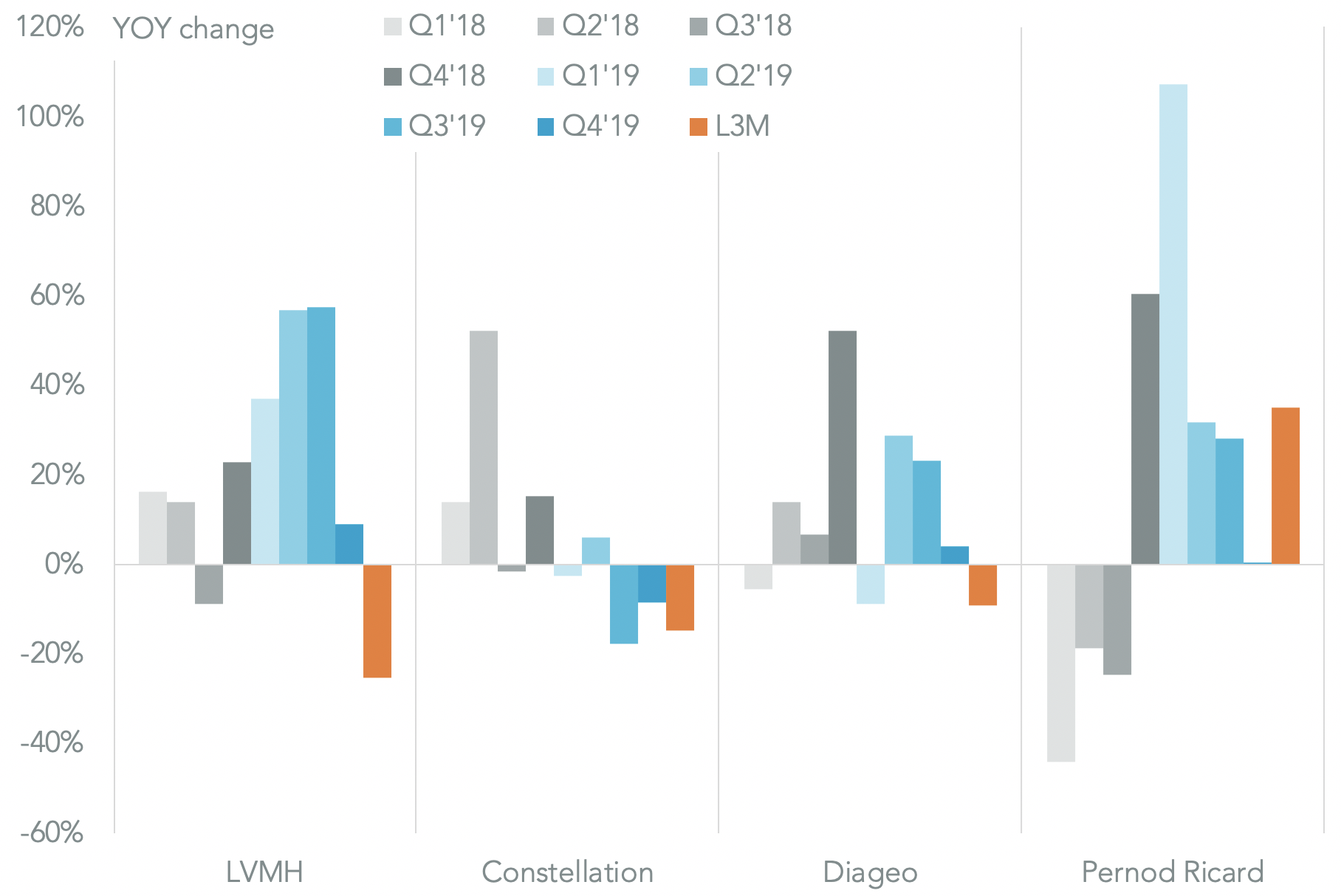
Most of the major European exporters of beverages to the U.S. have cut their shipments in the three months to Jan. 31. Panjiva’s seaborne shipping data shows imports linked to LVMH slumped 25.5% year over year, while those associated with Constellation and Diageo fell by 14.8% and 9.0% respectively. The outlier’s been Pernod Ricard where shipments linked to the firm surged 34.8% higher.
Source: Panjiva