Es
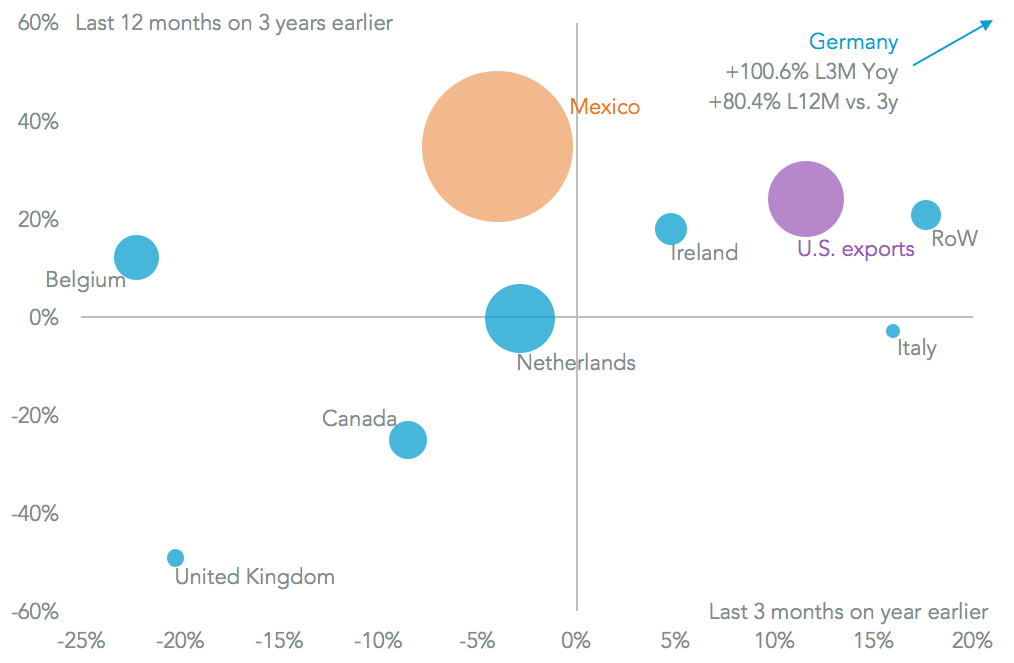
EsThe U.S. beer industry has been steadily losing market share in the broader drinks market, with the Boston Beer Company flagging growth of just 1% in the past quarter on a year earlier. While imported beer sales growth has been doing better, U.S. imports of beer fell 7.9% on a year earlier in April, Panjiva data shows, resulting in a three month decline of 2.6%. That marks a step back from a longer-term trend of growth that has seen imports rise 21.3% over the past three years.
Tastes have shifted somewhat, with imports of German beers rising 103% in the past three months on a year earlier, while shipments from Belgium and the U.K. fell 22.2% and 21.3% respectively. The main volume beer remains that from Mexico, however, which slipped 4.0% and accounted for 65.7% of the total.
Source: Panjiva
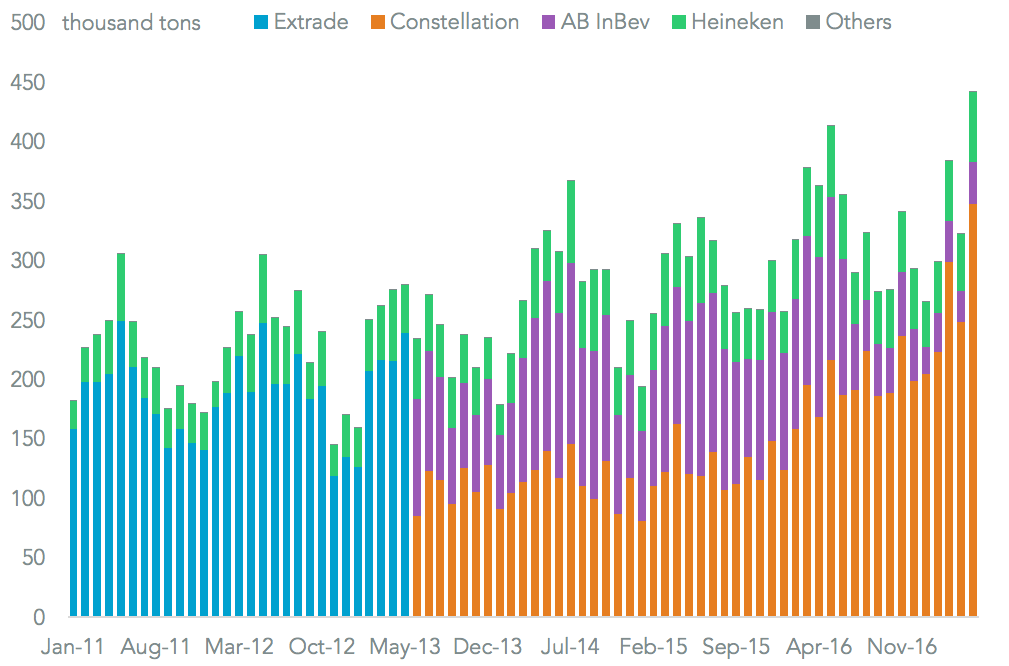
There was a resurgence in Mexican exports to the U.S. in May with a 6.9% rise on a year earlier in volume terms. That was a new high since at least 2011 of 437.4 million liters and comes ahead of the normal seasonal peak of June or July. That still only resulted in an unchanged total for the quarter. Among major shippers Heineken saw a 10.3% drop on a year earlier for the quarter, which came ahead of its distribution deal with Molson Coors. Constellation saw a 54.5% increase, though this was due to purchase of production facilities from AB InBev.
Source: Panjiva
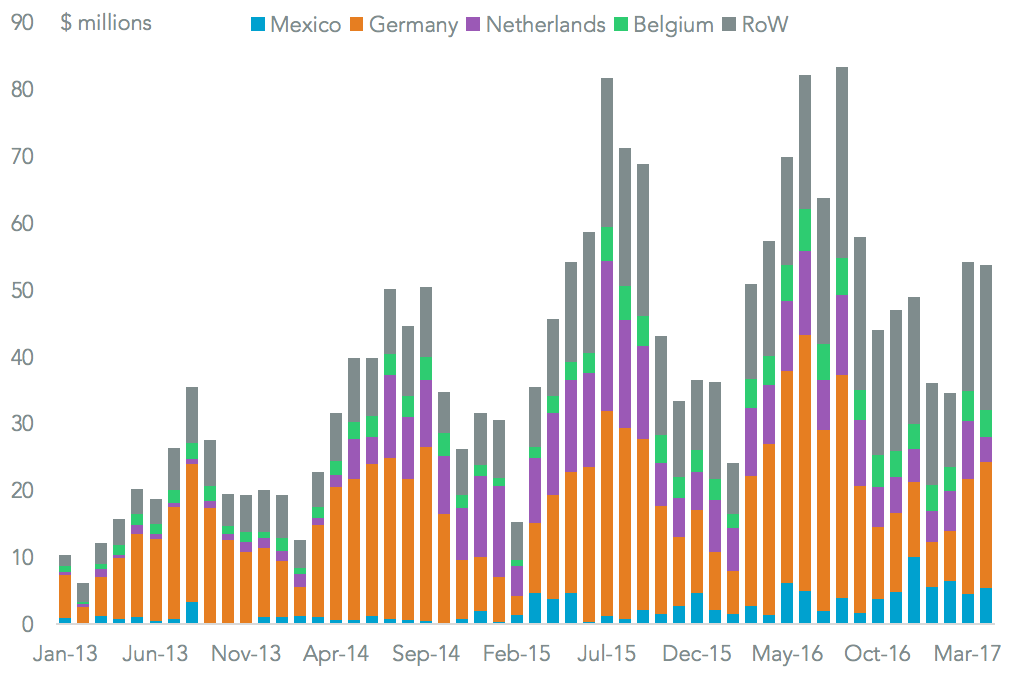
One of the faster growing international markets has been China, which increased imports by 9.6% in the 12 months to April 30. Buyers have so far preferred European brands, though imports from Mexico ( handled by AB Inbev’s local subsidiaries) increased 130.2% in the past year. Even with that growth Mexican beers only accounted for 8.8% of total imports. The steady growth in tequila, which reached 48% in the last quarter alone as outlined in Panjiva research of June 22, suggests growing appetites for both products could continue.
Source: Panjiva