Es
EsAutomaker Daimler has reduced its earnings guidance for 2018 in response – in part – to “increased import tariffs for US vehicles into the Chinese market”. That reflects the recently announced duties to be applied as a response to America’s section 301 review of Chinese IP practices as outlined in Panjiva research of June 18.
Daimler produces its GL range of SUV models in the U.S. for domestic and international markets. Panjiva data shows Chinese imports of Daimler products reached $9.18 billion in the 12 months to February 28, with $3.24 billion (35.3%) having been sourced in the United States.

Source: Panjiva
That underestimates the impact of tariffs on Daimler’s U.S. business though as the Chinese duties are focused on imports of cars and parts whereas Daimler’s business includes trucks and buses too. Cars represented 97.9% of Daimler’s Chinese imports from the U.S. vs 87.4% from all origins.

Source: Panjiva
Chinese duties are not the only problem for Daimler. It also faces the ongoing section 232 of the automotive industry being prepared by the administration of President Donald Trump. It isn’t yet clear whether this will focus solely on completed vehicles or supply chains more broadly, but has the potential to hit Daimler’s European business too.
Up until the end of May Daimler does not appear to have been overly concerned about the imposition of wider duties given its U.S. seaborne imports rose by just 3.7% on a year earlier in the three months to May 31.
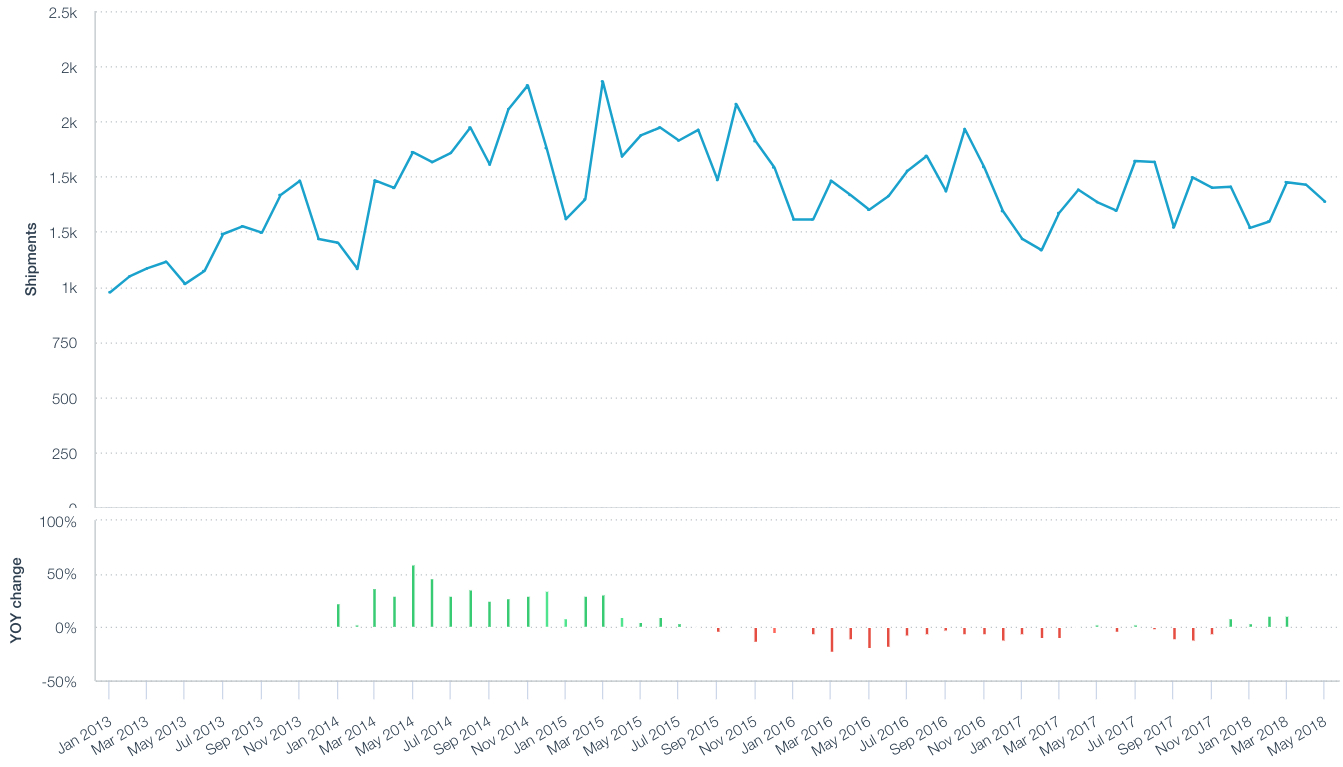
Source: Panjiva
A particular risk lies ahead for its shipments from Europe and specifically Germany where 47.0% of Daimler’s shipments and 75.4% of its containerized freight hails from. President Trump has a particular animus with regards to Daimler’s Mercedes Benz brand, Fortune reports.
Daimler ships most of the parts required to build its SUV vehicles from Germany and while completed vehicle imports only represent 13.0% of shipments 62.8% of those come from Germany too.
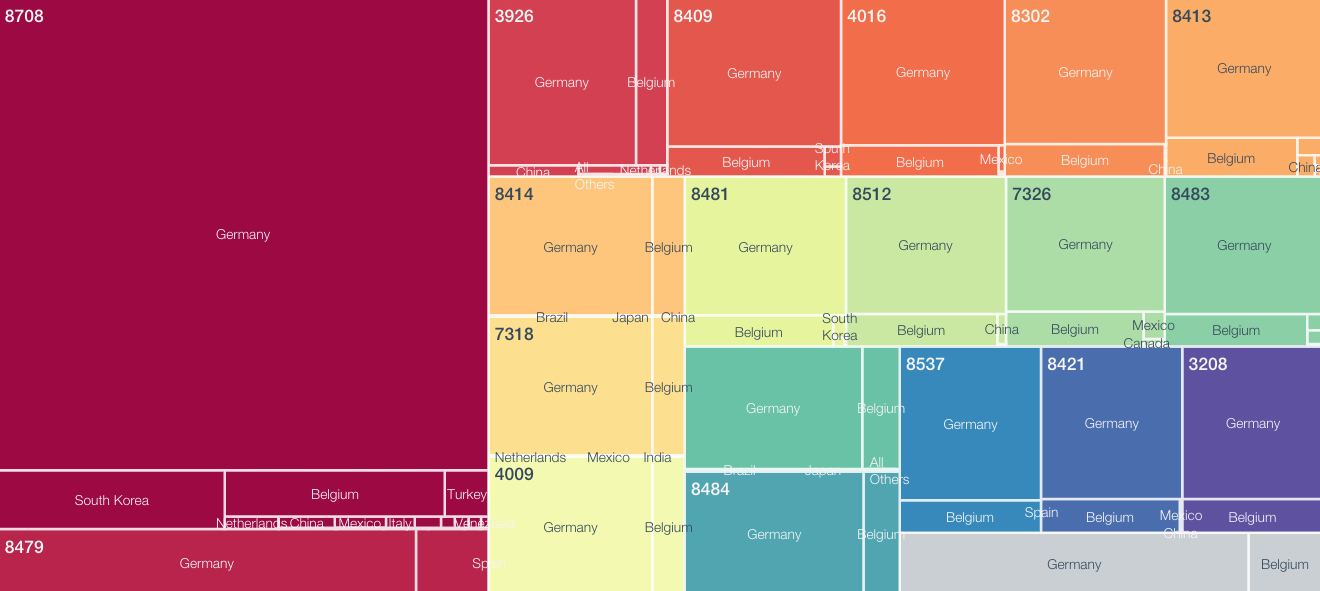
Source: Panjiva
The third potential area of disruption for Daimler relates to ongoing NAFTA negotiations. These have been held up because of disagreements around automotive rules of origin. A change in the rules could both disrupt intra-NAFTA supply chains – if the U.S.-specific components is increased – as well as its wide global supply chain if the absolute ROO threshold is increased.
The main effect would come from Daimler’s exports of commercial vehicles from Mexico which were led by semi-tractors ($4.9 billion or 78.0% of the total in the past 12 months) and goods trucks ($1.3 billion).

Source: Panjiva