Es
EsThe U.S. automotive industry took a marked step backwards in November, with sales which declined by 15.4% year over year, Panjiva’s analysis of official data shows. That reversed a 1.3% improvement in October and left sales of 1.19 million vehicles close to their levels in May as the industry was recovering from the first round of industrial lockdowns linked to the pandemic.
Sales of foreign autos continued their decline, with foreign built auto sales down by 25.3% and continuing a downturn stretching back more than a year. Sales of foreign built light trucks meanwhile fell by 8.8%, bringing the decline in total foreign built vehicles to 13.5%.

Source: Panjiva
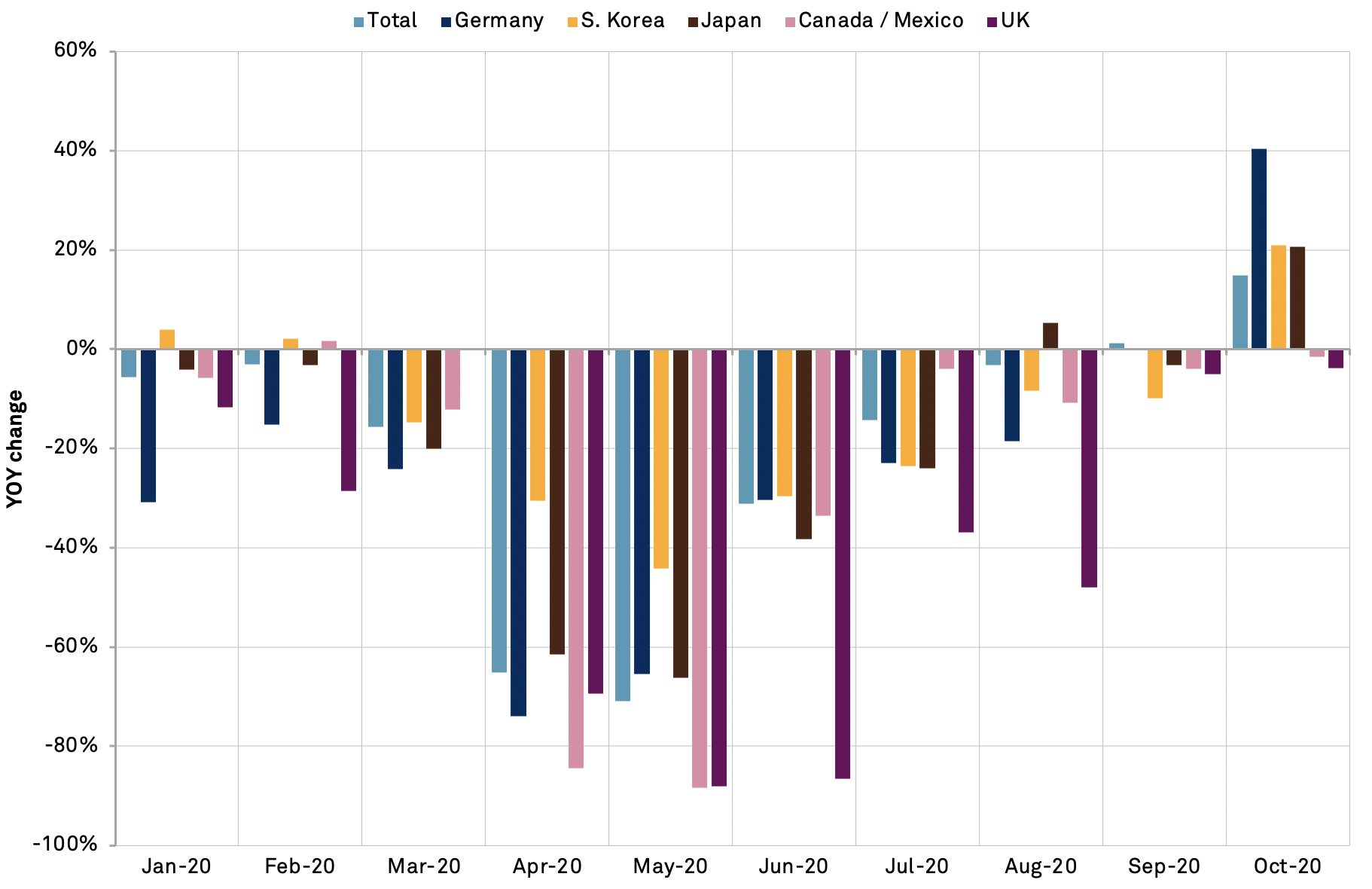
The major global automakers may be caught out having increased imports to the U.S. just as sales have potentially lost momentum. Panjiva’s data shows that total U.S. imports of vehicles rose by 14.8% year over year in October. That was led by a 40.0% increase in shipments from Germany. There was also a 20.5% rise in imports from Japan and a 21.0% increase in shipments from South Korea. Imports from Canada and Mexico meanwhile continued to decline with a 1.5% dip after a 3.9% decline in September.
There is some evidence of a slowdown though with imports by sea, which generally excludes shipments from Mexico and Canada which arrive by truck and rail for the most part, being down by 0.1% year over year in November.
Source: Panjiva
Aside from fluctuations in sales dynamics, the auto manufacturers also face ongoing disruptions to parts supplies as a result of pandemic-related closures of suppliers’ facilities, as outlined in Panjiva’s research of Dec. 9. There’s also been some logistics issues with closures of rail lines due to protests that have had to be contended with.
That comes at the same time as having to implement the requirements from the implementation of the USMCA trade deal from last July as well as the uncertainties regarding vehicle specifications that President-elect Biden’s environmental policies may bring.
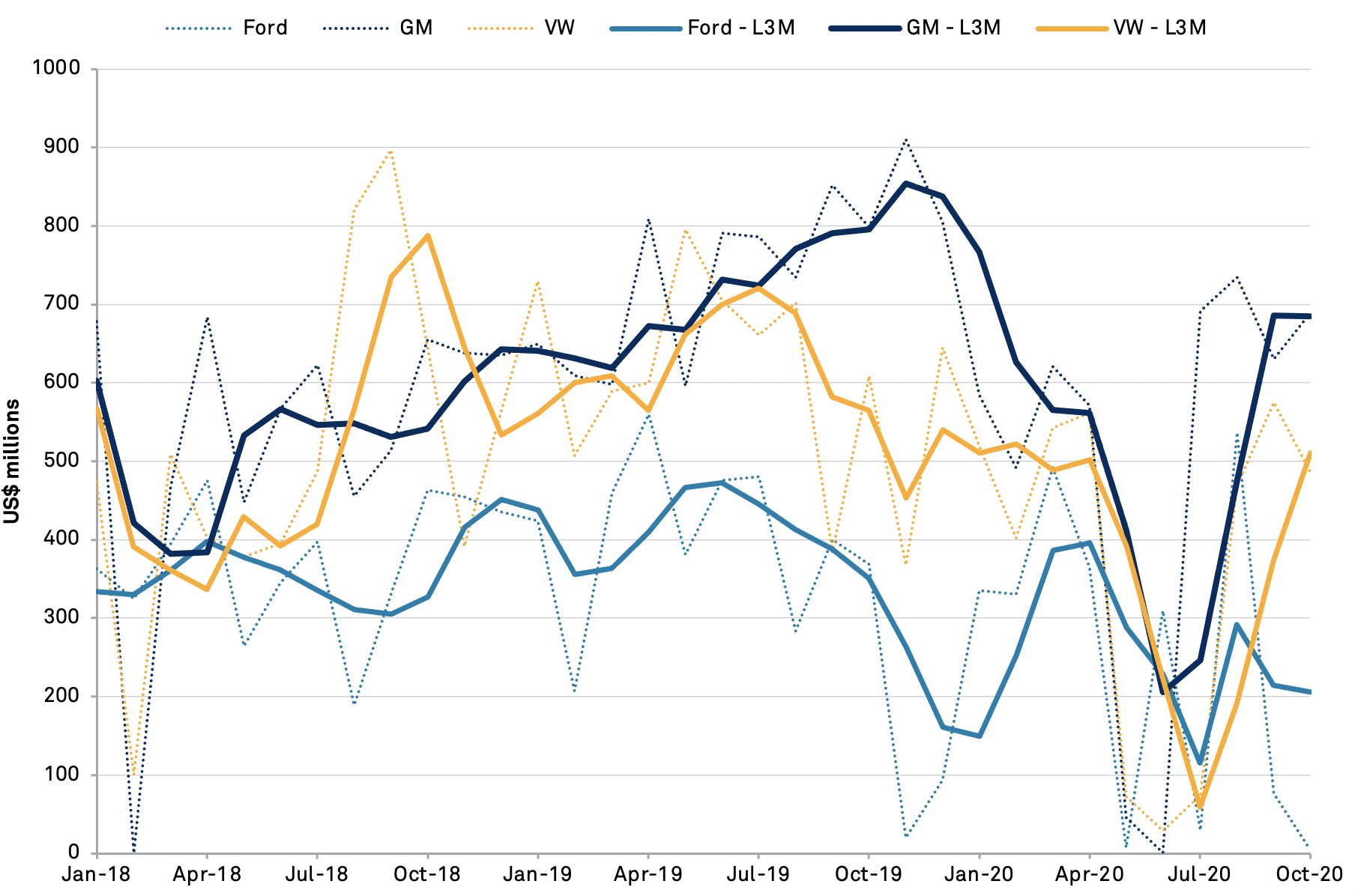
The volatility seen in supply chains during 2020 may provide an impetus for the major automakers to reconsider their strategies for manufacturing. Exports from Mexico to the U.S. in the meantime dipped 15.3% lower than a year earlier in October in dollar terms.
That included a 20.0% drop in shipments linked to Volkswagen while shipments linked to Ford have proven highly sporadic. In absolute terms the biggest drag came from the 13.7% slide in shipments linked to General Motors. Not all suppliers have been cutting back though, with Fiat Chrysler and Nissan increasing deliveries by 80.3% and 20.8%, though both had previously been lower a month earlier.
Source: Panjiva