Es
EsThe U.S. Department of Commerce issued final circumvention rulings on corrosion resistant steel (CORE) and cold rolled steel (CRS) shipped through Vietnam. The complaint, initiated by a petition from U.S. steel manufacturers, focused on steel subject to anti dumping (AD) and countervailing (CVD) duties from South Korea and Taiwan.
CORE duties were first imposed on South Korea and Taiwan in December 2015, while cold rolled steel duties started in February 2016. The AD/CVD process can be protracted and lead to reopeners, as outlined in Panjiva Basics of Oct 21.
CORE and CRS imports have been declining since late 2017, before Section 232 tariffs on steel and aluminum were announced. South Korea was exempted from the 232 tariffs on March 28th 2018, but anti-dumping and countervailing duties remained in place.
That trend has since continued with imports to the U.S. falling 17.5% and 20.6% year over year in the last 12 months to Oct 31 respectively in dollar terms. THat’s in part been due to a 10.5% decline in the domestic price of steel, suggesting overall demand may be overcoming any tariff effects.

data. Source: Panjiva
The core of the U.S. complaint is that steel from Taiwan and South Korea is being given a minor transformation before being reshipped as Vietnamese. Trade remedy investigations are slow however. While imports from South Korea and Taiwan fell by 29.3% and 27.8% year over year in the 12 months after CORE duties were placed in 2015, in the last 12 months to October 31 South Korea has reversed the trend, growing by 41.8% year over year.
Vietnam quickly reversed its course, possibly as a response to the announcement of the probe. As flagged in Panjiva research of Nov 22, the Vietnamese government has already led the government to crack-down on relabelled exports in order to avoid provoking the Trump Administration via re-exports of Chinese plywood. Imports from Taiwan also continued to fall, down 37.8% year over year.
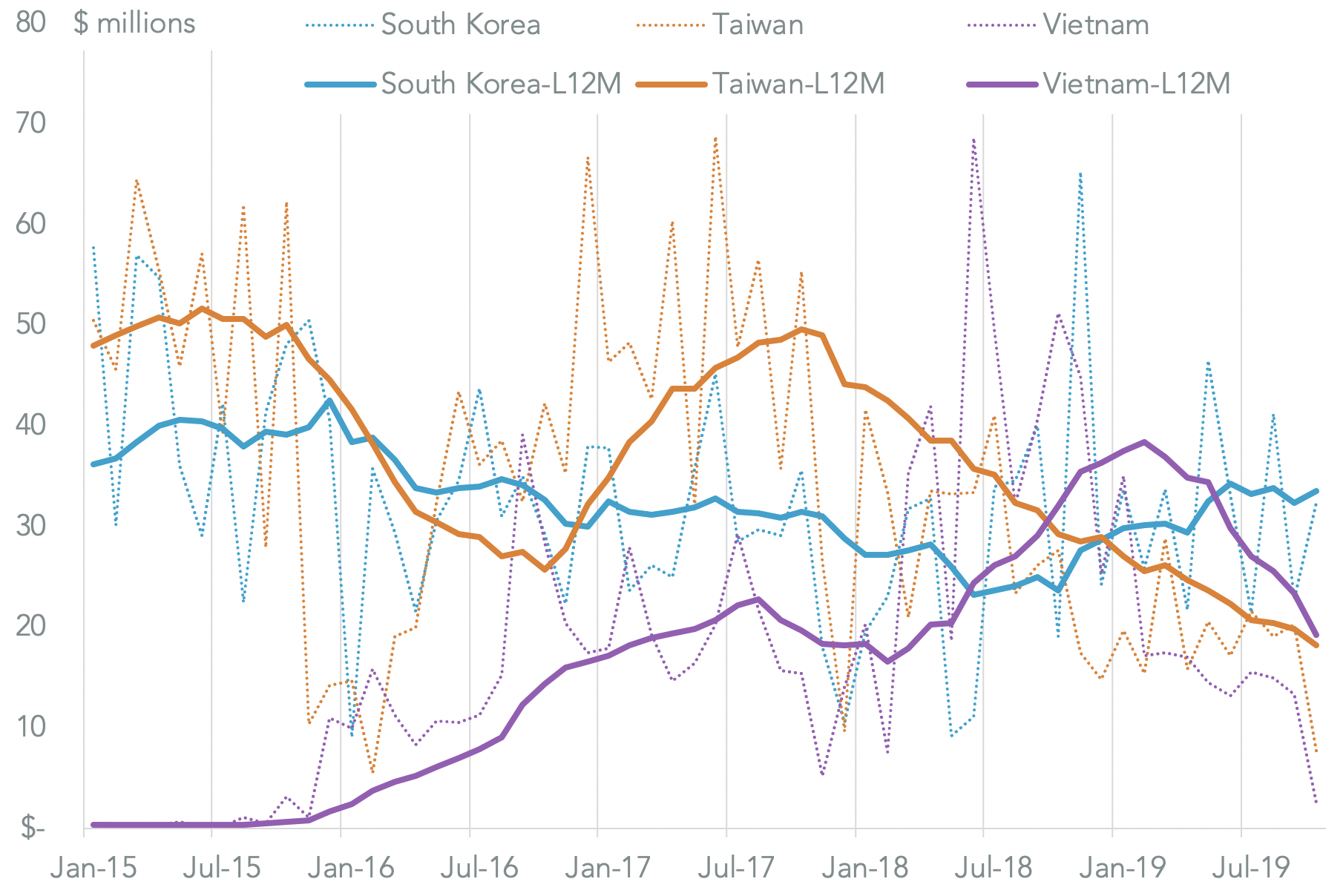
Chart segments U.S. imports of CORE from South Korea, Taiwan, and Vietnam on a monthly and twelve month basis. Source: Panjiva
Imports of cold rolled steel to the U.S. tell a similar story. Imports of steel from Vietnam increased by 444.9% year over year in the 12 months after duties were imposed in Feb 2016, while imports from South Korea fell 10.5%.
Taiwan did not see a negative impact from the duties – imports to the U.S. increased by 80.6% in dollar terms. Imports of Taiwanese and South Korean CRS are up 2.6% and 46.3% year over year in the last 12 months to Oct 31, while Vietnamese imports are down 10.7%. This may be an example of AD and CVD rulings applying the desired leveling effect to import sources as Vietnam cracks down on re-exports.
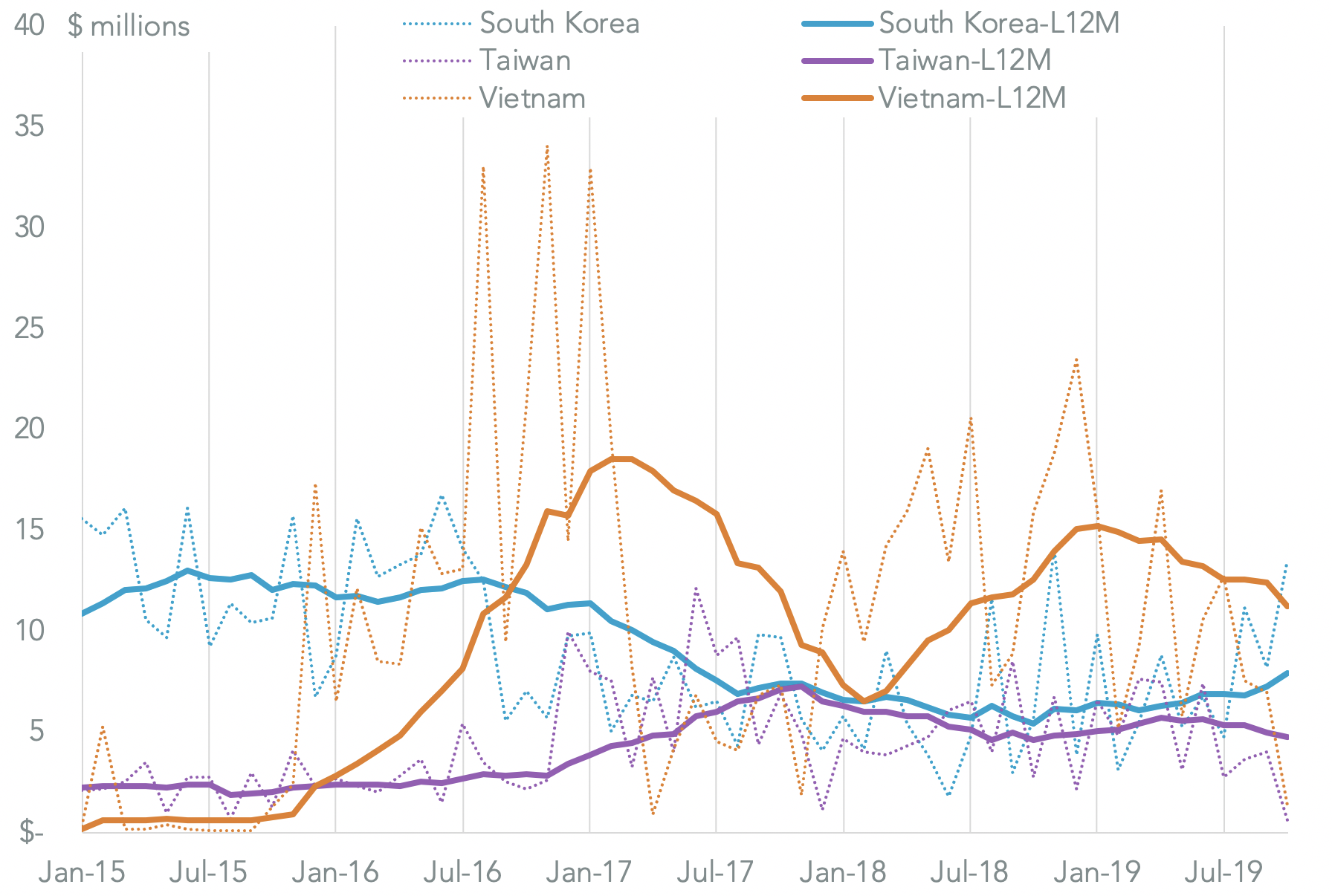
Chart segments U.S. Imports of CRS from South Korea, Taiwan, and Vietnam on a monthly and twelve month basis. Source: Panjiva
Panjiva data shows that U.S. seaborne imports associated with Hyundai Steel were sourced 28.7% from South Korea and Taiwan over the last 12 months to Oct. 31, amounting to just over 400 thousand tons.
Meanwhile total imports linked to Hyundai and its competitor Posco to the U.S. rose by 5.1% and 33.0% year over year respectively over the same period. In contrast, Dongkuk Steel Mill is falling behind, with imports associated with the firm having fallen by 9.5%.
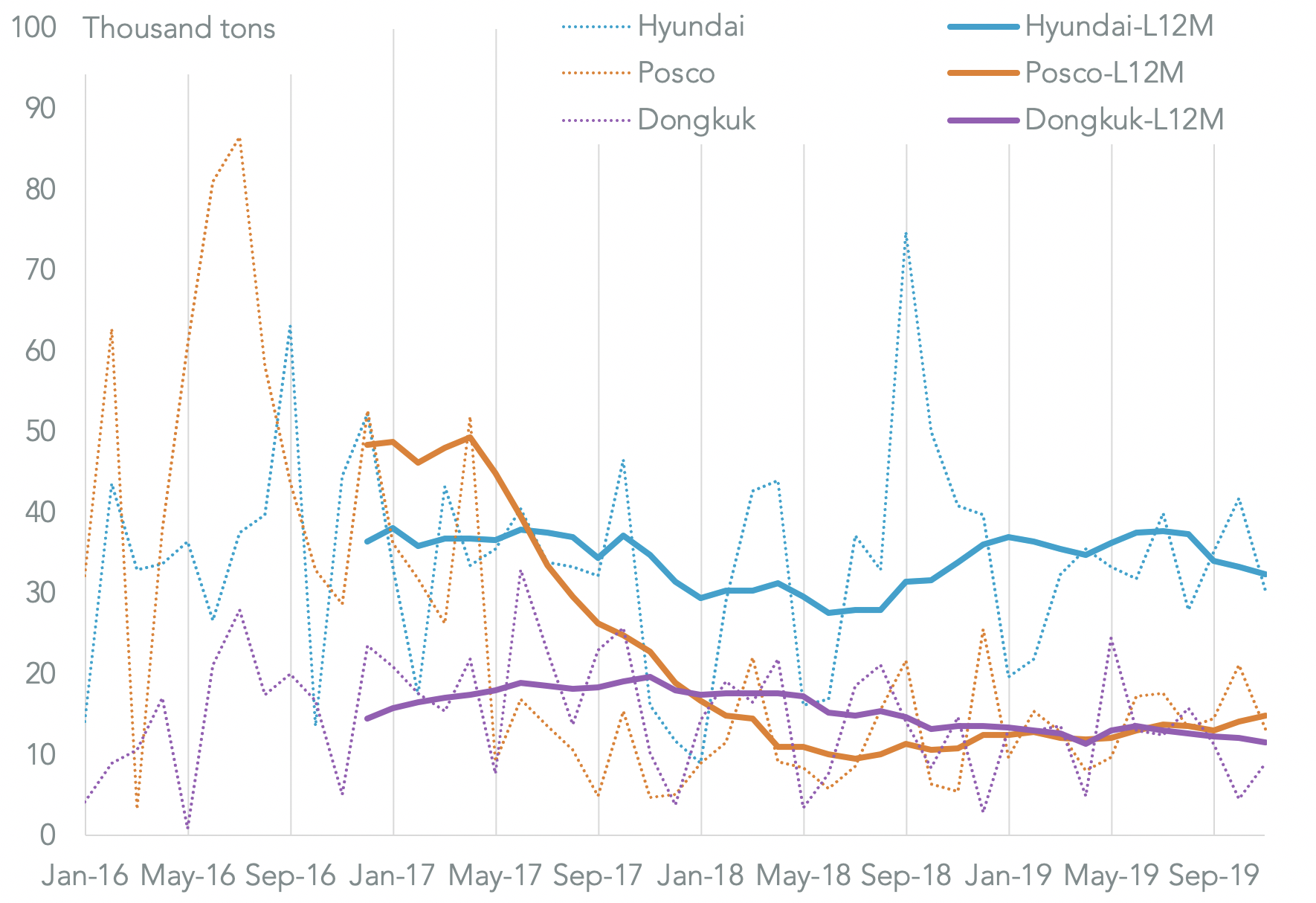
Chart segments U.S. imports of steel associated with Hyundai, Posco, and Dongkuk South Korea and Taiwan on a monthly and twelve month basis. Source: Panjiva