Es
EsThe Indian government may apply wide-ranging duties and other measures on imports of “non-essential” items to try and limit the expansion in the current account deficit and decline in the rupee. While that would be consistent with the wider “Make in India” strategy of using tariffs to promote domestic manufacturing it may not make a significant difference to the deficit, which reached $174 billion in the 12 months to August 31. The main driver of the growth in the deficit was the rise in energy imports which (net of exports) drove 83% of the increase in dollar terms after the oil price c...
Related Research
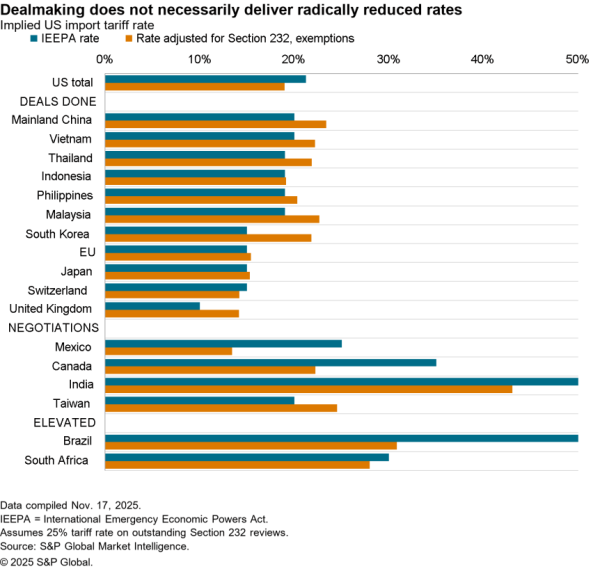
Supply Chain Edge: More deals, fewer tariffs; a decade of automotive change; winter chills begin
– A renewed round of trade deal frameworks announced by the US government has brought the total to 13 with a wide mix of concessi... Read more →
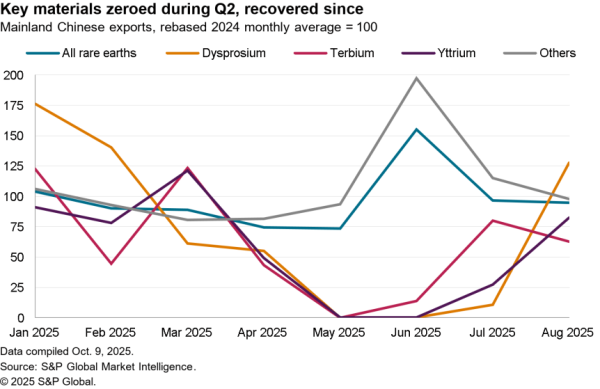
Supply Chain Edge: Rising tech tensions, Philippine focus, tariff margin math
– Trade tensions moved beyond import duties in the past week. Mainland China tightened export restrictions for rare earths, addin... Read more →
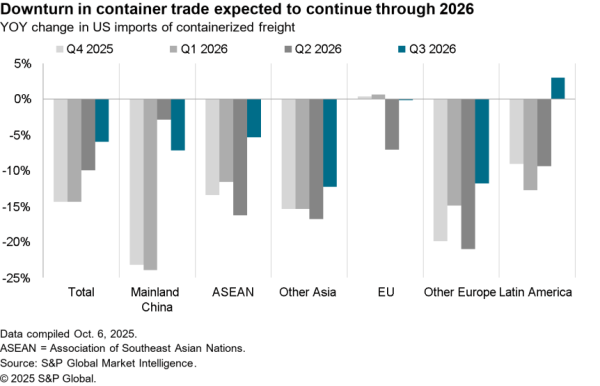
Supply Chain Edge: Inflection points, cyberattacks, fire disruptions
Key findings – US supply chain activity is at an inflection point, our latest outlook shows, with an early end to the peak shippi... Read more →
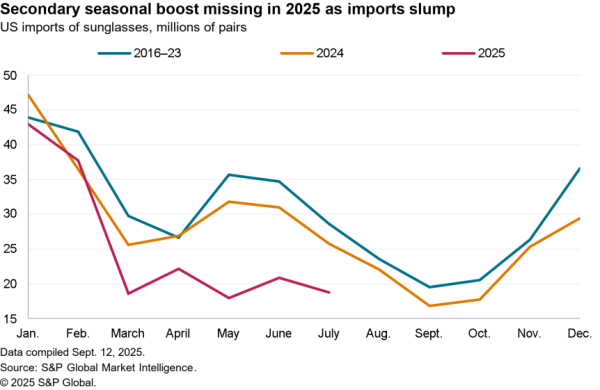
Supply Chain Edge: Smarter glasses, pricier Xbox, looser cobalt
Key highlights – Summer may be gone, but sunglasses remain in the spotlight as EssilorLuxottica SA and Meta Platforms Inc. launch... Read more →
Copyright © 2025 Panjiva Supply Chain Intelligence, a product offering from S&P Global Market Intelligence Inc. All rights reserved.