Es
EsA proposed draft of U.S. guidelines for NAFTA renegotiation may include a “snapback” provision to reinstate tariffs on a product if there is a flood of imports that may injure domestic injury, the Wall Street Journal reports. The document also doesn’t refer specifically to deficit targets. That would suggest that the “new NAFTA” would be focussed more on solving emerging problems – providing something of an amnesty for past changes – rather than trying to change existing deficit drivers.
The compromise approach, and apparent tweaks rather than wholesale review, appears to be consistent with meetings held between President Trump and Prime Minister Trudeau, as outlined in Panjiva research of February 14. It is also potentially a more conciliatory position than hawkish language from the Mexican government suggests. Nothing is firm, however, until the Trump administration actually completes the overdue start of 90 days of consultations with Congress on the negotiation terms.
Panjiva analysis of the top 1000 export lines between the U.S. and Mexico in January 2017, compared with a year earlier, shows there would be plenty of areas of potential investigation. Putting aside the auto and energy industries there were marked increases in amplifier semiconductors (26-fold increase, adding $40.6 million to imports), polyethylene (671%), non-carbon steel sections (598% increase) and non-cotton shirts (423%). In the auto industry there were also marked increases in auto engines, batteries, low capacity diesel autos and mid-sized heavy trucks.
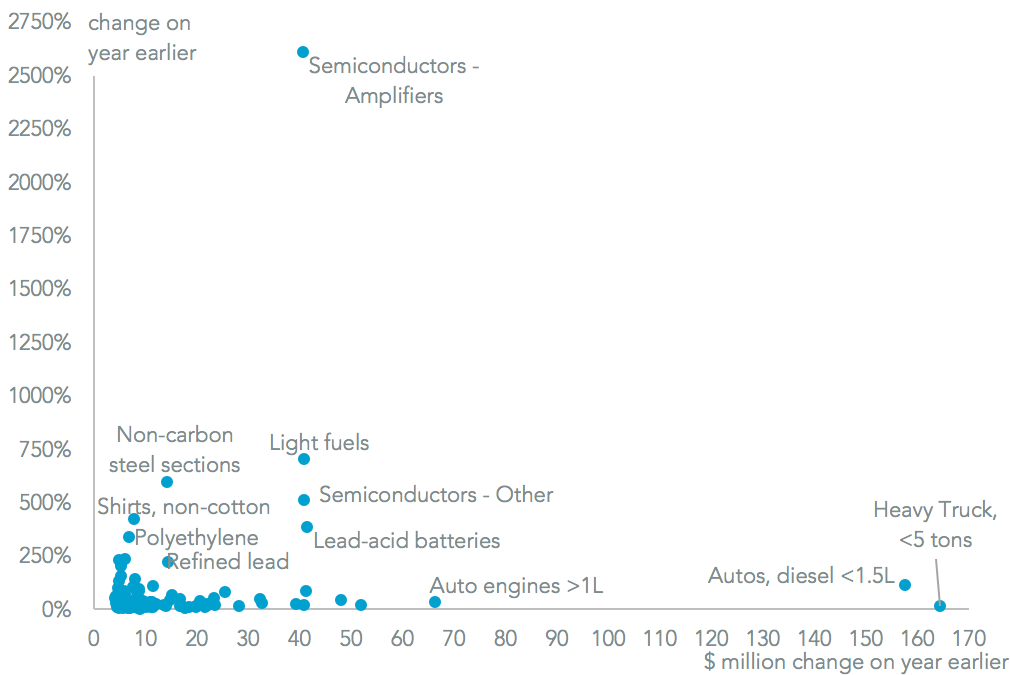
Source: Panjiva