Es
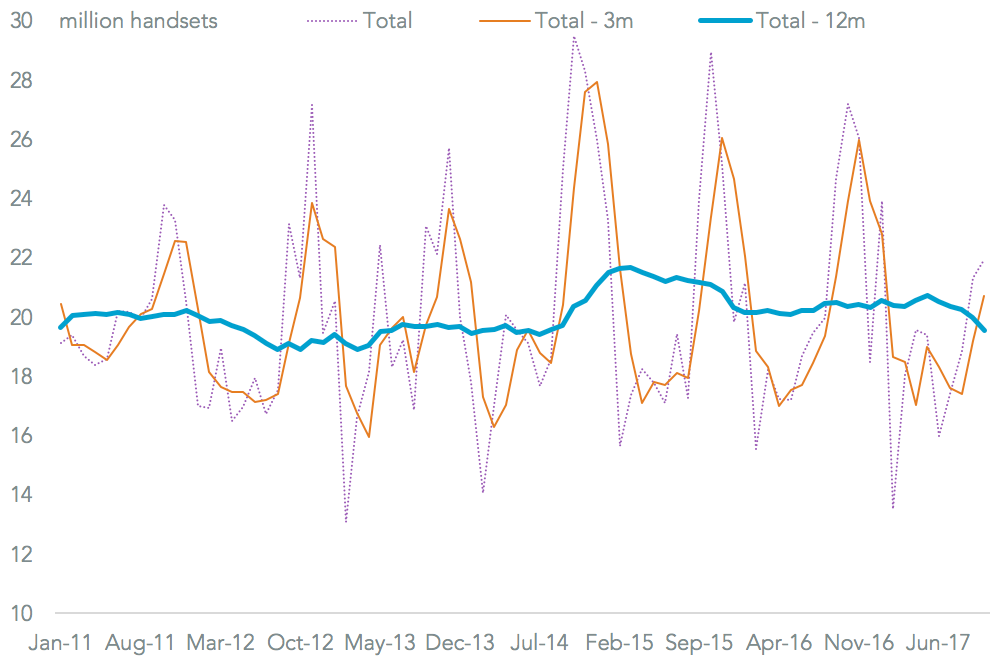
Es2017 is shaping up to be a poor year for smartphone manufacturers. Panjiva data shows U.S. imports of mobile phone handsets fell 19.3% on a year earlier in October. That was the worst year-on-year change since December 2015, and brough the three month average 13.5% lower than the year before.
The slowdown may reflect the phased release of Apple’s iPhones, though November is the peak month for imports historically. There may also be a slowdown going into the new year after Samsung indicated an earlier-than-usual release of its S9 product line, Bloomberg reports. The trailing 12 month total of 234 million handsets is the lowest since July 2014.
Source: Panjiva
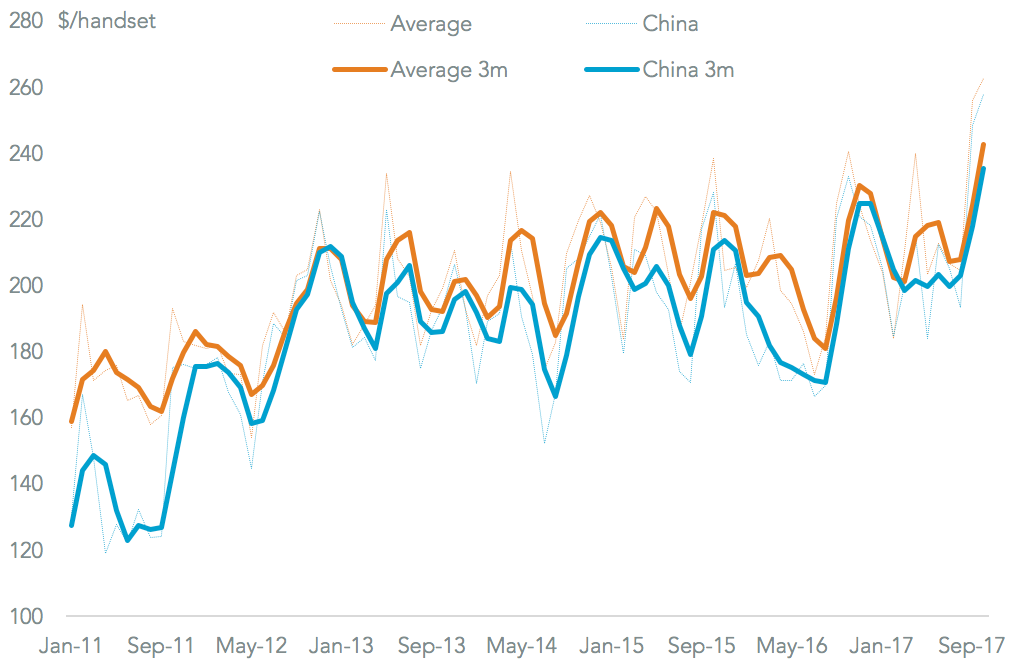
On a more positive note the trend of rising import values per handset – a proxy for price – has continued to rise, with an 11.3% rise in the past three months. The single month total of $262 per handset for October is the highest on record after handsets from China climbed 10.7% in the month. The improvement will likely be seen in November too given the higher price point of the iPhone X.
Source: Panjiva
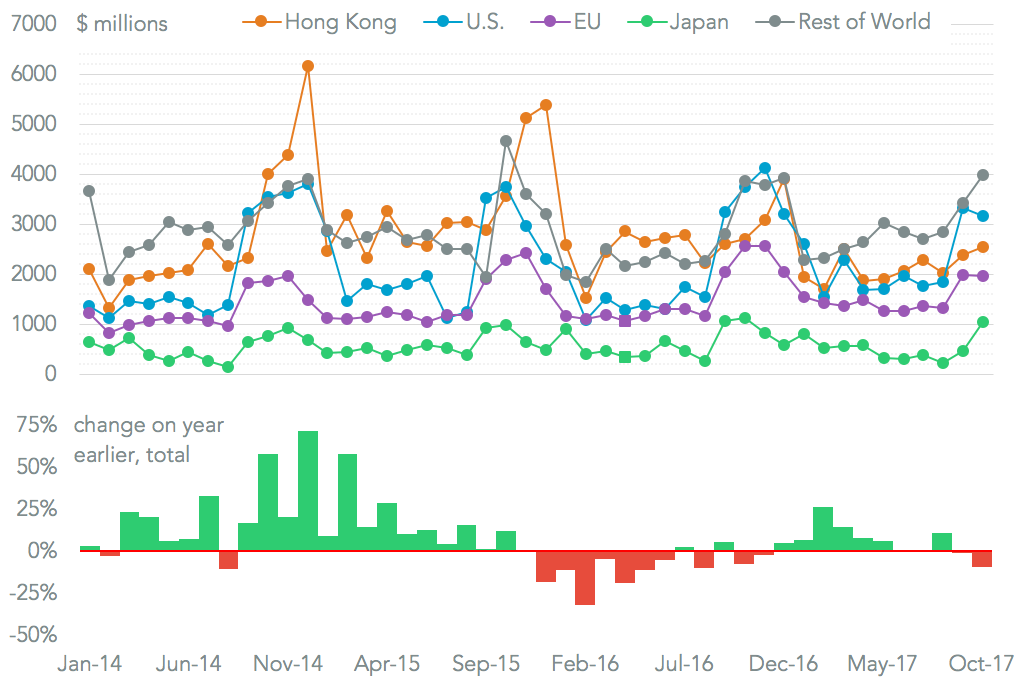
Sadly the pattern of lower demand does not appear to be limited to the U.S. Chinese exports fell 9.5% in October in dollar terms, leaving the total for the past three months 2.2% lower than the year earlier. There was an improvement of 2.9% in exports outside the big three markets (the U.S., the EU and Japan) which may reflect improving sales to emerging markets.
Source: Panjiva
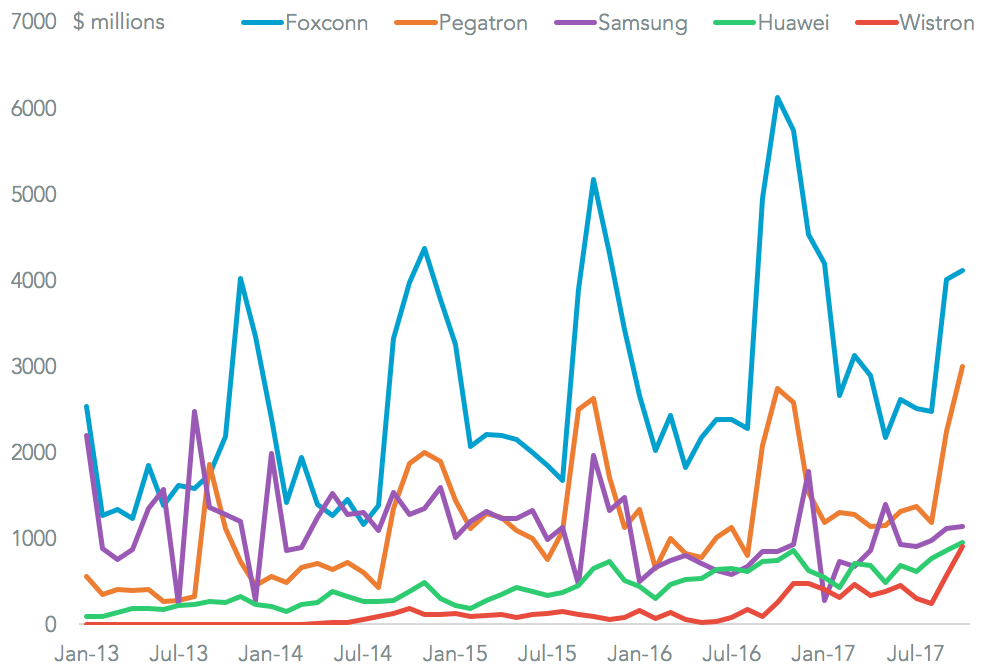
Among the emerging markets specialists Huawei saw a 27.2% rise in shipments in October. Samsung Electronics also did better with a 33.5% improvement, which may also reflect improved sentiment towards its handsets over a year after the its battery problems.
EM producers Huawei +27.2%. Samsung recover +33.5% may reflect broader improvement.
While overall shipments are down, there also appears to have been a significant shift in supply chains. Foxconn, historically Apple’s largest supplier, saw a 33.0% slump in October. It likely lost share within Apple supply chain to Pegatron (which was 9.6% better) and Wistron. The latter accounted for a 5.3% share of all exports, 3.3x the level of a year earlier.
Source: Panjiva
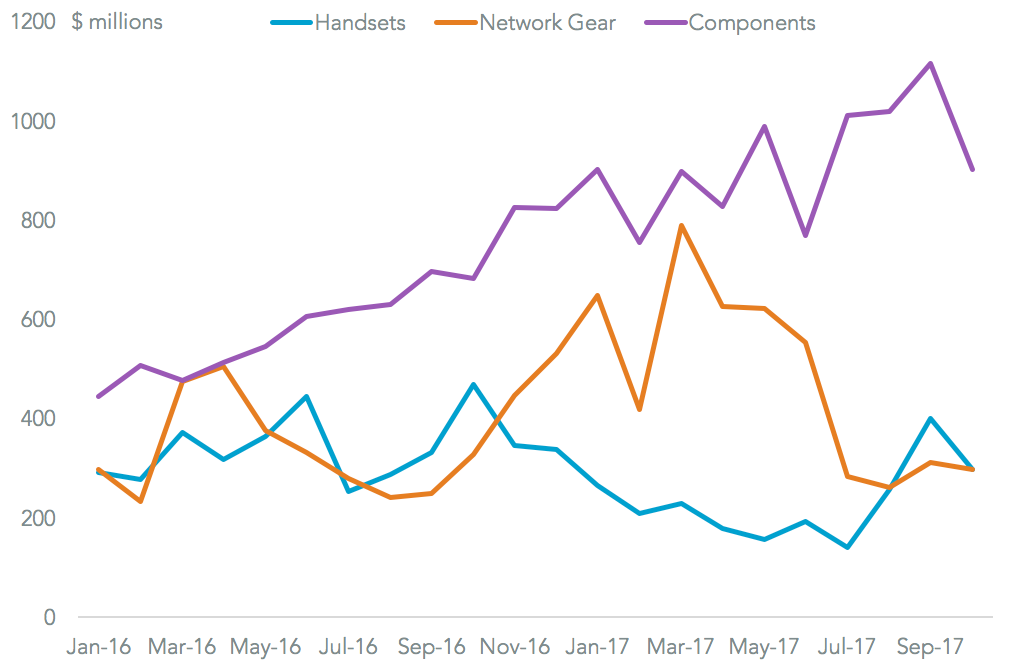
Wistron also responsible for Apple India expansion, though it has reportedly faced problems in securing sales. That can be seen in a slide in handsets from all manufacturers in October with a 36.5% drop vs. a year earlier. Local production is still increasing though, with imports of components rising 1.3% in October and 24.2% in the past three months. Manufacturers may be anticipating increased import duties from the government, as outlined in Panjiva research of December 11.
Source: Panjiva