Es
EsPresident Donald Trump’s first State of the Union address to Congress will likely include a discussion of trade policy. As outlined in Panjiva research of January 18, the President’s administration has launched 26 major trade policy initiatives during its first year in office. It has an opportunity to build momentum after the recent section 201 tariff decisions ahead of the midterm elections in November. The potential actions in the address can be broken down into likely, possible and unlikely buckets.
Likely – Trade Scorecard and Infrastructure Plans
The President will likely highlight a selection of the meaningful trade policy actions already taken. These may include the withdrawal from TPP, the start of NAFTA and KORUS negotiations and the section 201 tariff decisions on washing machines and tariffs, as an indication that trade policy commitments are being acted upon.
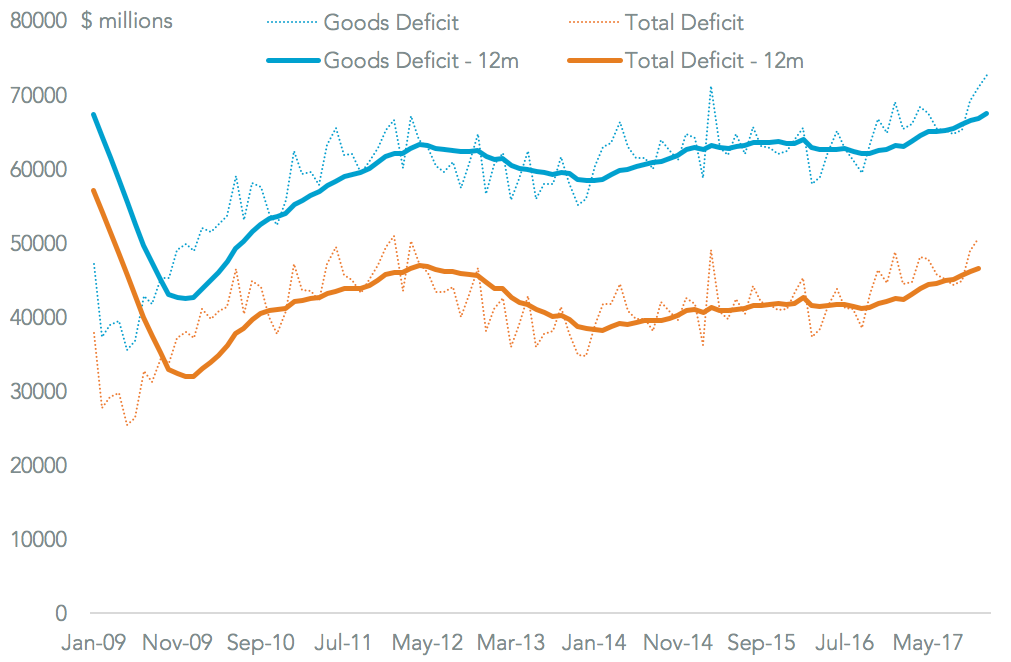
The central target of achieving “fair and reciprocal” trade with America’s partners is still a long way from fruition however. The merchandise trade deficit – the administration’s key metric for success (or otherwise) of deals and fairness (or otherwise) of trade relations – reached the highest for a single month since 2008 at $71.6 billion in December 2017. That resulted in a full year total of $796 billion, which was 8.1% higher than the level seen in 2016.
Source: Panjiva
The major driver of the growth in the deficit has been the rapid growth of the American economy. That has put an increasing strain on logistics infrastructure – incoming port activity has climbed by 4.4% annually for the past eight years and 4.1% in 2017, Panjiva data shows. The President is likely to outline a significant infrastructure investment plan, which could use $200 billion of federal funds Bloomberg reports.

Source: Panjiva
Possible – Early Action on s232; Specifics on s301
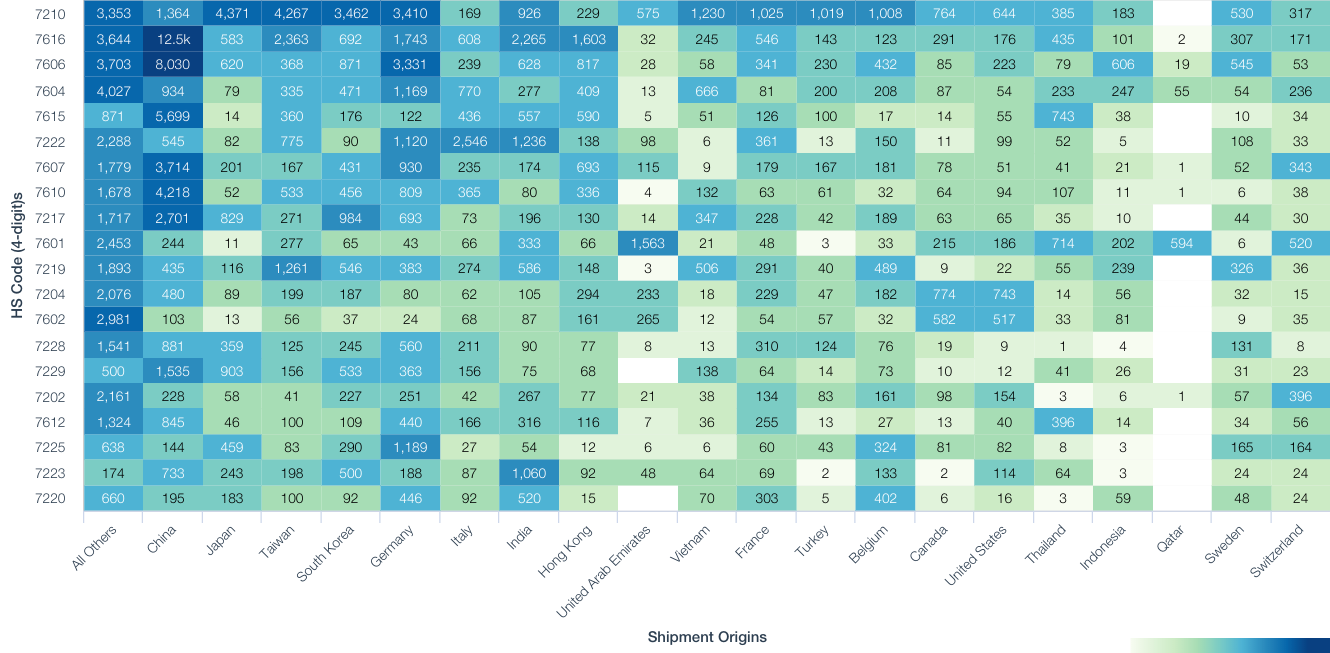
The State of the Union is not normally a forum for policy details, but given the President has already received recommendation on – and is on a deadline to deliver decisions about – the section 232 reviews of the steel and aluminum a specific commitment might be made. With seaborne imports of iron and steel up 9.3% in 2017 vs. 2016 and aluminum by 9.8% there is certainly no shortage of impetus to act. The challenge will be finding the “right” targets – for example the two biggest products to act on in aluminum vis-a-vis China are already under separate investigations.
Source: Panjiva
The President has put action against China at the center of his trade policy, with the country also identified as an adversary in the National Security Strategy announced on December 18. The section 301 review of China’s intellectual property practices could be used in a number of different ways, ranging from measures to restrict Chinese investment in the U.S. and industrial policy through to trade tariffs.
The administration may be willing to use tariffs on consumer goods to deliver such aims – as shown by the section 201 review of washing machines it would appear the risk of higher costs for consumers are not a block to a tariff decision.
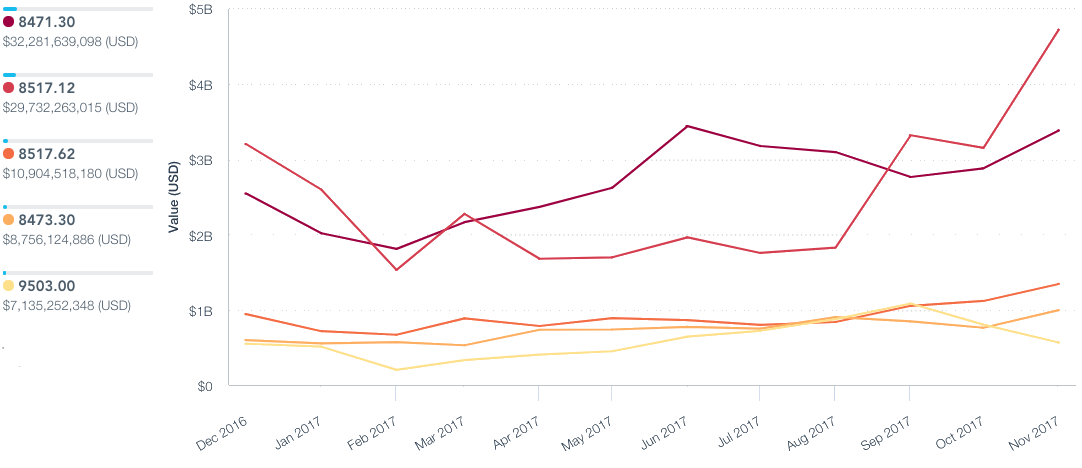
Three of the top five Chinese exports to the U.S. are consumer goods – PCs (7.6% of the total in the past 12 months), phones (7.0%) and toys (1.7%). Limits to the other two would increase costs to American industry, but would also meet technological concerns, with PC parts worth 2.1% of the total and telecoms network equipment worth 2.6%. The latter may also be limited by a potential nationalization of 5G telecoms investments reported by Axios.
Source: Panjiva
Unlikely – “Terminate” NAFTA or KORUS; Declare Trade War with Europe
President Trump’s tone with regards to the quality of the NAFTA and KORUS trade deals has been consistently negative, but his willingness to withdraw from either has varied. It seems unlikely that a withdrawal from NAFTA immediately after round six of talks, or from KORUS in the midst of the current round of talks would make sense.
The President has, however, taken a more hawkish tone with regards to trade with Europe, returning to the “very unfair” trade rhetoric seen during the election campaign in 2016, according to an interview with ITV. That could include action that is “very much to the detriment” of the EU.
It isn’t clear what vehicle would be used at this stage, and it seems unlikely that a policy approach like the broad-based section 301 review with China would be used. That said, leading EU seaborne exports to the U.S. include sectors that may be impacted by other trade actions such as NAFTA negotiations (7.9% of imports are automotive parts).

Source: Panjiva