Es
EsThe U.S. advance goods trade deficit, due to be published on March 28, will be the first covering a full period under the Trump administration. There is a possibility that figures may be presented with re-exports excluded, as discussed in Panjiva research of February 20, though no indications have yet been provided by the Census Bureau.
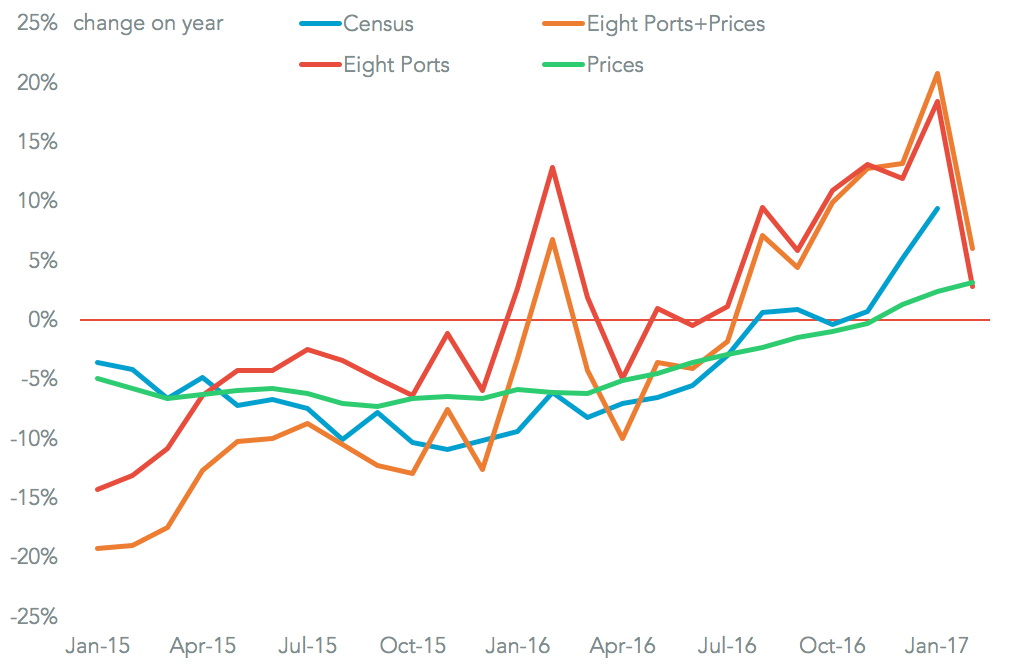
Exports likely increased on a year earlier. Average export prices increased 3.1%, reflecting higher fuel prices and non-automotive transportation equipment. Added to this Panjiva analysis of figures from eight major ports groups (three in California, Savannah, Charleston, Virginia and Seattle/Tacoma) indicate an expansion of 2.8% on a year earlier.
Source: Panjiva
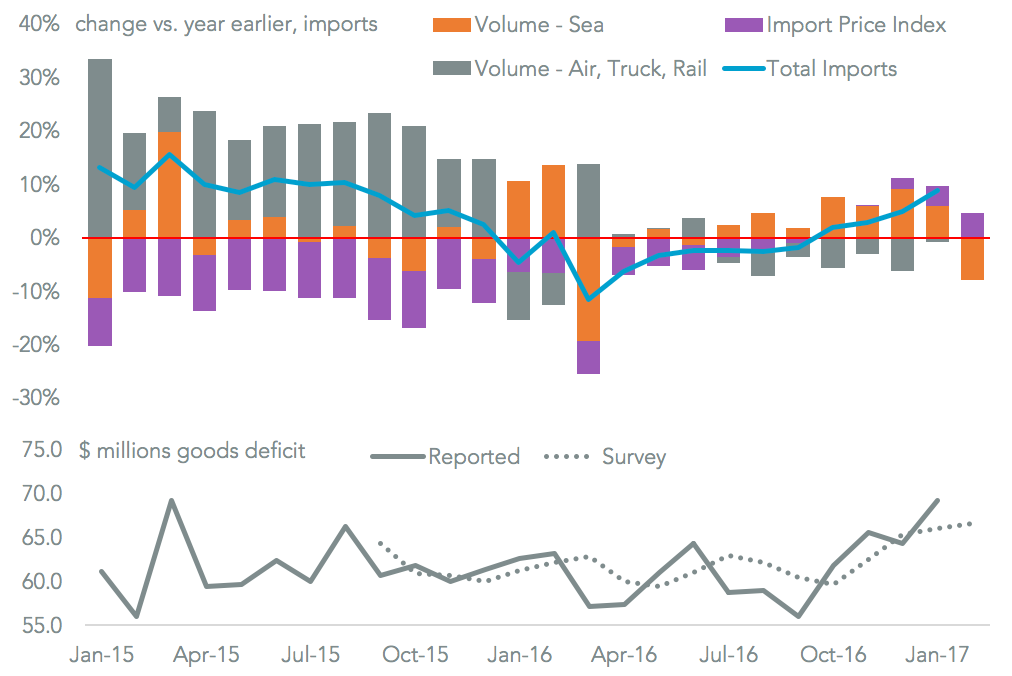
Imports, by contrast, may have contracted. Panjiva data shows seaborne shipments across all seaports fell 7.8% on a year earlier. That was the result of a drop across almost all major categories including a marked reversal in furniture imports. The decline will be partly offset by import prices, which increased 4.8% as a result of a two-thirds jump in oil prices.
So, export volumes increase significantly more than imports while export prices increased only a little less than those for imports. Economists surveyed by Bloomberg currently expect the goods deficit to rise to $66.6 billion from $63.2 billion a year earlier but down from the $69.2 billion reported in January.
Source: Panjiva