Es
EsU.S. imports of spirits have increased 3.3% in the 12 months to March 31 on a year earlier, Panjiva data shows. That lagged the 5.9% rise in imports of beer, as discussed in Panjiva research of May 24, but beat the 1.6% rise in wine shipments. A more marked shift has been seen in the first quarter, with imports from Mexico rising 6.4% in volume terms while shipments from France and the U.K. fell 4.3% and 6.5% respectively. That came despite a 7.7% reduction in the average cost (defined as customs value divided by volumes) of British spirits resulting from the weaker pound.

Source: Panjiva
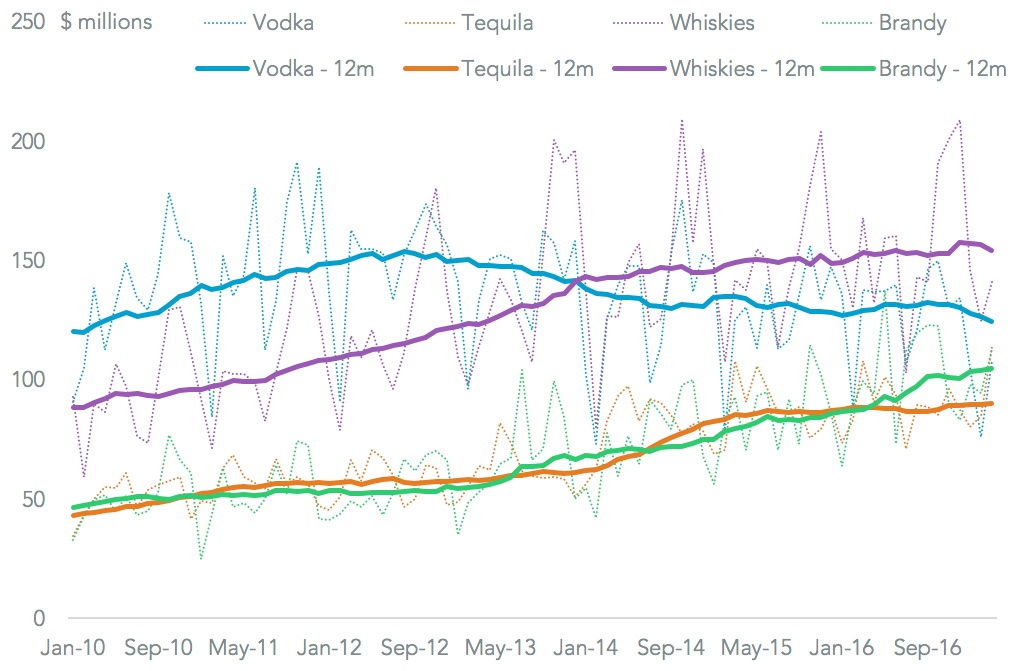
The change in sourcing also reflect a marked shift in the mix of spirits being consumed. Imports of tequila hit a new high in March, having climbed 5.3% on a year earlier and 40.9% compared to three years ago on an annualized basis. That meant tequila accounted for 15.2% of imports, up from 11.8% three years ago.
That was mostly at the expense of vodkas, which dropped to a 20.9% market share from 31.0%, which also lost out to brandies and whiskies over the same period. Among the major shippers to the U.S. that likely means that Absolut has lost out the most due to its focus on vodka. It may also suffer short-term due to disruptions to shipping out of Sweden. Among brandy shippers, Remy Cointreau is the leader.
Source: Panjiva
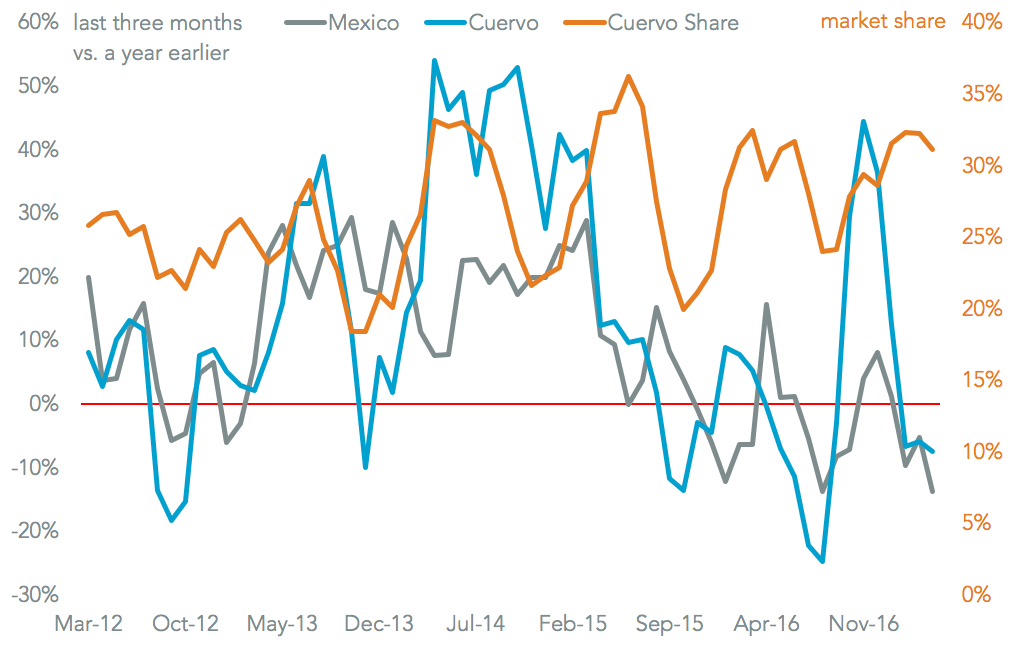
While there may have been a rush to ship tequila to the U.S. the global fortunes of Mexican tequila shippers is not as strong. Exports in the three months to April 30 were 13.8% lower than a year earlier, the fastest rate of decline since at least 2012. Number one shipper Jose Cuervo has not seen as fast a slowdown, dropping 7.5%, despite an acceleration in exports ahead of its initial public offering.
Source: Panjiva
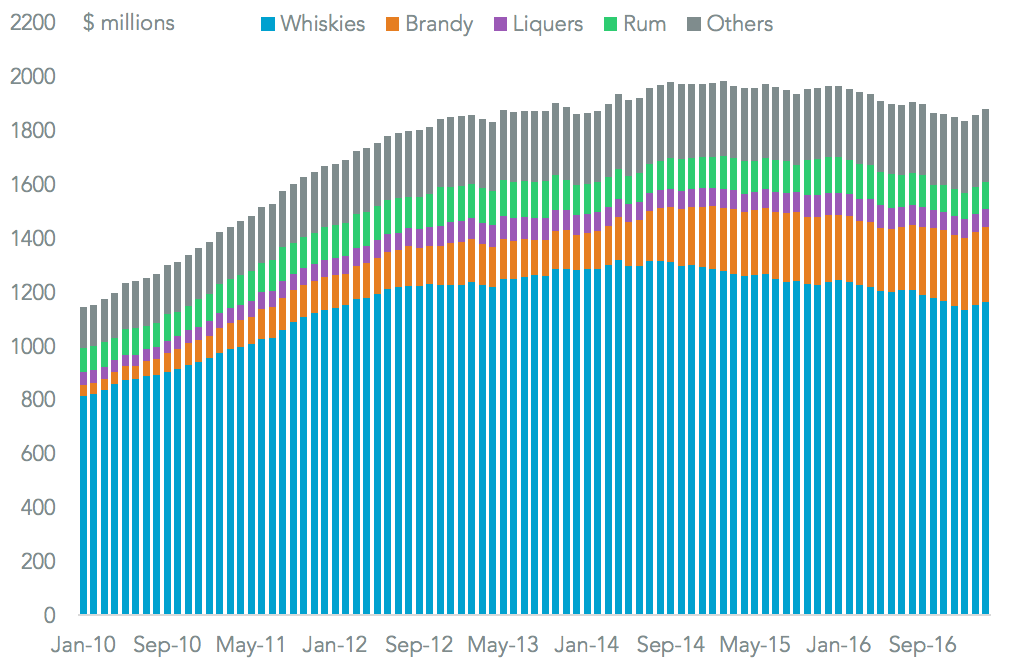
Coming back to the U.S., in common with its trade position more broadly the country runs a deficit in terms of spirits. Total exports lagged imports by $5.26 billion in the 12 months to March 31. Demand for U.S. spirits also fell, by 3.4% in the past year, due to a 5.0% drop in demand for whiskies including bourbon. That may be related to the stronger dollar making U.S. products more expensive.
The relative success of American brandies, which increased 15.6% in the past year, show marketing can help too. The administration of President Donald Trump has not yet made clear its position on promoting alcohol exports as part of its renewed focus on bilateral trade deals. Trade with Japan and China may be represent major opportunities in this regard.
Source: Panjiva