Es
EsMexico’s President Andres Manuel Lopez Obrador has reiterated his aim to improve the country’s energy self-sufficiency, Reuters reports, stating he does not “want to be a colony of any foreign country“. The matter is particularly pressing in the short-term given Mexico’s income from energy exports is under threat from potential U.S. tariffs, as outlined in Panjiva’s research of May 31.
Panjiva data shows Mexico exports 58.1% of its crude oil to the U.S. in the 12 months to Apr. 30. It has also become increasingly reliant on the U.S. with shipments to the U.S. having climbed 1.8% year over year in the three months to Apr. 30 while exports to the rest of the world fell 15.6%.
The tariffs will present a challenge both the national oil exporter Pemex as well as U.S. gulf coast refiners including Shell and Valero according to S&P Global Platts.
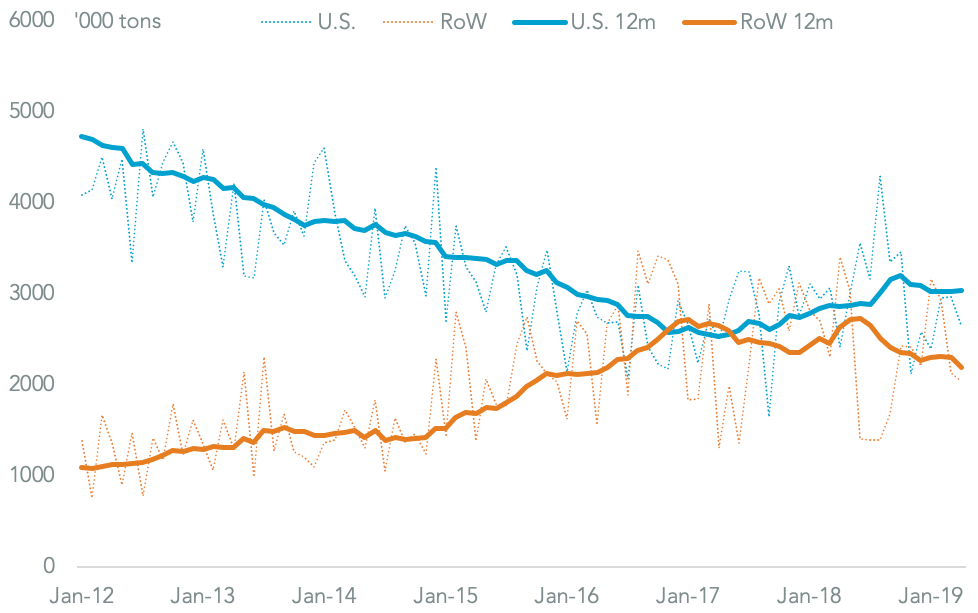
Source: Panjiva
The President has called for funding for six refineries for oil products using Mexican crude as part of the energy independence plan. Lower export revenues due to tariffs could lead the government to retain more Mexican crude.
Mexico’s imports of refined oil products outnumber its exports by 7.6-to-1 after imports surged 17.4% year over year annually in the three years to Apr. 30 while exports fell 16.3% over the same period. More recently the reliability of supplies has been beset by strikes around ports and theft from pipelines.

Source: Panjiva
Implementing the refinery investment plan will take several years, though will eventually erode supplies from overseas refiners. The largest refiner supplying Mexico directly was Tesoro with $369 million shipped from the U.S. in the 12 months to Apr. 30.
That was followed by Valero with $243 million and ExxonMobil at $105 million. Major oil traders including Vitol and Novum may also lose business if Pemex cuts its overseas purchases.

Source: Panjiva