Es
EsThe U.S. and EU have signed a deal that reduces tariffs around $271 million of bilateral trade “as part of improving EU-U.S. relations“. It should at least be WTO-compliant given both sides are cutting duties to MFN levels.
The action is even smaller than the “mini deals” the U.S. has signed with Japan and others which cover a wide range of goods and service arrangements. Trade deal wins, however small, are a potential positive for the Trump administration in vindicating its trade deal strategy during the election year. It particularly contrasts President Trump’s bilateral approach to former Vice President Biden’s multilateral approach discussed in Panjiva’s Q3 Outlook.
From an EU perspective the deal appears to run against the long-term practice of only signing full trade deals. The move is likely designed to reduce near-term risks to the automotive industry given earlier threats from the Trump administration to apply tariffs to U.S. automotive exports in retaliation for EU restrictions on lobster imports as outlined in Panjiva’s research of June 9.
Aside from the improving relations cited above the two sides have also stated that the deal is “just the beginning of a process” that could lead to further agreements. The move comes against a backdrop of continued conflict between the two sides on aerospace subsidies as well as EU countries’ plans for digital services taxes. Indeed, the lobster-based “pico deal” may be a template for resolving such issues.
The deal comes just in time for the seasonal upturn in U.S. exports of lobster and crab which typically peak in October, Panjiva’s data shows. U.S. exports of lobster to the EU dropped by 51.7% year over year in the 12 months to June 30 and represented just 5.4% of the total. Total exports meanwhile dropped by 17.0% over the same period and hit the lowest for a single month in June since at least 2009.
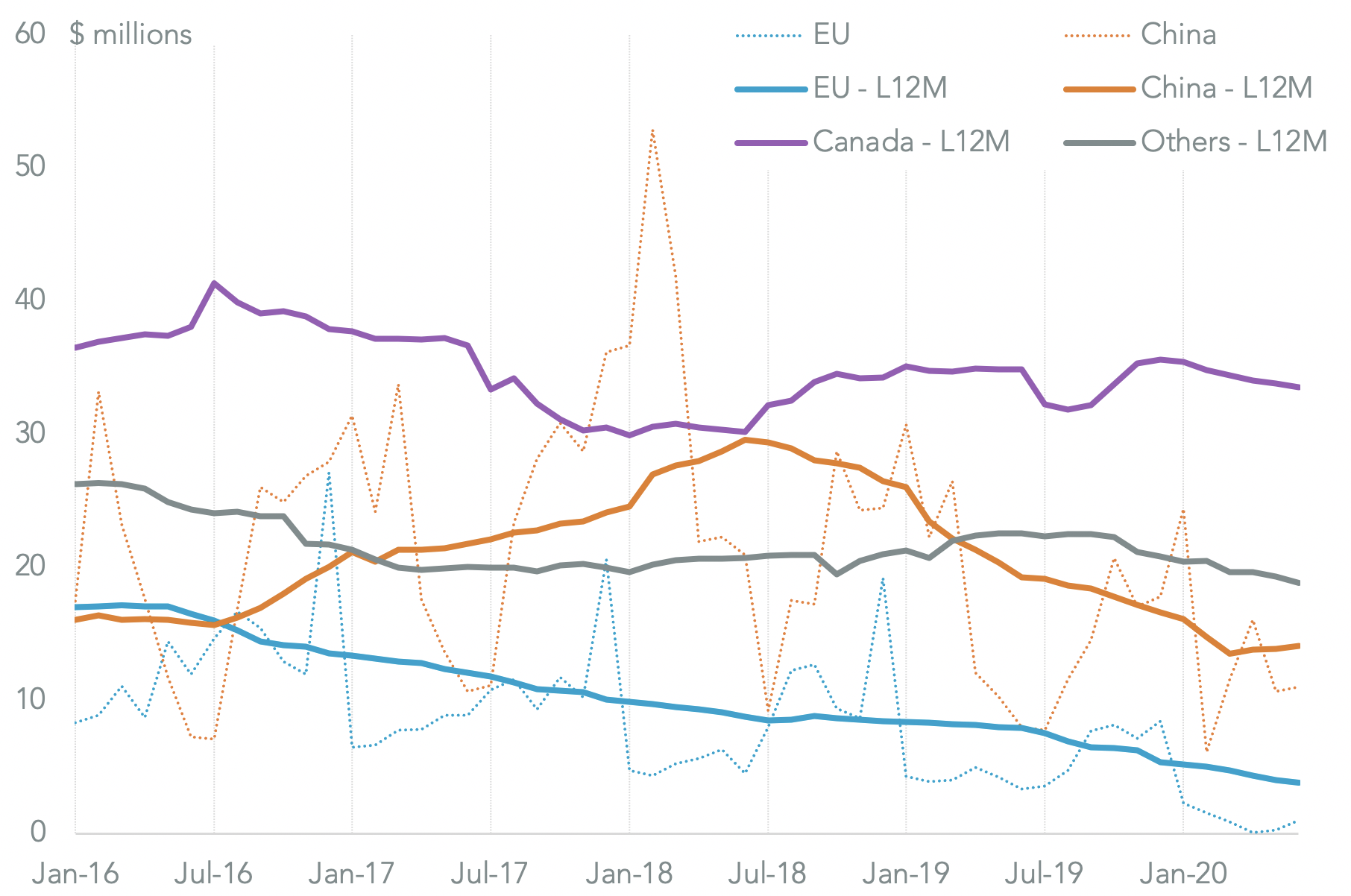
Source: Panjiva
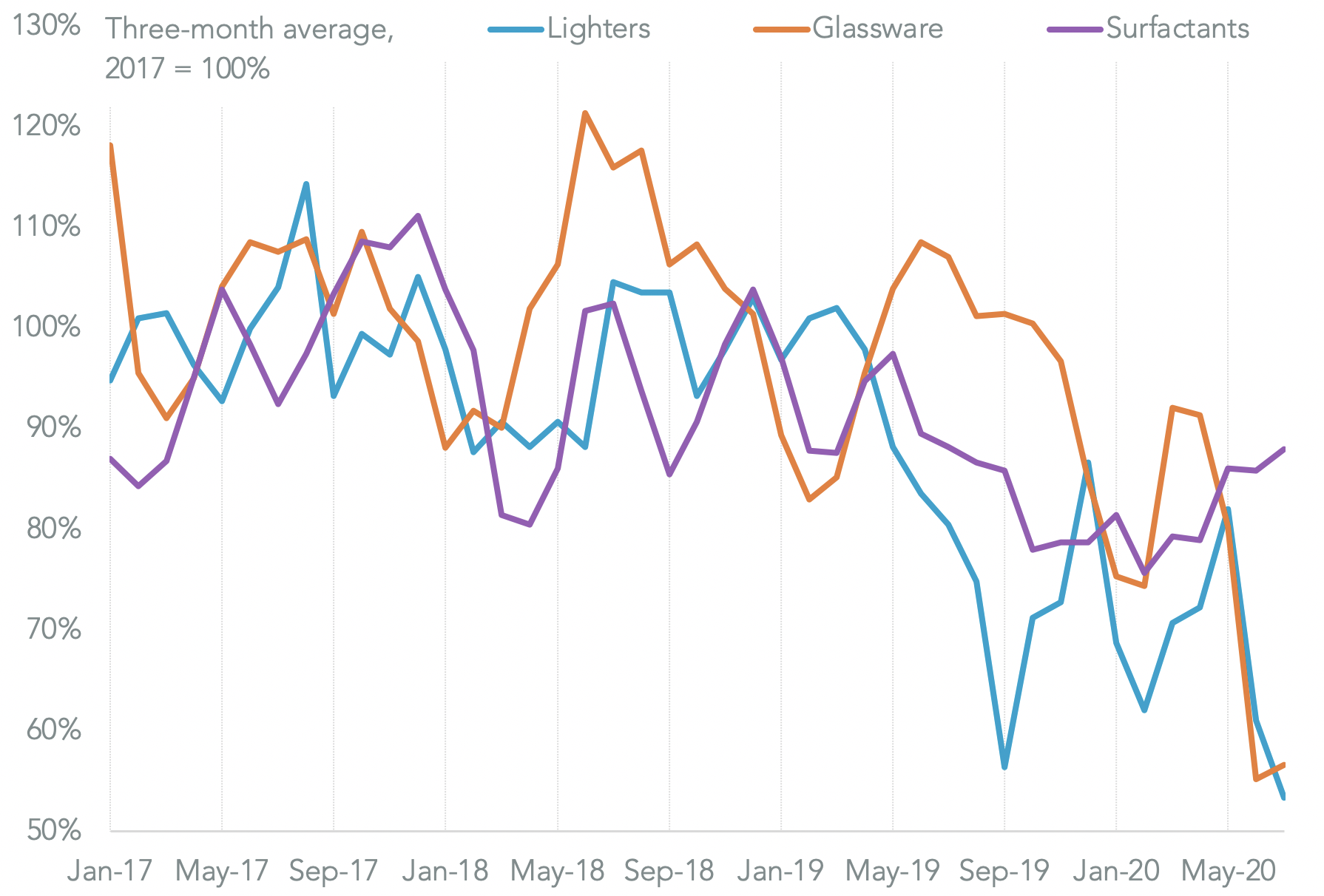
A detailed list of tariff codes to be covered by the deal awaits approval by the EU College of Commissioners in early September as well as publication in the U.S. Federal Register. However, a keyword analysis would suggest the products are drawn from those covered by U.S. retaliatory duties issued against EU aerospace subsidies including crystal glassware (selected HS 7013), surface-active preparations (HS 3402.20), cigarette lighters / parts (under HS 9614), meals prepared from crustaceans and molluscs (under HS 1605) and propellant powders (HS 3601).
Panjiva’s data shows that U.S. seaborne imports from the EU of the five product categories identified fell by 20.6% year over year in the three months to July 31 including a 47.1% slide in shipments of glassware and a 33.8% slide in shipments of cigarette lighters. Surface-active products were unchanged while fish meals actually increased by 16.7%.
Major U.S. importers whose tariff payments should fall under the deal include: lighter manufacturer BIC; tableware distributor ARC International; and surfactant importers including Henkel.
Source: Panjiva