Es
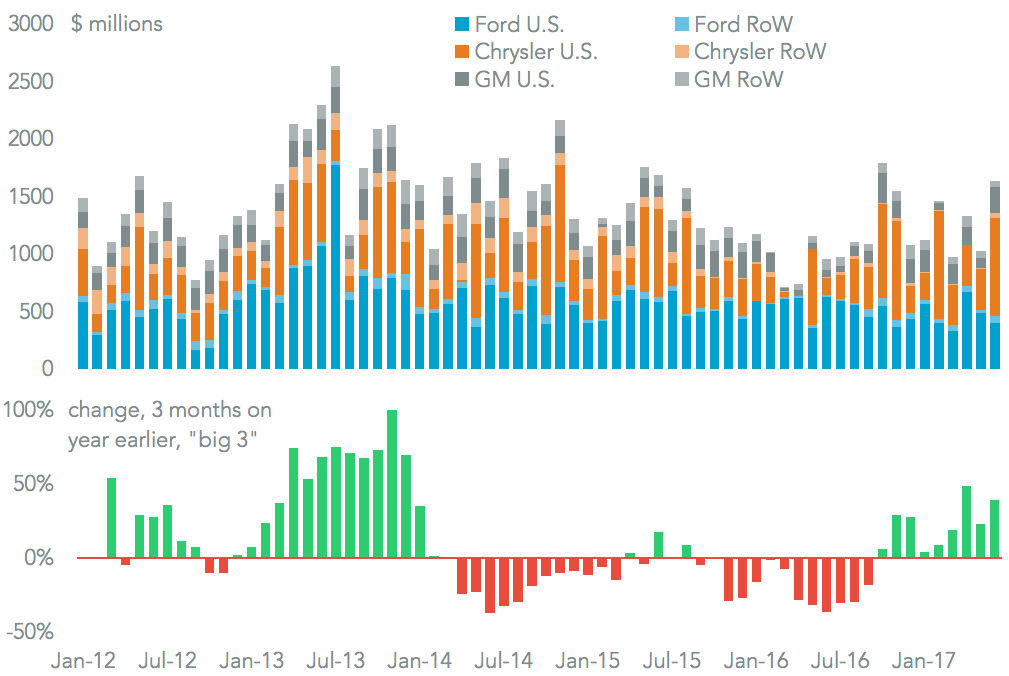
EsMexican auto exports expanded by 7.8% on a year earlier in July, the sixth straight month of growth, AMIA data shows. This masked a 8.7% drop in shipments of passenger cars, compared to a 26.2% jump in truck exports. That is likely to be the effect of a 19.7% drop in imported passenger car sales in the U.S., as outlined in Panjiva research of August 1.
Growth was led by Fiat-Chrysler and General Motors which expanded 27.8% and 33.4% respectively. While July is traditionally one of the quieter months for production in the year that would suggest GM’s success with the GMC Sierra light truck (11.3% higher than a year earlier) and Fiat Chrysler’s Journey crossover SUV (42.2%) is proving sustainable. Kia’s growth of 52.4% (not shown in the chart below) is the result of production of the Forte compact which was only ramping up a year ago.
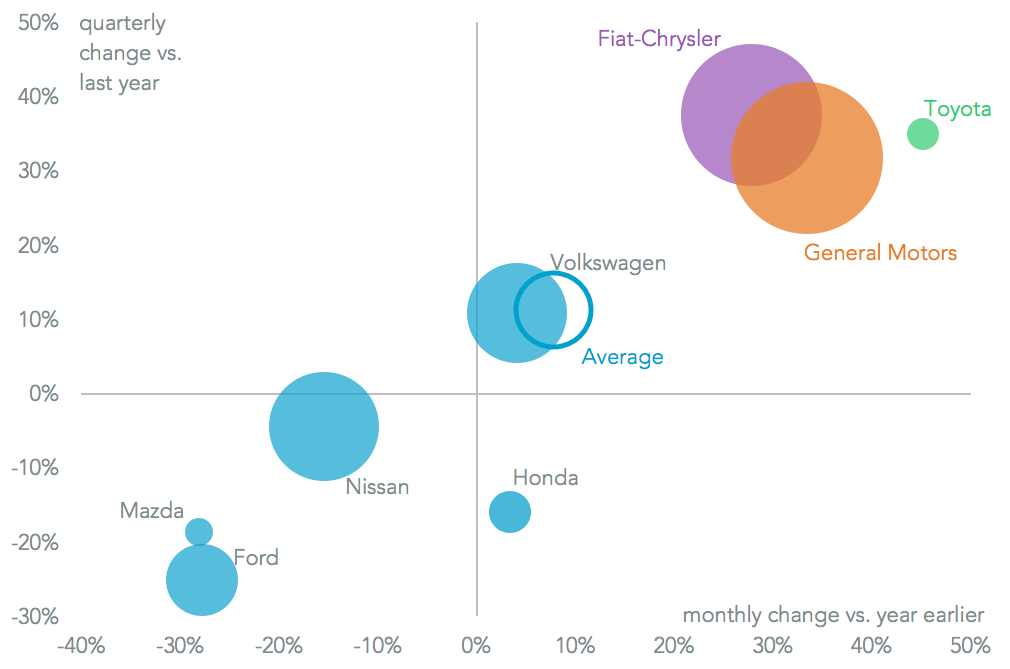
Source: Panjiva
General Motors’ focus on light trucks is making it more reliant on the U.S. as an export market for its Mexican production. In the second quarter 69.8% of its exports were U.S.-bound, compared to 45.7% on a year earlier, Panjiva data shows. By contrast Ford has seen the ratio drop to 91.6% from 96.3%, possibly because of falling demand for its car-oriented portfolio in the U.S., including the Fiesta compact.
While tariff risks are minimal at this stage, the start of NAFTA talks on August 16 will include discussions on rules-of-origin and supply chain structures. That may lead to a further round of evolution in the automakers production strategies.
Source: Panjiva