Es
EsFor an industry that is focussed on long-term energy solutions, the solar power sector suffers from a high degree of short-term problems from trade cases. The U.S. is the most recent to move, with its section 201 “safeguarding” review of imports from all countries likely to result in tariffs in November, as outlined in Panjiva research of September 21.
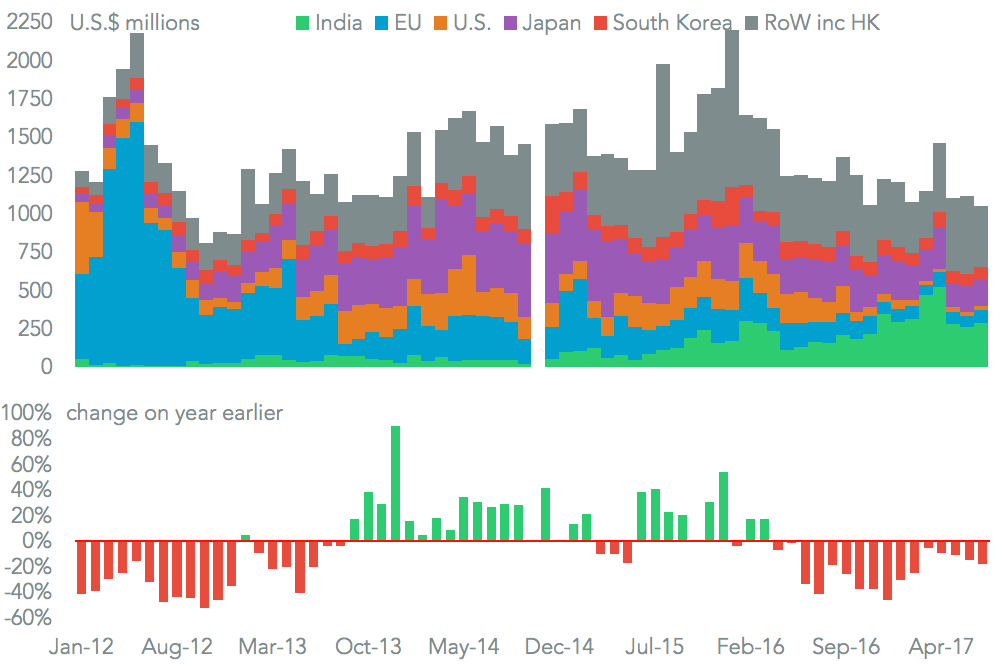
That has had the most significant impact on Chinese manufacturers, which have had to find new markets. They’ve had limited success after 16 straight months of falling exports, Panjiva data shows. A key target market for exporters, led by Trina Solar, including has been India. Exports to India from China in the 12 months to July 31 were 6.7x their levels of three years earlier.
Source: Panjiva
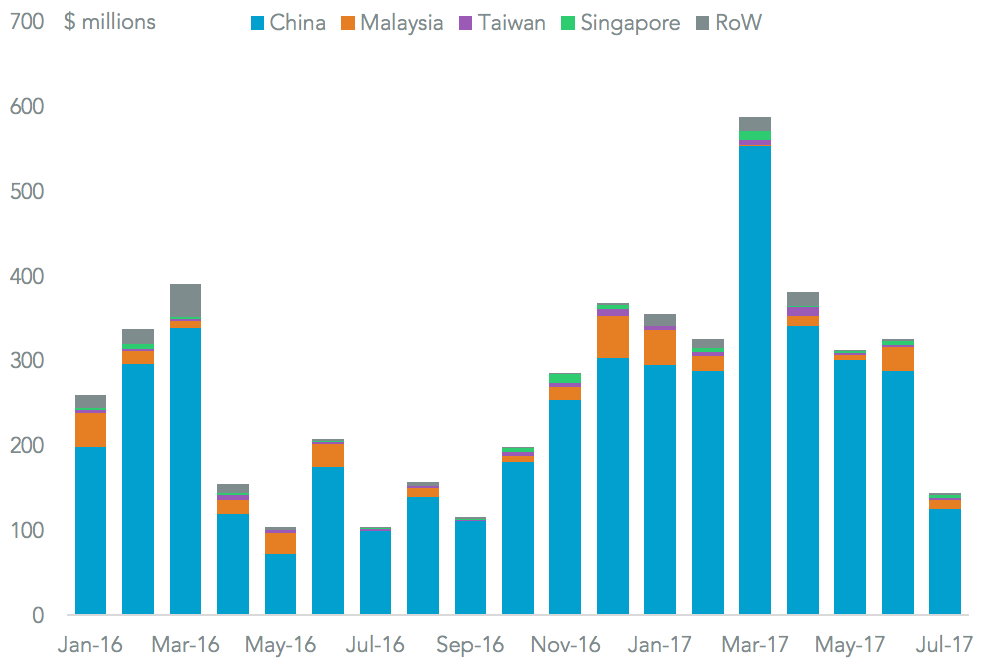
That growth has continued recently, with Indian imports from China rising 68.7% year-to-date vs. the same period a year earlier. That has resulted in Chinese exports squeezing other producers out of the market – total imports only increased 56.1%, while those from Malaysia fell 10.4%.
It’s worth noting the high seasonality in imports, which is linked to the ability of installers to operate during the monsoon season. This makes the timing of trade cases in other countries during the year an important factor for manufacturers.
Should exporters from Malaysia and South Korea – including Hanwha Q-Cells – face tariffs from President Trump in November, the timing should be right to ramp up sales in India. That assumes demand can be found and a ruinous price war avoided.
Source: Panjiva