Es
EsRussia will increased food exports from 1.5 million tons in 2018 to 52 million tons in 2028, TASS reports, including soya, barley, canola, flax seeds and sunflower oil. That will use a new rail line due to be inaugurated in April. This will make for a welcome diversification in Russia’s trade with China.
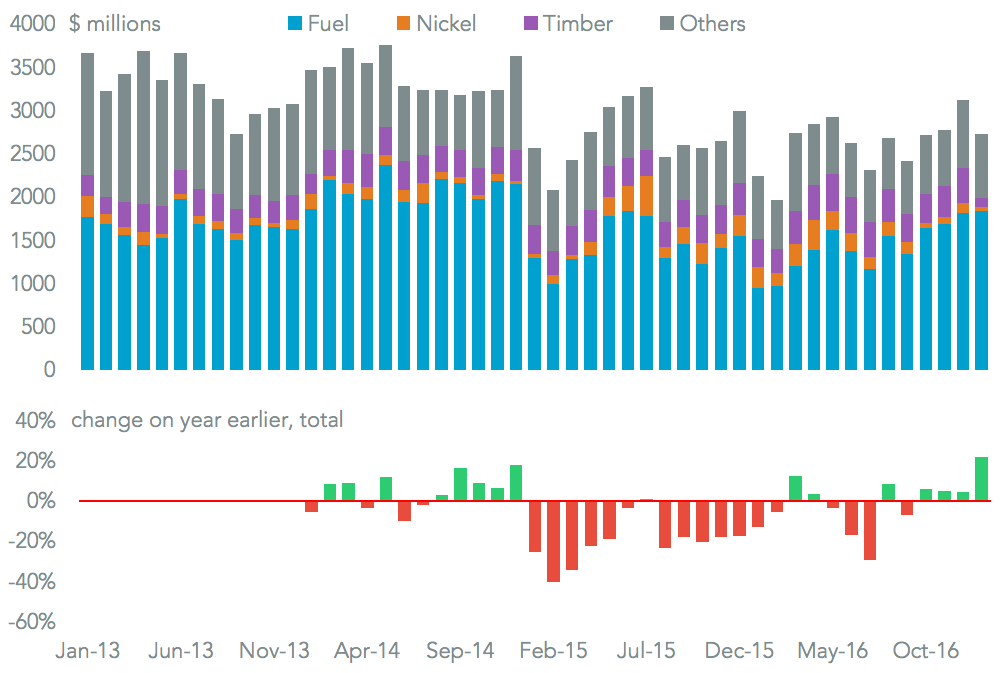
Panjiva data shows that China’s imports from Russia have fallen 1.2% in the 12 months to January 31 on a year earlier, despite a recovery of 21.9% in January. With 62.2% accounted for by energy, 13.3% by timber products and 6.1% by nickel it is commodity prices, and specifically oil, that drive the value of exports.
Source: Panjiva
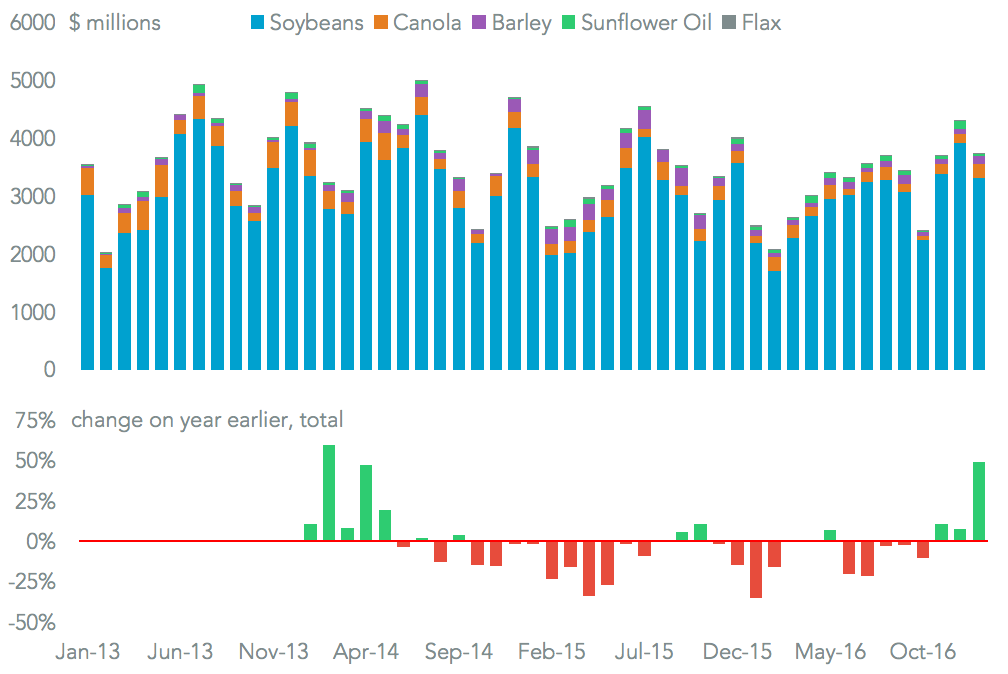
China currently imports $39.5 billion of the five products covered by the new agreement annually. While shipments in the 12 months to January 31 were 9.9% lower than in 2013 there has been a renaissance recently with growth of 49.1% in January capping three months of expansion. That again is partly due to the progress in commodity prices. Soybeans are by far the most important product, accounting for 89.1% of the imports of the five in the past year.
Source: Panjiva
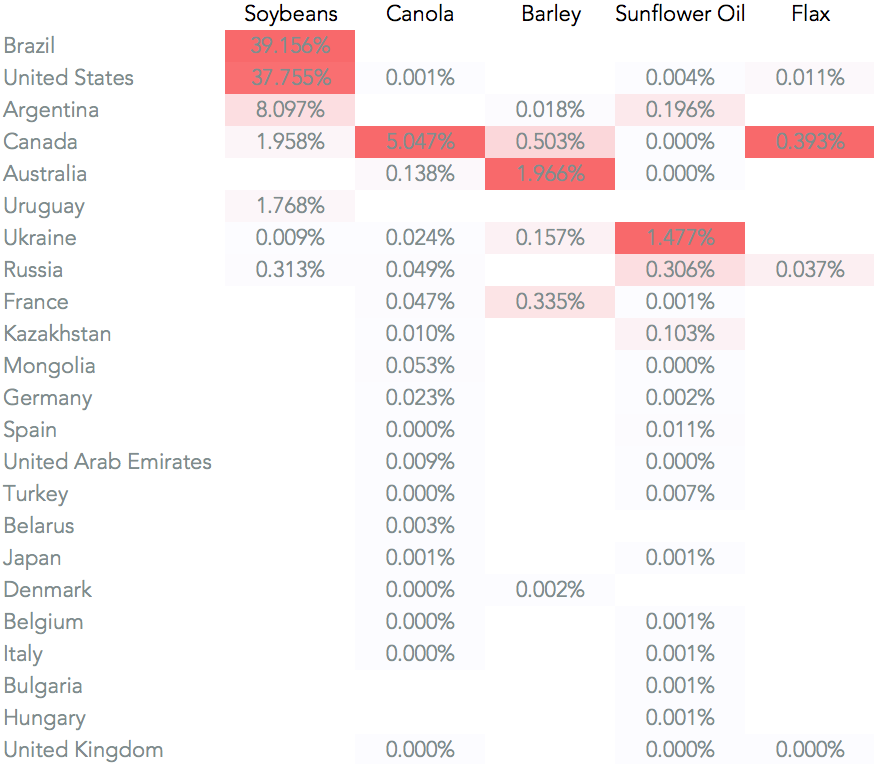
Presuming that the Russian supplies will largely replace other exporters rather than any domestic production, Brazil, the U.S., Argentina, Canada and Australia have the most to lose from its expansion, Panjiva’s analysis of 152 country-product pairs shows. Brazil exported $15.4 billion of soybeans to China in the past year, while the U.S. shipped $14.9 billion worth.
Among other products Canada shipped $1.99 billion of canola seeds and oil, following a trade spat between the two countries last year as outlined in Panjiva research of September 23. Given the forthcoming meeting between President Xi and President Trump and the recent launch of trade talks with Australia this move with Russia looks as much a geopolitical move as a food security strategy.
Source: Panjiva