Es
EsU.S. videogame imports had a disappointing end to 2016, with Panjiva data showing seaborne imports fell 11.3% on a year earlier. This didn’t stop the fourth quarter being moderately successful, with a 2.1% rise on a year earlier bringing the total for 2016 to a 1.0% rise. One challenge for the industry though is falling unit revenues – in 2016 through November 30 the value of imports fell 22.1%.

Source: Panjiva
The weakness in imports may reflect consumer apathy with regards to Sony’s revamped PlayStation range, evidenced by related imports that fell 18.2% in the fourth quarter. Shipments related to Microsoft’s Xbox jumped 41.6% in December and 106.3% for the fourth quarter. This may reflect supply chain shifts rather than just popularity of the S range.
Nintendo-related imports fell 12.1% in December and 4.2% for the fourth quarter. This is not a big surprise given it is close to releasing the new Switch console, which would likely lead consumers to delay their purchasing decision. Pre-orders for the console began January 11.
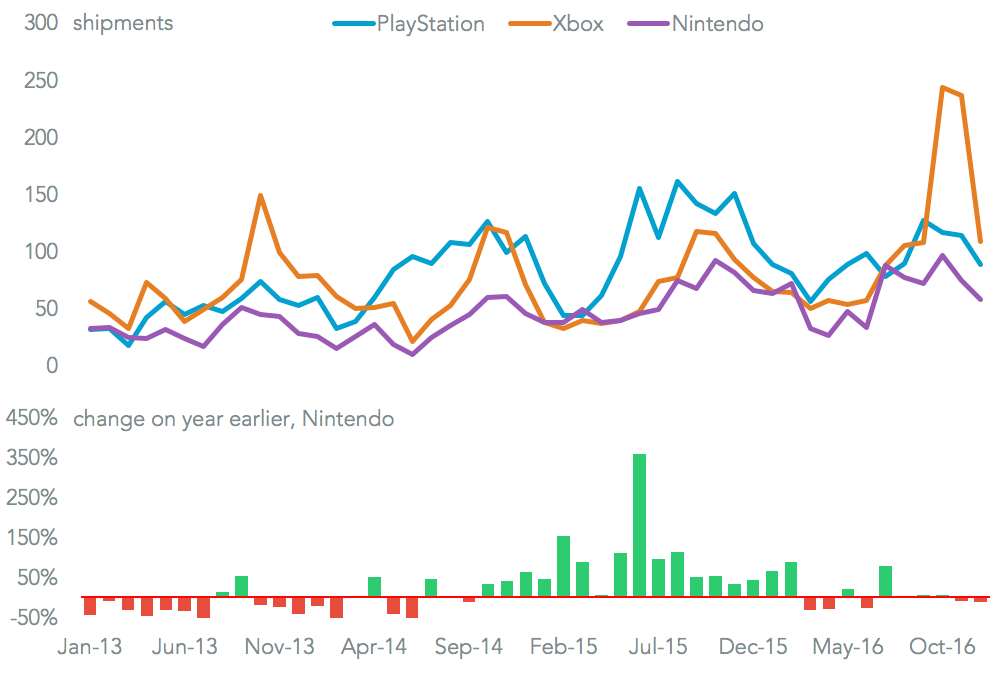
Source: Panjiva
A bigger challenge for the videogame industry in 2017 than release schedules are potential tariff schedules. China accounted for 77.2% of U.S. videogame imports by volume in 2016, and 96.4% by value in the first 11 months of the year. This potentially exposes the sector to electronics or toy sector tariffs that may be implemented by the incoming U.S. administration, discussed in Panjiva research of January 5.

Source: Panjiva
Exports by Chinese manufacturers have struggled in late 2016, falling 12.5% in the three months to November 30 though imports for the 12 month period were 23.1% higher. U.S. bound exports fell 24.1% over the 12 month period, leaving manufacturers including Foxconn (via its Hon Fu Jin Precision subsidiary), Mingshuo Computer and Flextronics (maker of the Xbox) relying on Japan and emerging markets. A hawkish move by the Trump administration would exacerbate that trend.

Source: Panjiva