Es
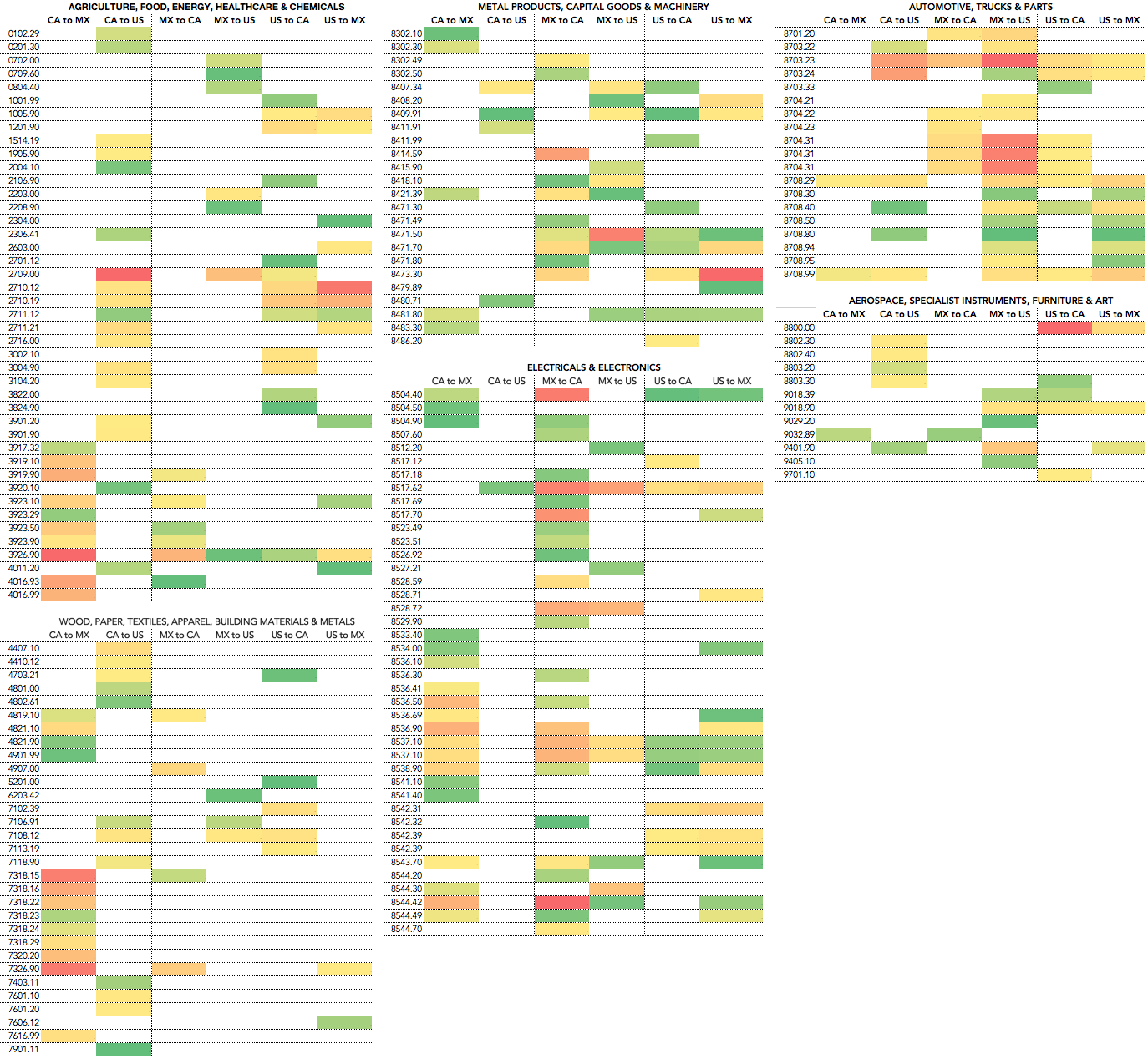
Es#1 Trump, Trudeau and Peña Nieto’s pain points (February 3) Mexico technically kicked off the NAFTA renegotiation process with its consultation with business, and President Peña Nieto and Prime Minister Trudeau held talks in late January. It took until May (see below) for the U.S. to formally launch its own consultative process. Our deep-dive into each country’s exports showed autos, aerospace, agriculture, energy and technology are among the most significant sectors for each countries’ negotiations.
Source: Panjiva
#2 TPP gone, NAFTA matters more (January 23) The first substantive trade action by the administration of President Donald Trump was withdrawal from the Trans-Pacific Partnership. While headline grabbing the presence, over three quarters of U.S. trade with TPP partners is with Mexico and Canada, and the remainder with Japan – which the U.S. subsequently addressed in a separate economic dialogue.

Source: Panjiva
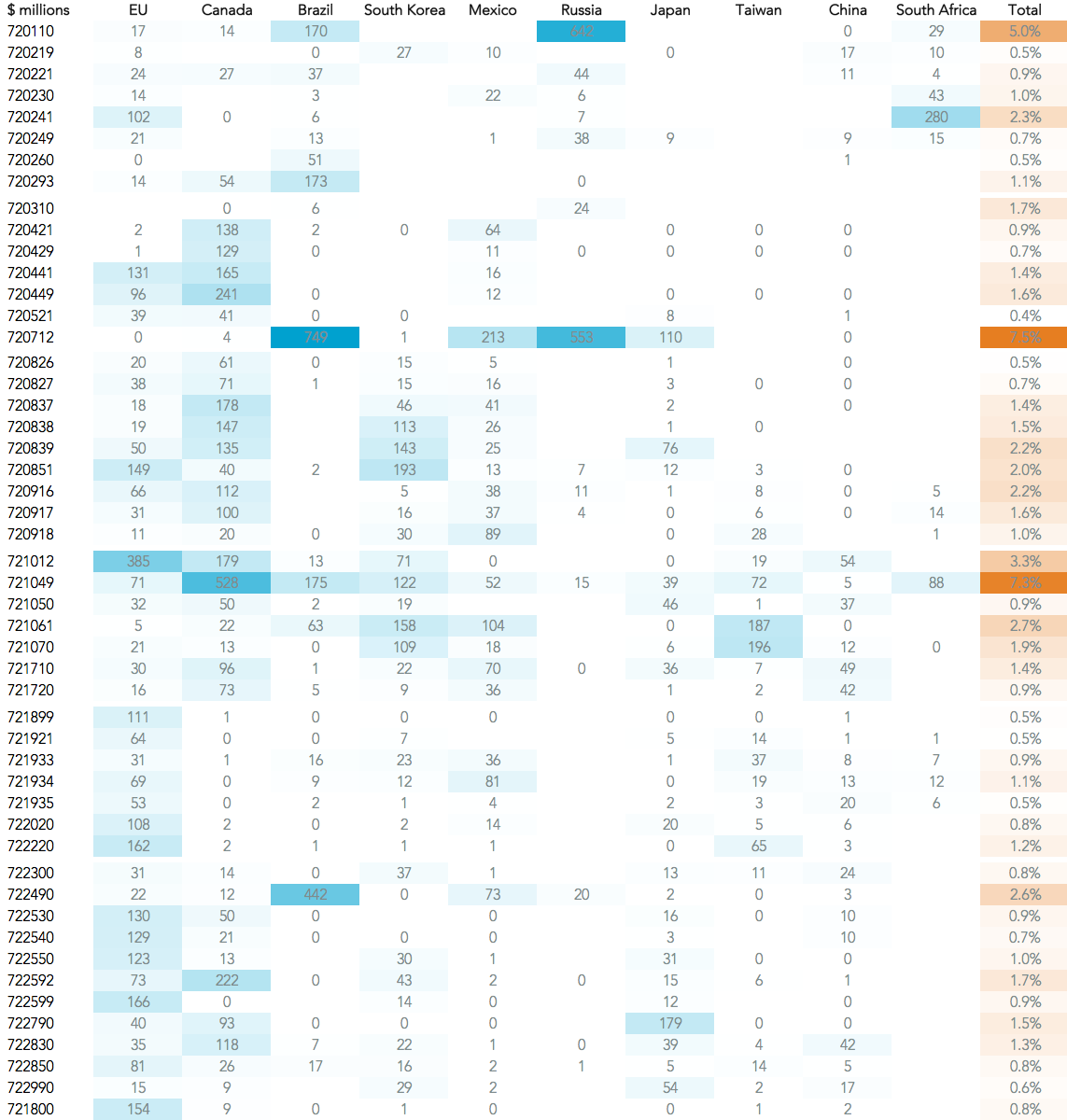
#3 12 tasks for day 200 (April 26) President Donald Trump spent much of the first 100 days of his administration opening trade reviews into topics ranging from the national security issues of steel and aluminum through causes of the trade deficit and performance of trade deals. Many are due to be completed before the end of August.
Source: Panjiva
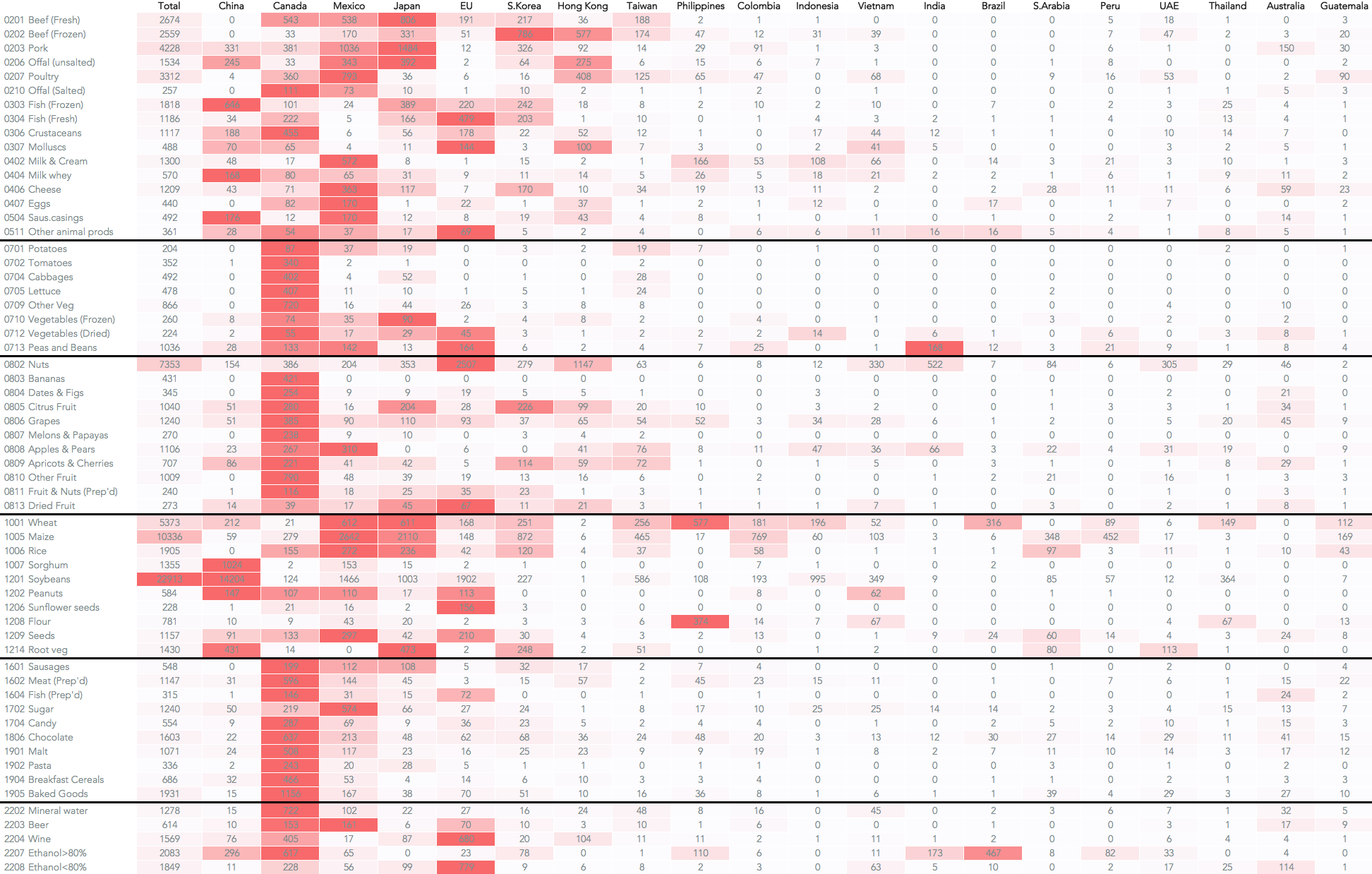
#4 Mexico bares its teeth (March 15) Back to NAFTA, this time Mexico’s potential actions in the agricultural space. Agriculture Secretary Jose Calzada called for the country to diversify its sales away from the U.S. before changes in NAFTA have a chance to bite.
Source: Panjiva
#5 138 days to get NAFTA done (May 18) The U.S. can formally being negotiations to reform NAFTA in August, but regulatory complications (to allow a future “up-down” vote under TPA rules) mean it will not have long to complete talks if it wants to sign a deal before the Mexican elections. Even then it could take until well after the U.S. midterm elections before changes actually impact upon the real economy.

Source: Panjiva