Es
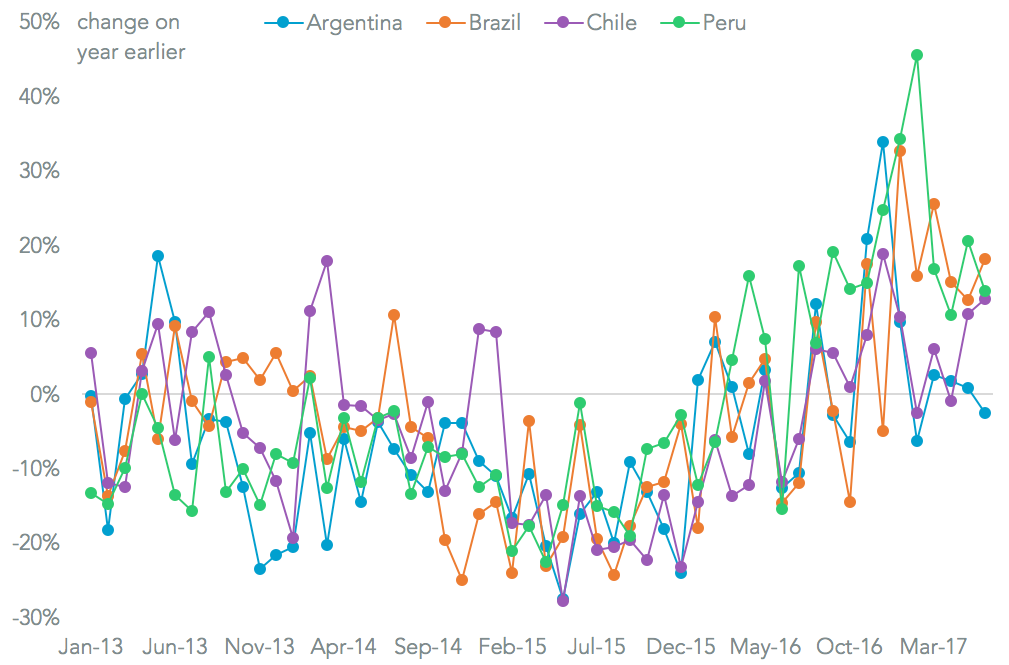
EsArgentina’s exports continued to underperform its peers in June, with a 2.6% decline on a year earlier according to official figures, bringing the quarterly total to a level unchanged on a year before. That compares to a 15.3% rise in exports from Brazil, 15.0% from Chile and 7.4% from Peru, Panjiva data shows, and Uruguay which rose 2.2%. Only Paraguay has performed worse, with a 0.7% fall on a year earlier. With imports having risen by 15.4%, Argentina’s trade deficit of $758 million was the first deficit for the month of June since at least 2010.
Source: Panjiva
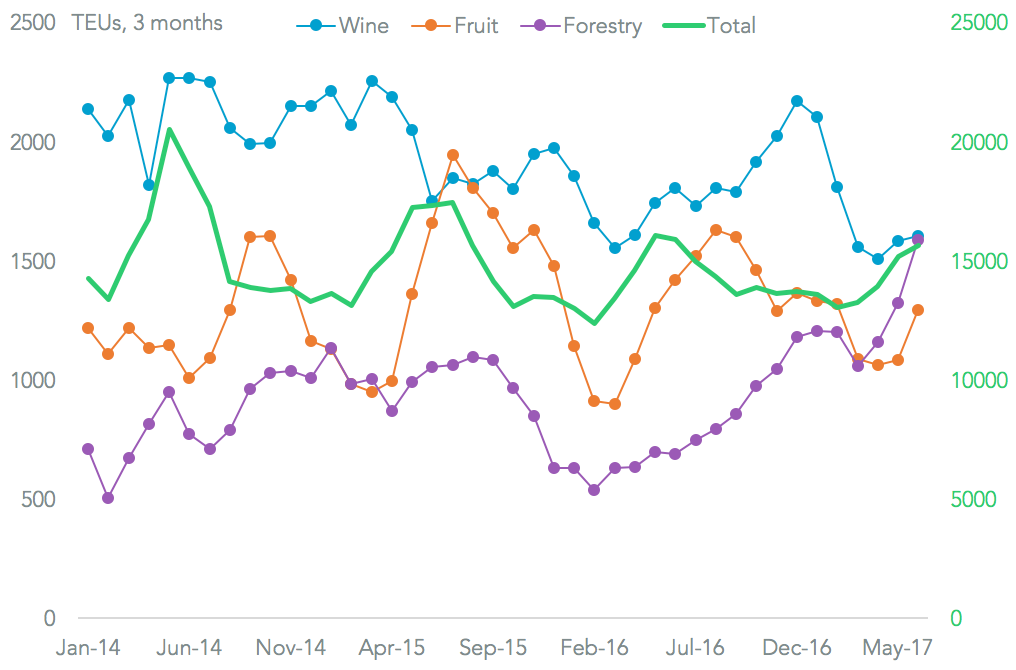
Argentina’s export problems have been typified by shipments to the United States, Argentina’s third largest export market after China and Brazil. which are led by agricultural products including wine and fruit juice. In aggregate Argentine shipments were 1.3% lower on a year earlier in the second quarter, but within that wine fell 11.1% in the second quarter and fruits/juices by 8.9%. In part that reflects dry weather conditions that have cut harvests, but was offset in part by a 129% rise in shipments of forestry products. A 10% collapse in the Argentine peso vs. the dollar, making Argentine products cheaper, may provide some respite.
Source: Panjiva
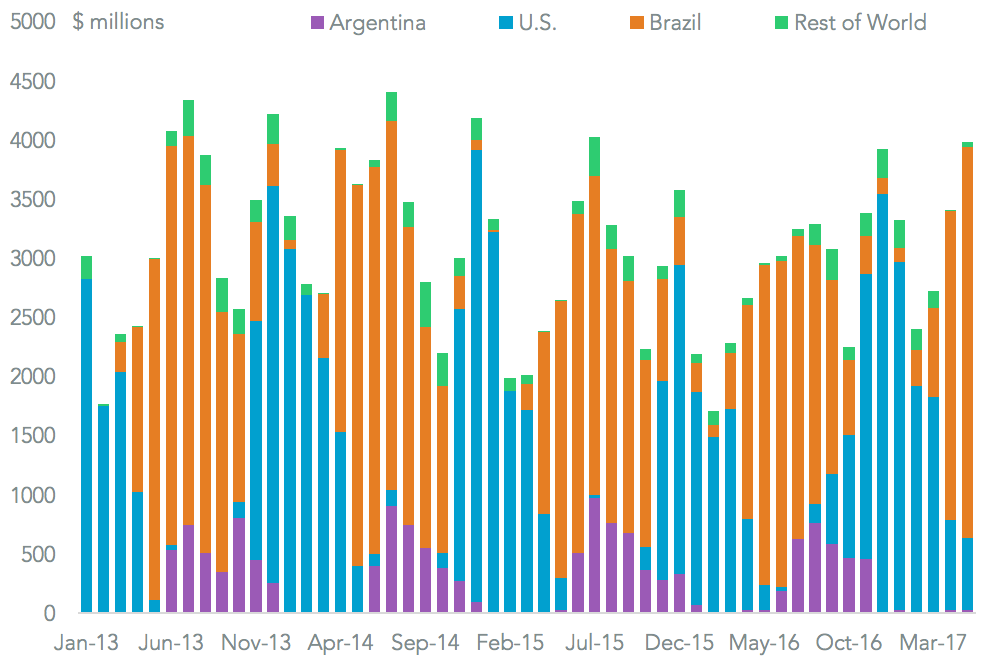
Argentina will also face challenges in its exports to China. These are dominated (63.7% in the past 12 months to May 31) by shipments of soybeans, exports of which fell 21.5% on a year earlier in the 12 months to May 31. Argentine supplies therefore lagged the broader 10.6% growth in Chinese soybean imports, led by a 51.1% jump in shipments from the U.S. The U.S. may pull further ahead after a “millions of tons” supply deal was signed, as outlined in Panjiva research of June 15. With the peak growing season running from July to August the coming quarter could be critical for Argentina’s export health for the year overall.
Source: Panjiva