Es
EsThe informal deadline for signing exemptions for countries from the U.S. section 232 duties on steel and aluminum – outlined in Panjiva research of March 21 – expires at midnight on April 30. Of particular concern are relations with the European Union, which had been granted a temporary exemption. The German government has indicated that it, alongside France, is “prepared to defend its interests” in trade matters with the U.S.
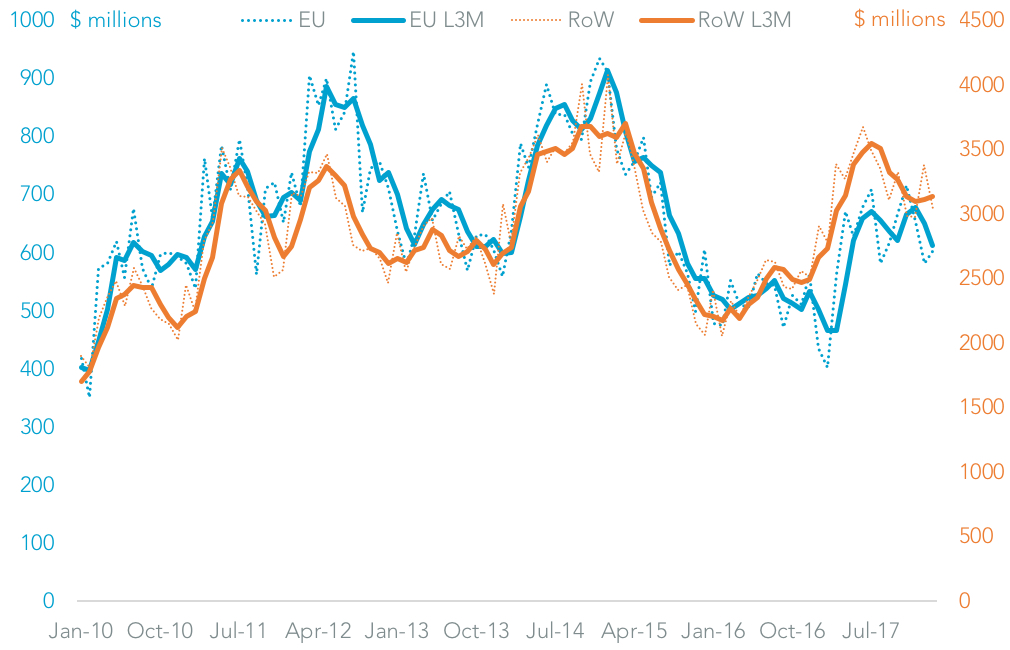
From the U.S. perspective the EU represents the largest potential exemption candidate after Canada (which is tied up in NAFTA negotiations). The EU accounted for 16.3% of U.S. imports of the steel and aluminum products covered in the 3 months to February 28, Panjiva data shows. EU exporters have also taken a more conservative approach than others, with shipments in the three months to February 28 down 8.2% sequentially vs. a 0.1% decline for all others.
Source: Panjiva
The European Union may follow a transactional approach to dealings with the U.S. Aside from a possible voluntary “export quota” in steel, the EU may also relax the rules allowing more U.S. beef imports, Politico reports. That could involve an extension of the previous quota scheme from 2009 that allows 45,000 tons of beef imports annual on a duty-free basis.
A relaxation of the rules would come at an opportune time for American ranchers. Global export growth has been robust but has started to slow. Exports climbed 8.9% on a year earlier in the three months to February 28, down from 12.7% on the prior three quarters. Furthermore 13.0% of exports by weight go to China which will plans to apply tariffs in retaliation for potential U.S. section 301 duties.
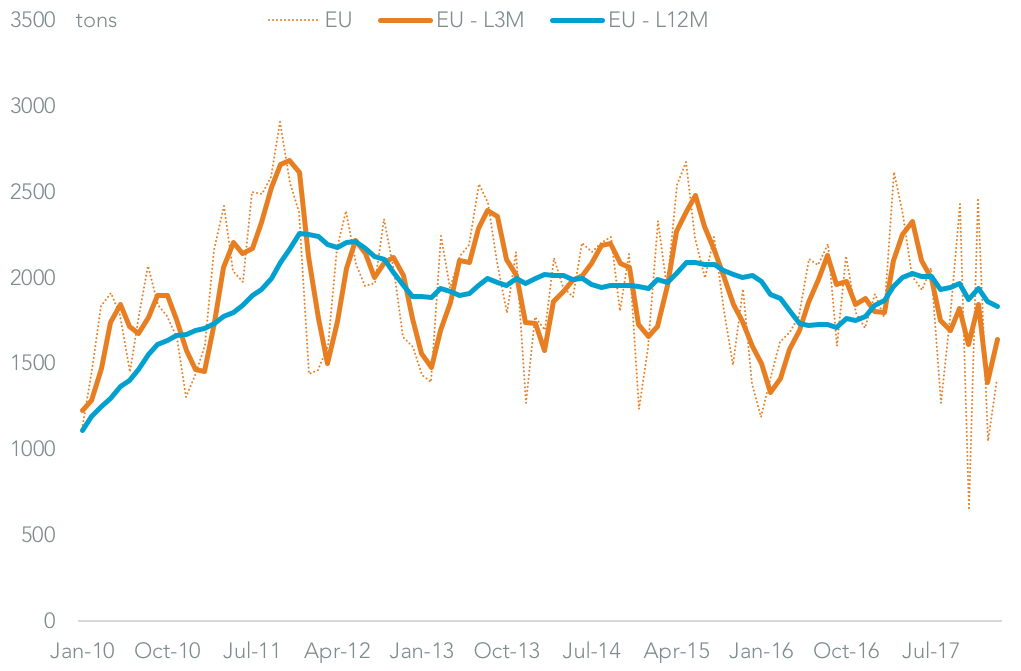
Exports to the EU meanwhile were just 22k tons in the past 12 months after falling 8.5% in the past three months. That was well below quota and likely reflects marketing as well as purely tariff issues.
Source: Panjiva