Es
EsThe final U.S. trade deficit for March increased 17.3% on a year earlier, according to official figures, the fastest rate of growth since February 2016. While the deficit was unchanged on a month earlier at $43.7 billion it was 1.8% smaller than economists had expected according to MarketWatch. Given the goods deficit, which increased 13.6%, had already been announced last week – as outlined in Panjiva research of April 17 – this implies better-than-expected services result.
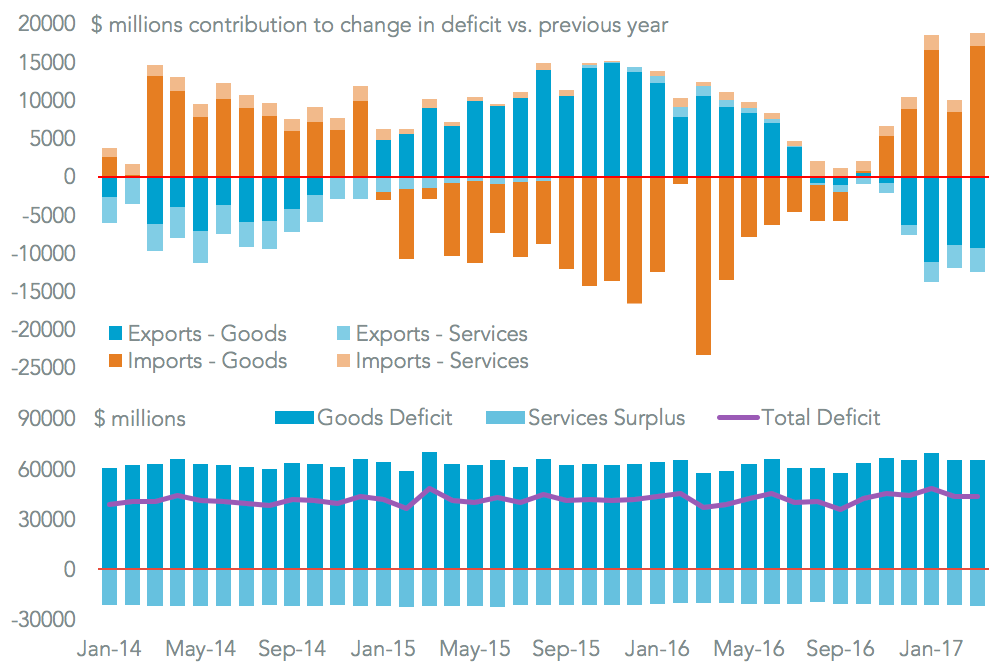
Source: Panjiva
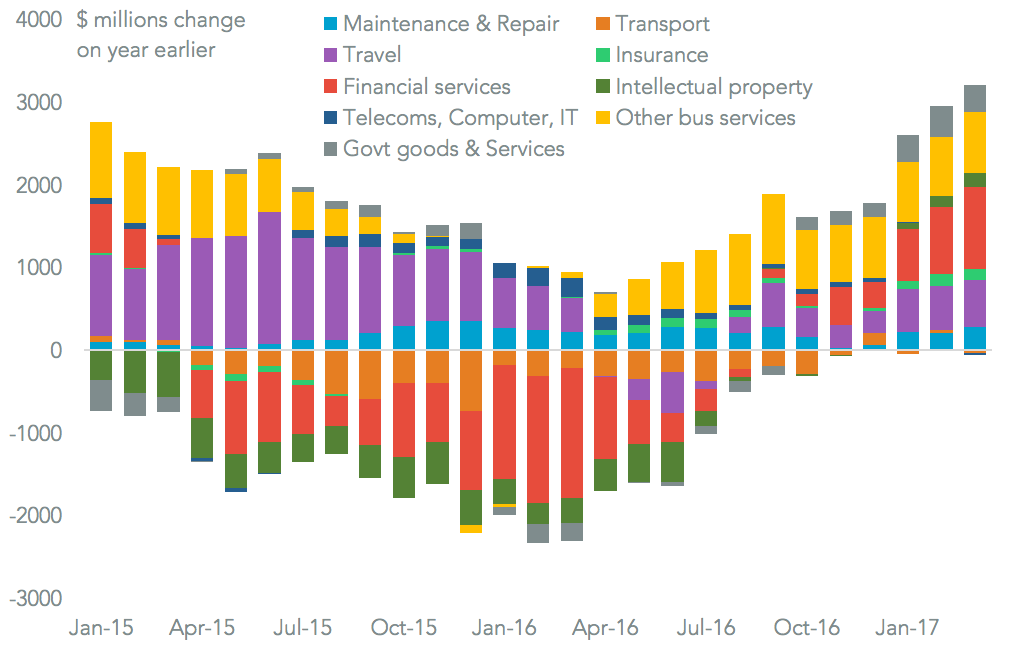
Services exports climbed by 5.1% on a year earlier, the fastest rate since October 2014. The Financial services exports increased 13.2% – the seventh straight month of expansion – and accounted for 31% of the absolute increase in services exports.
Meanwhile “other” business services (including consulting) expanded by 6.4%, which was a 14th month of growth. This success may lead President Donald Trump’s administration to keep an eye on the financial services terms in new trade deals it signs. Deals with China, Japan and South Korea are either underway or in review currently, and may benefit from improved services access.
Source: Panjiva
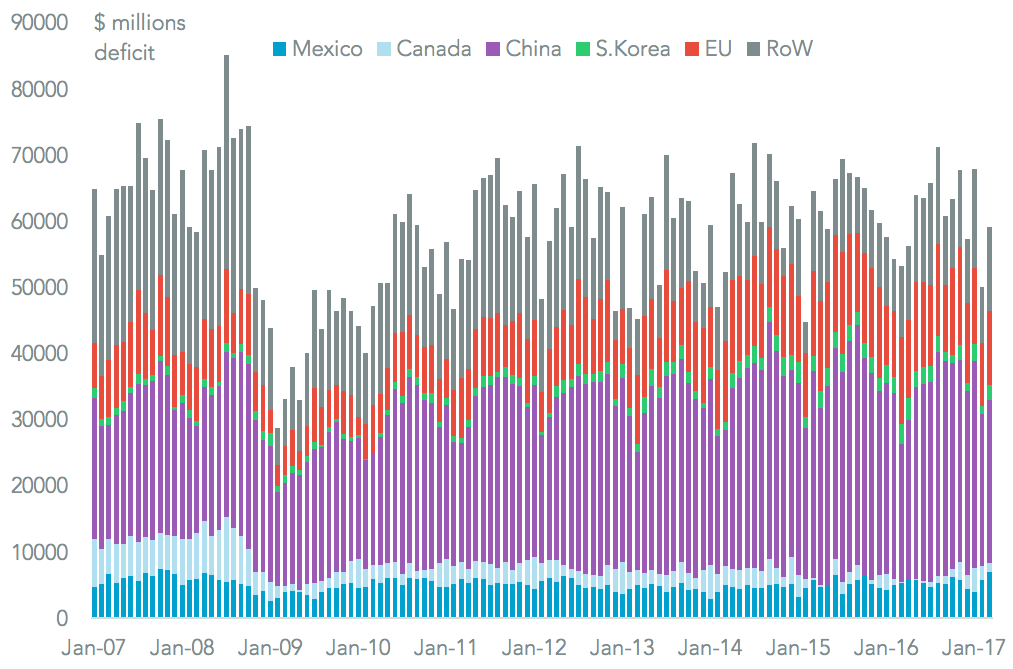
There is still plenty in the data to fuel the administration’s urge to take a more hawkish stance, however. While the goods trade deficit with China is still well below its peak on an annualized basis, it jumped 17.6% in March compared to a year earlier. That may cast a cloud over the ‘100 day plan’ talks currently ongoing.
The U.S. deficit with Mexico meanwhile jumped 30.1% to just over $7.0 billion. That was the highest since November 2007, and while it is due to higher energy exports it still comes at a difficult time ahead of NAFTA negotiations starting.
Source: Panjiva