Es
EsThe Conservative-led government of Prime Minister Theresa May has lost its majority in Parliament after yesterday’s elections, according to data collated by the BBC. The elections were called to gain a “no deal is better than a bad deal”, hard Brexit mandate in forthcoming EU talks. That increases the likelihood of a “soft Brexit” from Europe. As outlined in Panjiva research of May 8 that could be possibly in the form of either remaining in the Single Market or a similar deal to that held by Norway and Switzerland.
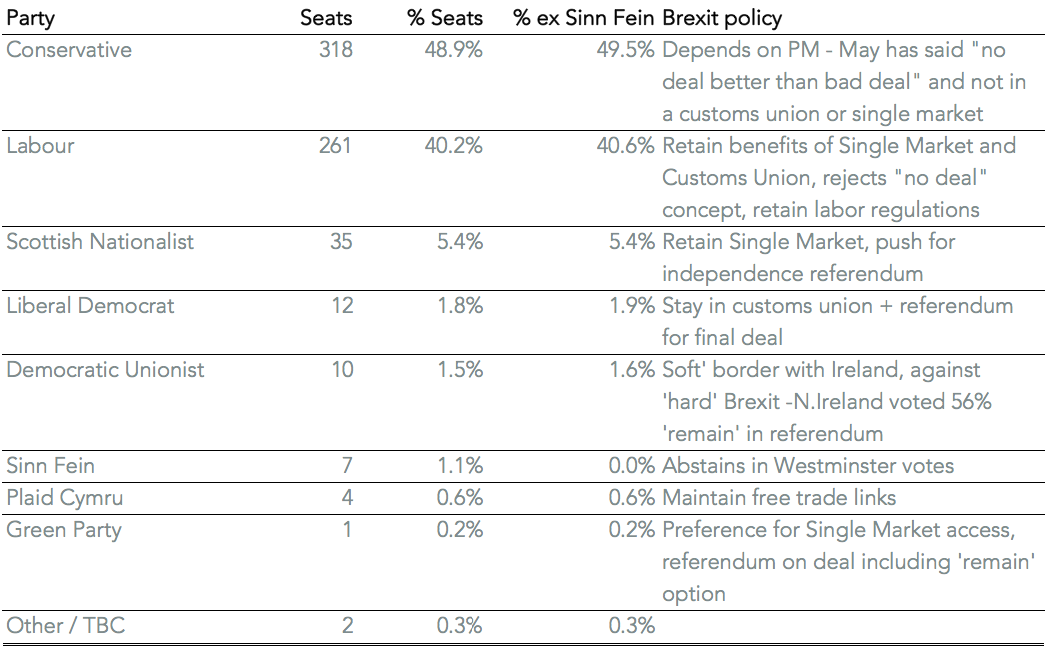
The vote, which comes before Brexit talks begin on June 19, has left the government – the Conservatives as the largest party have the right to try and build a coalition – requiring 326 seats. One important point is the Sinn Fein is committed to abstaining in votes, so an effective majority is 322 seats. The current party seats, and their Brexit positions per their manifestos are:
Source: Panjiva
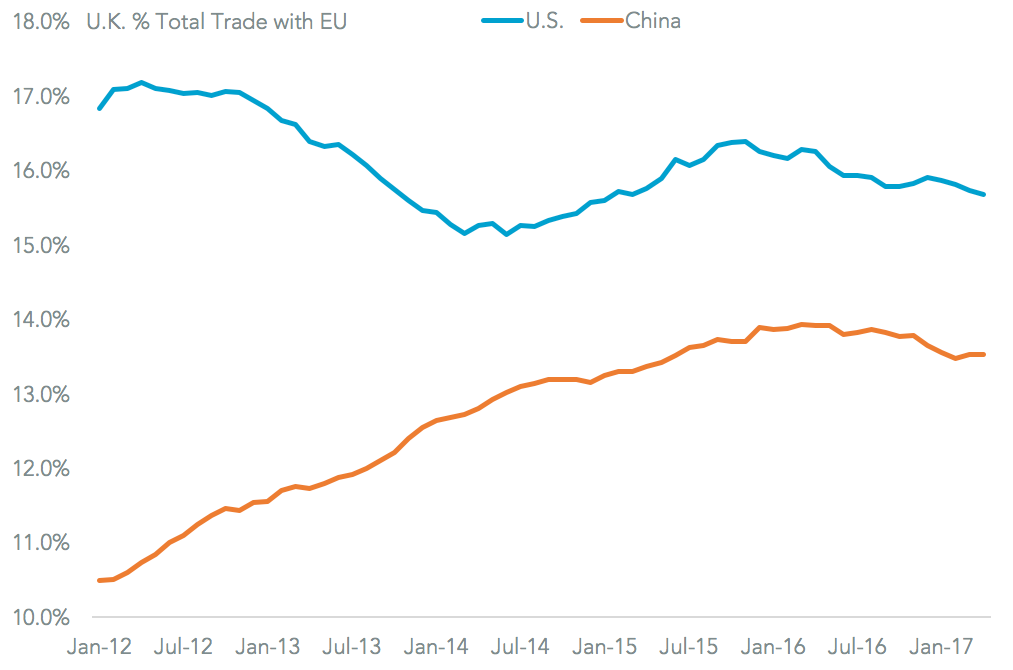
The outcome of the Brexit talks matters more broadly than just for Europe, as it will also define the relationship of the Single Market with the rest of the world. Panjiva analysis of U.S. and Chinese data, for example, shows the U.K. accounts for 15.7% of EU trade with the U.S. and 13.5% with China.
Source: Panjiva
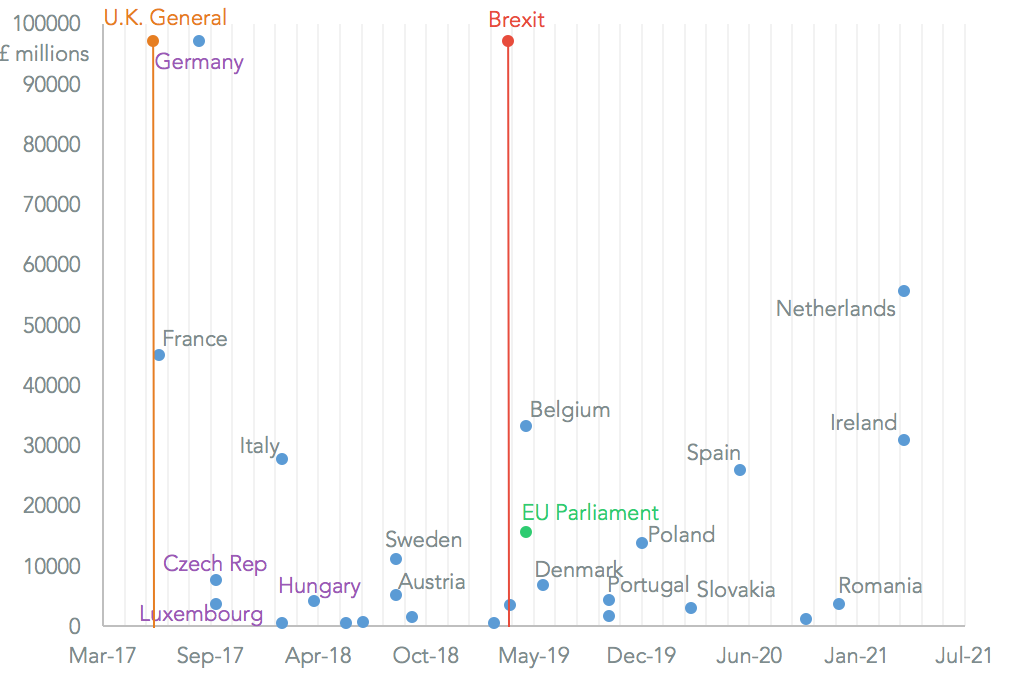
While the European Union members may welcome a delay to talks, they are unlikely to countenance a delay in Brexit unless formally requested by the new government. In any event, local politics will retain primacy. Elections accounting for 53% of British trade with the EU will occur within the time of the Brexit talks. As outlined in Panjiva research of May 16 any deal will need to be put to national parliaments in all member states too.
Source: Panjiva