Es
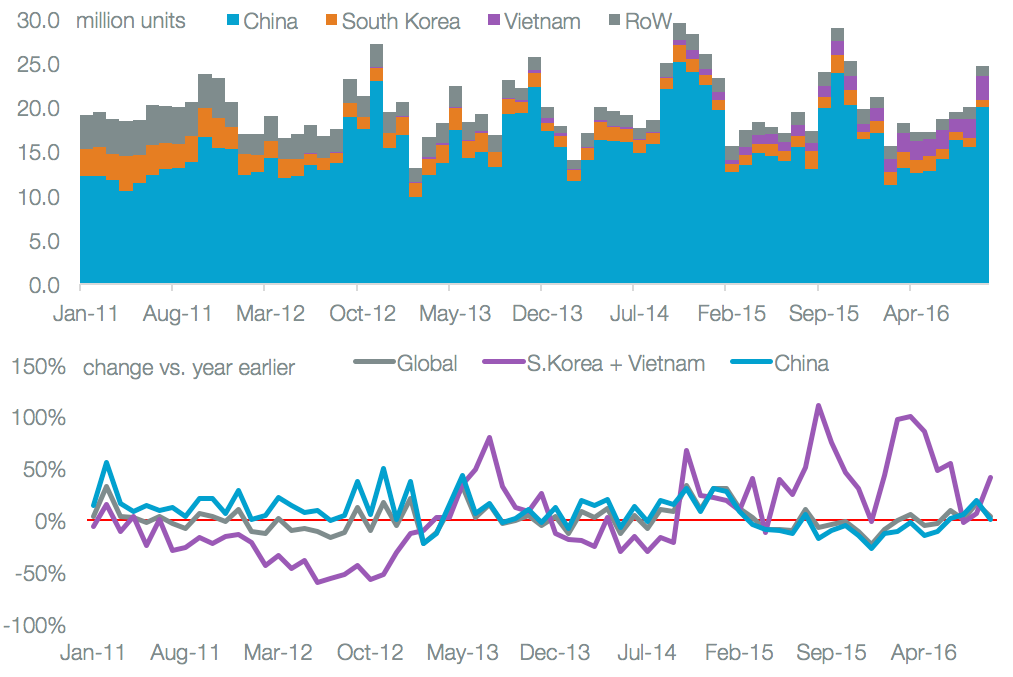
EsThe United States imported 2.8% more smartphones in September than a year earlier, according to Panjiva data, bringing the third quarter total to 5.6%. While slower than the 15.7% rate of August, the month represents the first big imports ahead of new product releases – including Apple’s iPhone 7 and Google’s Pixel – and the holiday season.
Imports from China in unit terms increased just 0.6% on a year earlier after a 19.2% jump in August, bringing the third quarter total to 7.0%. This contrasts with the 5% fall in units sold by Apple in the third quarter (fiscal fourth quarter). A 41.1% jump in imports from South Korea and Vietnam came before Samsung decided to terminate production of the Galaxy S7 Note, discussed in Panjiva research of October 12. Imports from Taiwan, where the Pixel’s manufacturer HTC is based, were actually 5% lower than a year earlier.
Source: Panjiva
One emergent issue for the smartphone industry, and Apple specifically, is the risk of tariffs imposed by the incoming U.S. administration. President-elect Trump has previously referred to trying to force Apple to move manufacturing back to the U.S., Fortune reported in January.
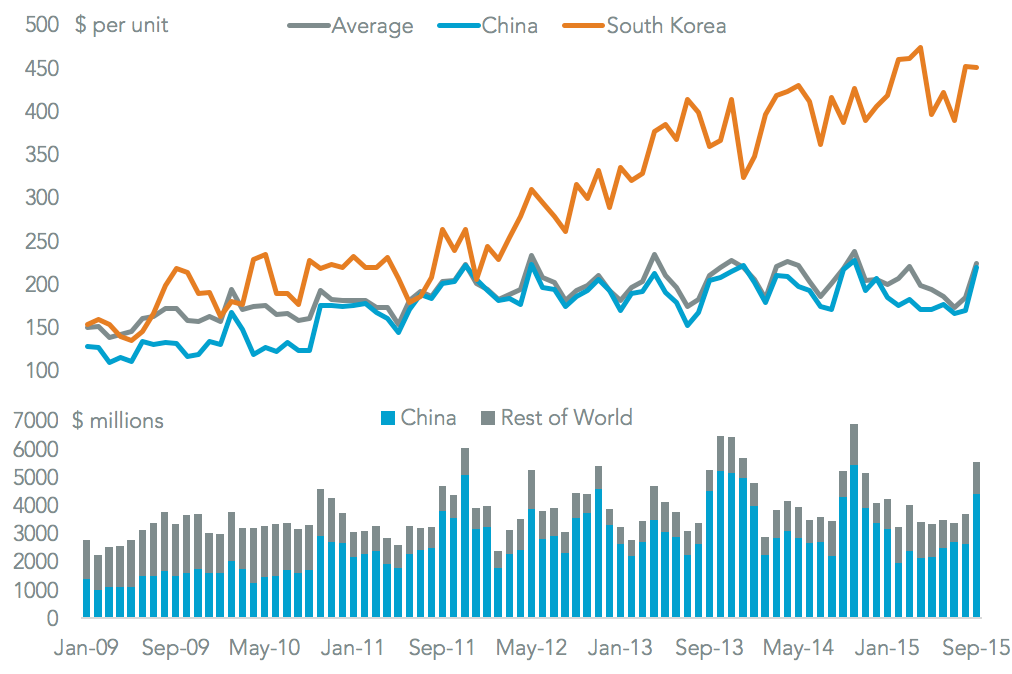
The U.S. imported $50.4 billion in customs value of smartphones from all countries in the 12 months to September. China accounted for 73.1% of the total. The average value per phone equates to $205 with the average value of phones from China amounting to $191. It isn’t clear whether a tariff would be applied to retail or customs value, but if the latter then a 35% tax would be equivalent to $67 per Chinese handset.
Source: Panjiva
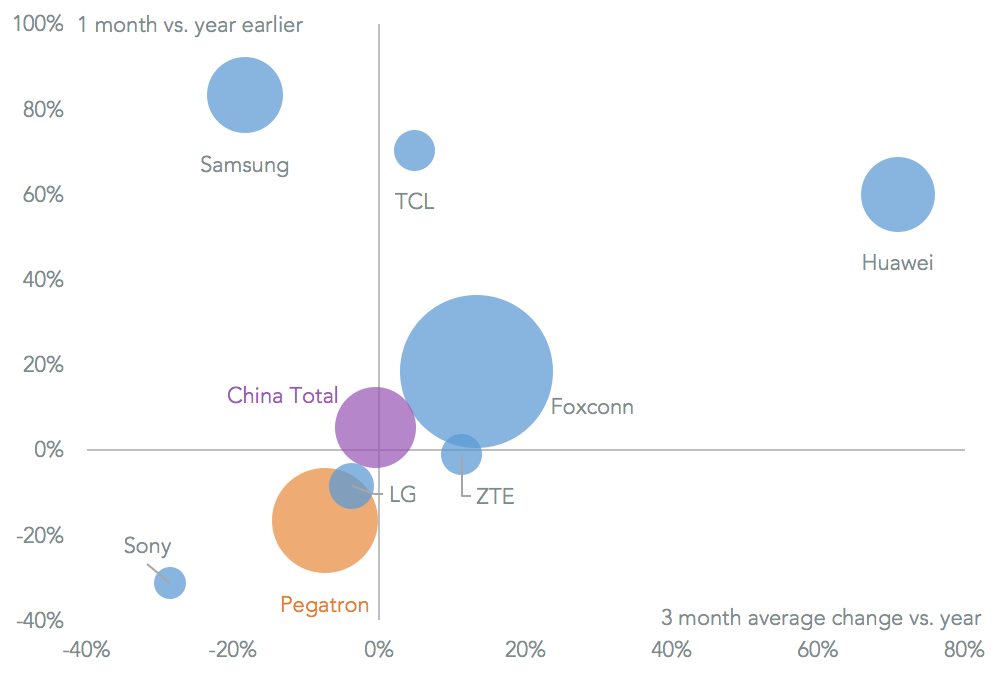
Global exports by Chinese-based manufacturers increased 5.2% on a year earlier in September to $11.7 billion. Apple suppliers Foxconn and Pegatron increased exports 4.0% jointly on a year earlier, though this will include supplies to other providers. Foxconn did better than Pegatron, with exports rising 18.4% and Pegatron’s falling 16.6%.
Samsung’s exports jumped 83.4% on a year earlier, though this may reflect shipment disruptions specific to the previous year as the quarterly average was 18.6% lower. Among the smaller players Huawei’s strength continued with a 60% growth, driven by lower cost phones for emerging markets, contrasting with Sony’s 31.2% slide. The latter does not bode well for the launch of the Xperia XZ at the end of the September.
Source: Panjiva
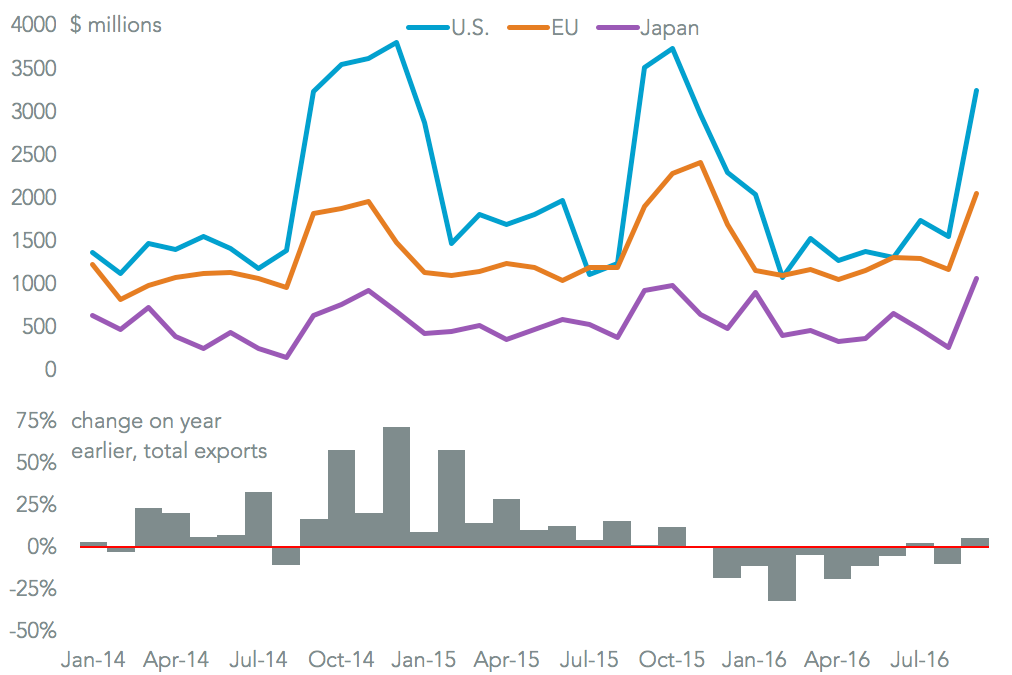
China’s exports to the United States fell 7.7%, suggesting customers in that market are expected to be conservative about their upgrade behavior. Japan and the European Union by contrast, saw 14.7% and 7.7% growth respectively. The most significant growth though came from the rest of the world, which jumped 44% on a year earlier, likely driven by the emerging market trends that also helped Huawei.
Source: Panjiva