Es
EsContainer-line Maersk reported improving profitability in 1Q 2019, with an EBITDA margin of 13.0% compared to 10.0% a year earlier. That’s adjusting for accounting changes related to leased vessels and is similar to Hapag-Lloyd’s 12.7% as outlined in Panjiva’s research of May 9.
It also shows the larger container-lines have been able to sustain a higher level of profitability than smaller competitors including ZIM Shipping (8.0% in 1Q 2019) and Evergreen (6.7%). So far almost all the container-lines have reported better profitability.
In Maersk’s case that came despite a 2.2% drop in the number of containers handled due to efficiency improvements such as a 4.3% drop in container handling costs and the cost cutting relating to the Hamburg Sud acquisition.

Source: Panjiva
The reduction in volumes likely reflects a more selective approach to market share from the Denmark-based shipping firm. Indeed while there were accusations on the company earnings call regarding rate reductions CEO Soren Skou stated that the firm can “deny that we have started a price war and certainly also say that we have 0 intent to do so“.
That’s borne out by container handling volumes which rose by 5.0% on U.S.-inbound lines in 1Q, Panjiva data shows, compared to 3.0% for the industry average. Meanwhile in April volumes increased by just 2.1% compared to an industry-wide 4.5%.
The less predatory priing approach comes despite the firm seeing risks in 2019 “due to weaker macroeconomic conditions and risk from trade war“. Skou also flagged that China is not the only trade confict to what with “the U.S. turning its attention toward Europe” according to Bloomberg. That chimes with Panjiva’s analysis of May 8 where there is a risk that trade negotiations stumble on areas such as aerospace subsidies and agriculture to become more of a situation of rising protectionism.
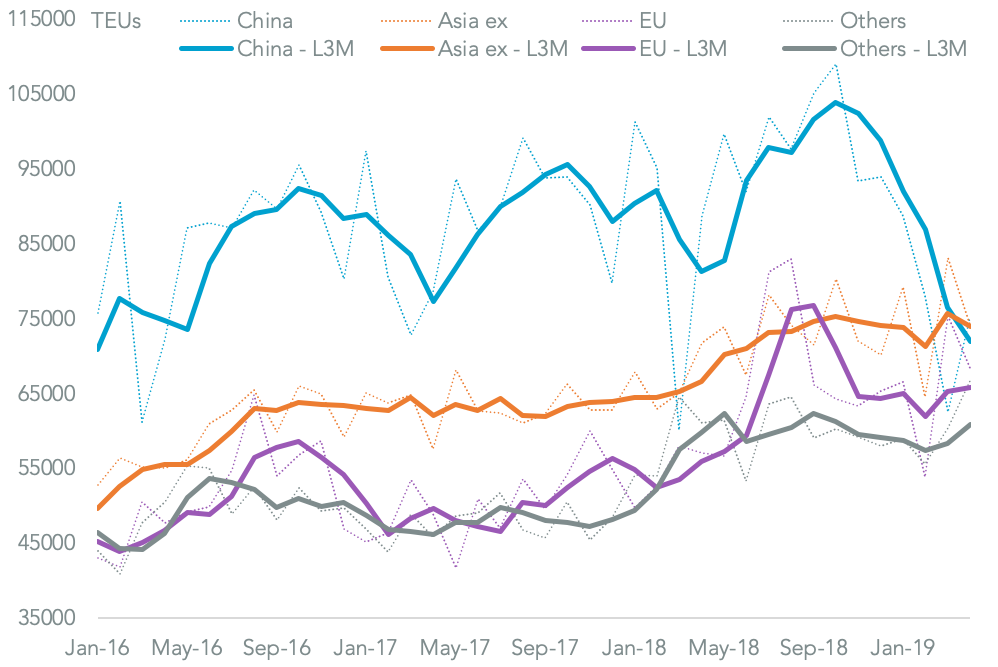
Maersk’s exposure to both Europe has been increasing relative to that from China recently. Shipments to the U.S. from Europe reached 23.0% of the total in the 12 months to Apr. 30, while its volumes handled rose 19.8% year over year in April. For China by contrast the China-U.S. routes represented 31.2% of its toal U.S.-inbound volumes with volumes having slumped by 15.2% year over year in April.
Source: Panjiva