Es
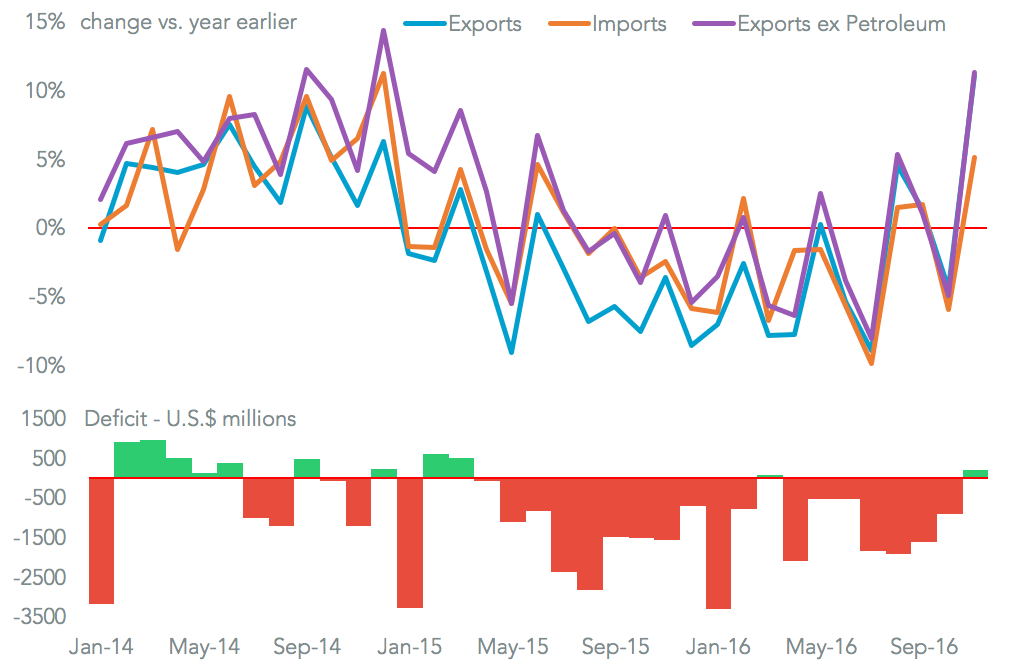
EsIn the wake of the U.S. elections, and subsequent collapse in the peso vs. the dollar, Mexican exports excluding petroleum products increased 11.3% in November on a year earlier, according to official figures. This was the fastest rate of growth since December 2014. When combined with a more modest 5.1% growth in imports (still the fastest since December 2014) this resulted in a trade surplus of $200 million compared to an average $1.3 billion deficit over the past year. Economists surveyed by the Wall Street Journal had expected a deficit of $749 million.
Panjiva data shows that the growth in exports was led by a $2.2 billion (or 45.6%) increase in power network equipment and a 71% increase in shipments of filtration equipment led by TetraPak. Shipments of completed autos also helped, with a 16% increase as discussed in Panjiva research of December 6.
Source: Panjiva
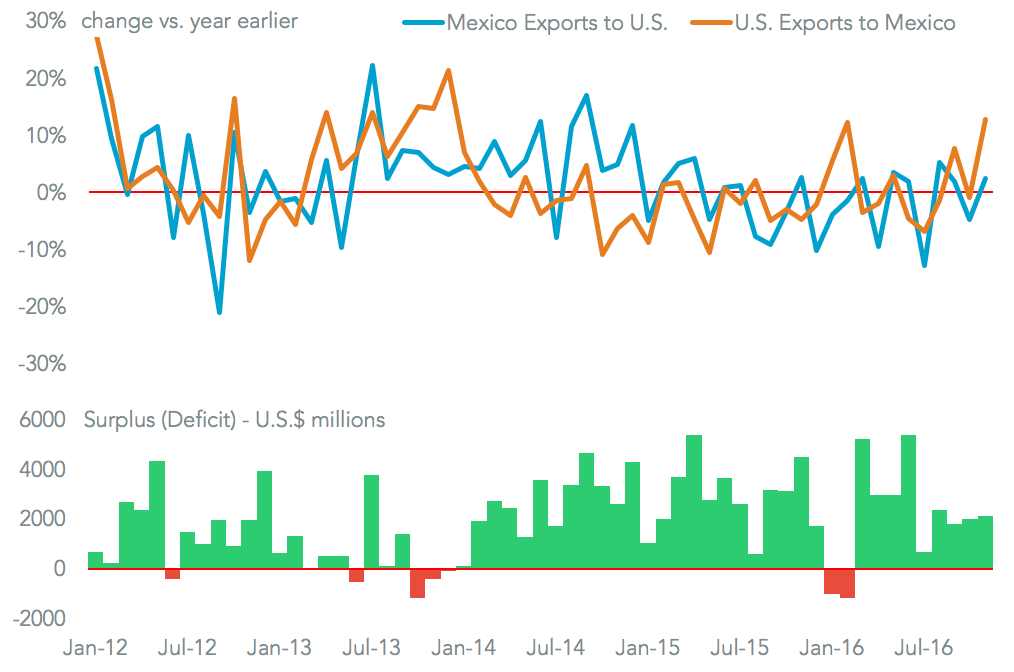
Mexico’s trade surplus with the United States increased for a third month to $2.12 billion, which comes at a bad time politically ahead of President-elect Trump’s commitment to review NAFTA. However, in contrast to the global picture Mexico’s exports to the U.S. actually only increased 2.5% on a year earlier. In fact, imports from the U.S. actually increased 12.8%, suggesting that – at least in November – supply chain shifts across the border can work in the U.S.’s favor.
Source: Panjiva