Es
EsVenezuelan oil exporter PdVSA faces two significant bond repayment deadlines shortly – one worth $841 million on a 2020 bond is due October 27, and another worth $1.1 billion due November 2 – according to Bloomberg. There are significant doubts it can make these after missing five coupon (interest) payments last week, CNBC reports. Should the company default, and its creditors be unable to get restitution, there may then be restrictions on its dealings with other oil companies and countries.
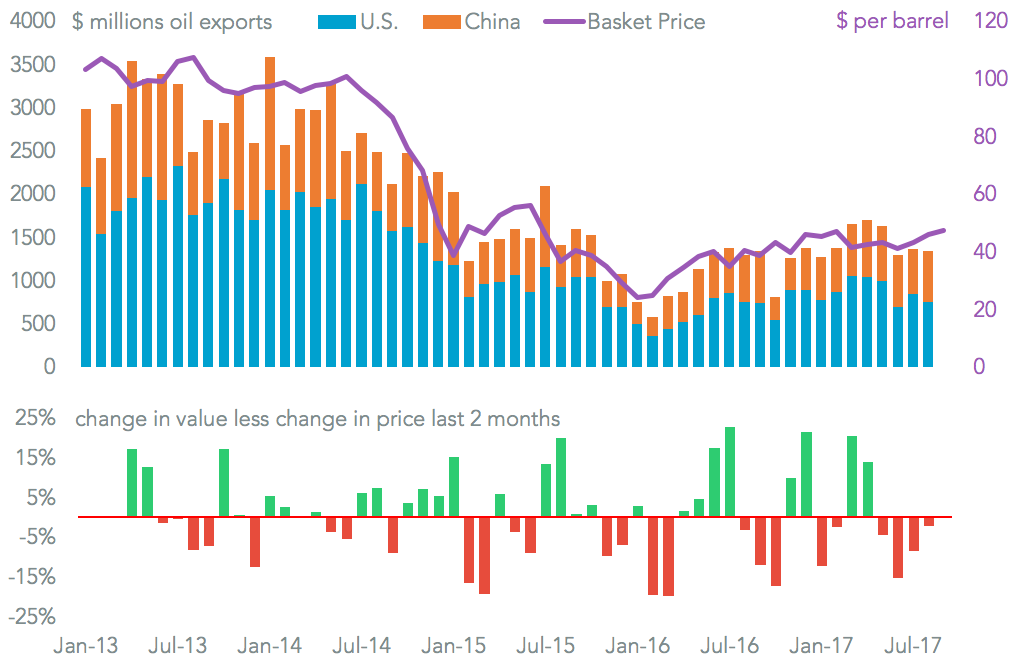
The country broadly has been highly reliant on oil export earnings, and can ill-afford disruptions to PdVSA’s dealings with other countries. Panjiva data shows exports to the U.S. increased 0.3% on a year earlier, while those to China climbed 8.2% in August vs. a year earlier. However, the total growth of 3.6% (to reach $1.34 billion) came against the backdrop of a 13.6% jump in oil prices, suggesting a slump in production.
While President Trump has previously indicated he is ready for “further action” on sanctions, as outlined in Panjiva research of September 19, no changes appear imminent. Any shortfall may also be taken up by Russia, with state oil company Rosneft already supporting PdVSA according to Business Insider.
Source: Panjiva
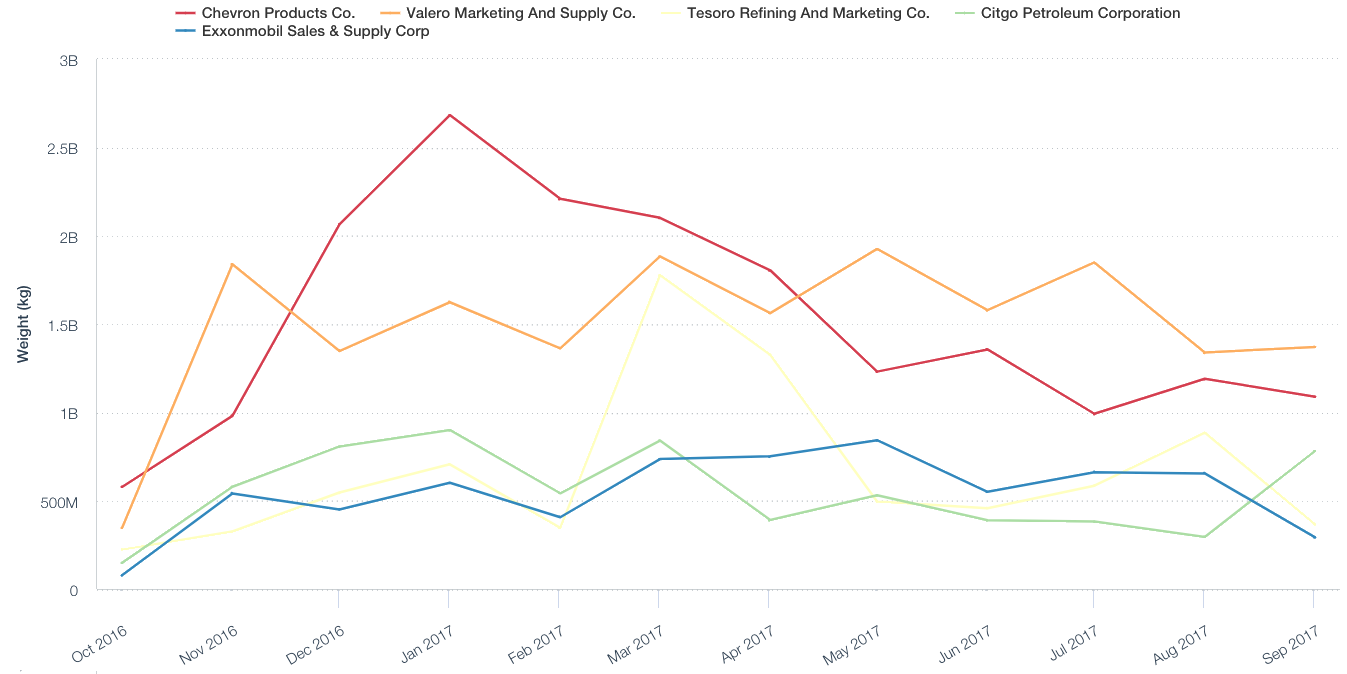
One issue for the U.S. oil market is that refiner Citgo, the third largest importer of oil, is jointly owned by PdVSA and Rosneft. Supplies have already been reduced, Reuters reports, and could fall further. Volumes imported fell less than the industry average in September, by 8.7% vs. 23.4% across the U.S. That included disruptions from Hurricane Harvey, however, with Citgo’s imports in the third quarter falling 27.0% vs. an industry average 21.7%.
Source: Panjiva
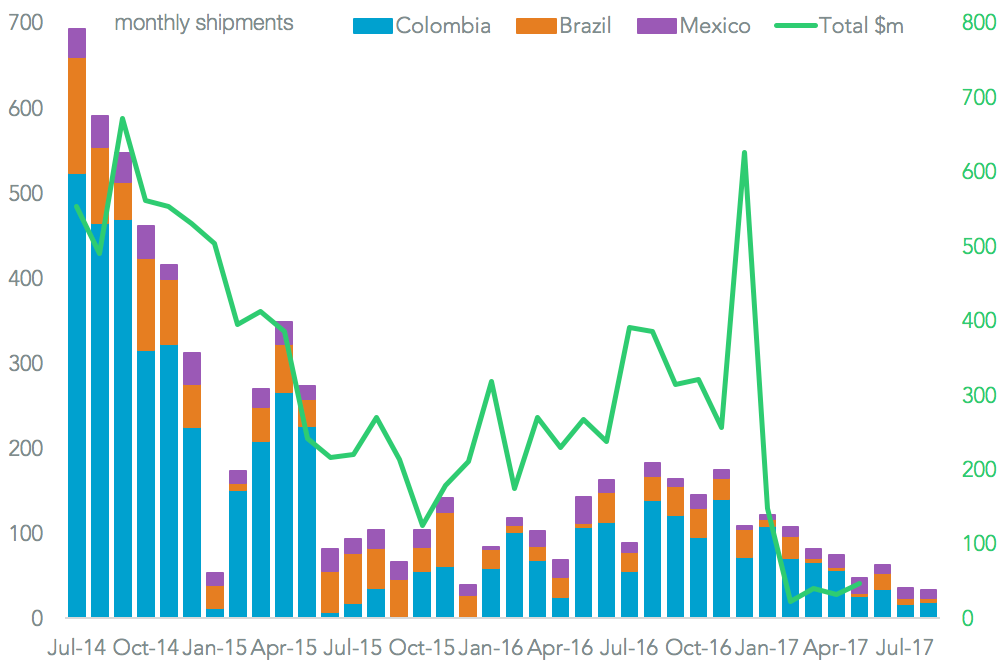
The bigger issue, of course, is whether the Venezuelan government can continue to support food imports, which are largely under the control of the military. Panjiva data shows imports of meat, cereals and sugar from Brazil, Colombia and Mexico reached a new low in August in shipment terms after falling 35.0% in the quarter to August 31 on the prior three months.
Source: Panjiva